
Reviewed in full · VILLA ROMANA DEL CASALE TOURS
Piazza Armerina: Roman Villa del Casale Mosaics Tour
Sicily has a Roman site that feels almost unfair in how much beauty it packs in, Villa del Casale near Piazza Armerina. A guided walk helps you make sense of what you are seeing, because these mosaics are not just decoration, they are storytelling across an astonishing spread of floor.
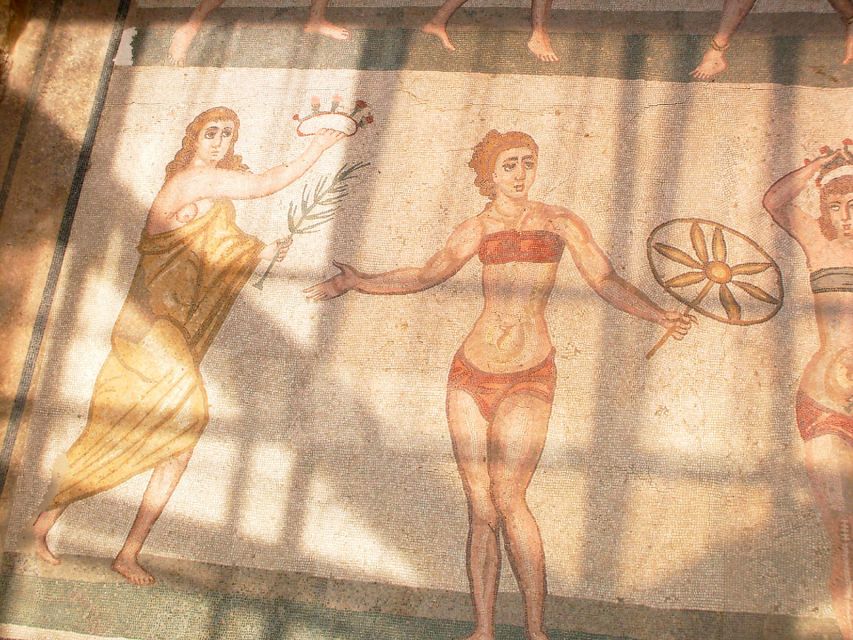
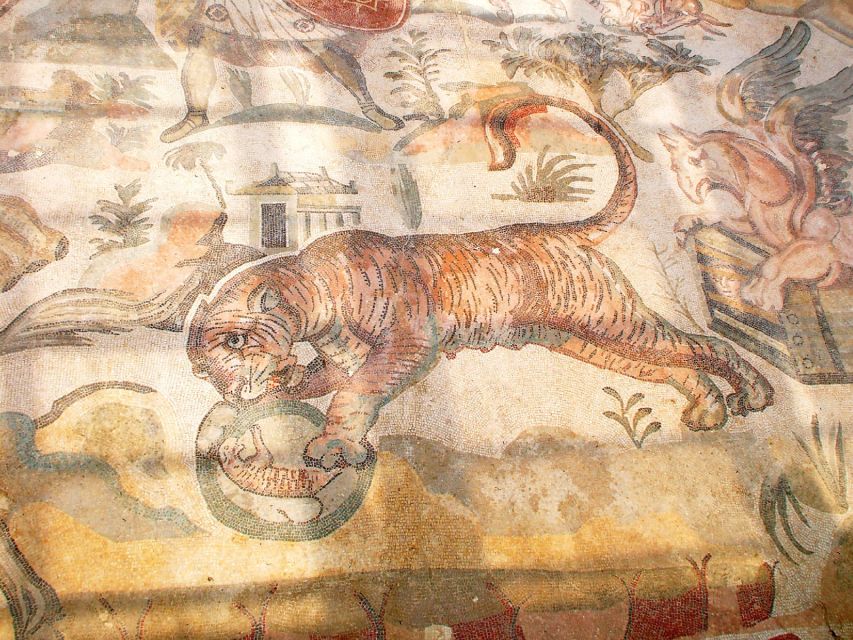
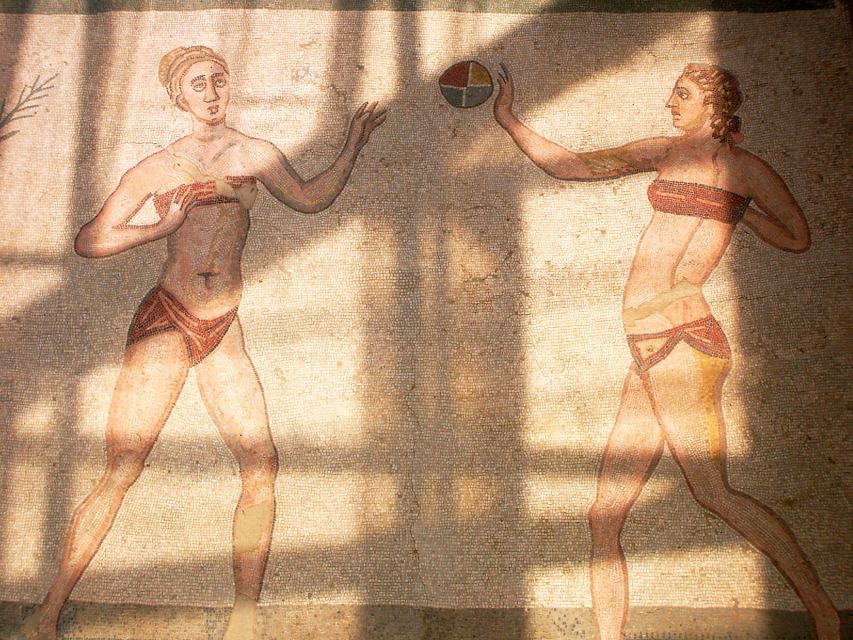
Two images I love about this tour are the Great Hunt mosaic and the Bikini athletes scene. You get to see them in context, not as a random photo spot.
One thing to consider is that the villa can feel crowded on busier days, so build in patience around shared viewing moments.
Key highlights to look for
- UNESCO World Heritage Roman mosaics spread across about 3,500 m of floor
- Great Hunt and the famous Bikini mosaic with sports action
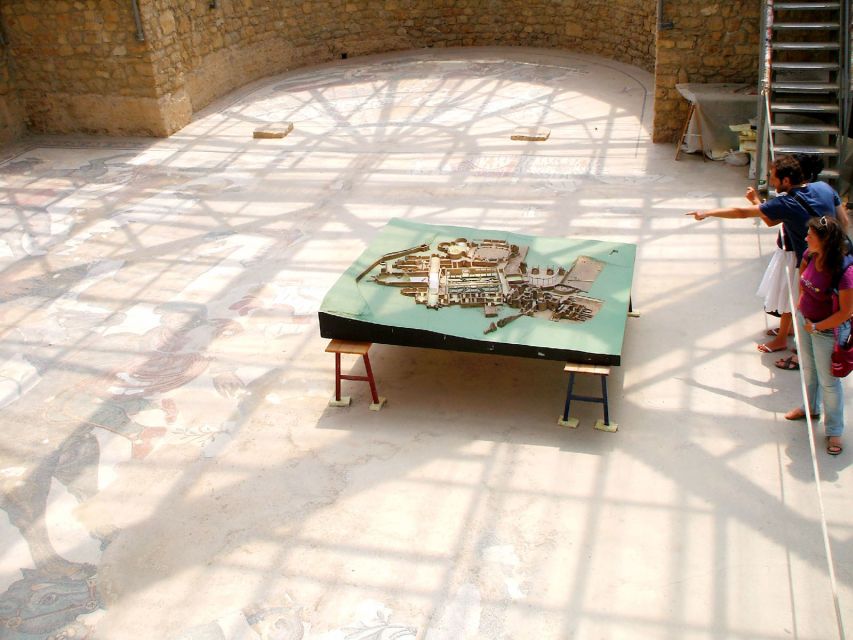
- 48 rooms of the domus, not just a quick corridor stop
- Peristyle floor with European and African animal mosaics
- Domus baths including the frigidarium and tepidarium
- Circus Hall with a mosaic reproduction of Circo Massimo in Rome
Villa del Casale in Piazza Armerina: why the mosaics feel personal
Villa del Casale is one of those UNESCO stops where the scale can make you forget what a single floor actually means. The mosaics cover daily life, games, heroes, and gods, and the result is that you keep spotting new details the longer you look.
I like that the tour does not treat the villa like a museum hallway. You get guided context, so when you see hunting scenes or mythic figures, you understand what the villa’s owner and visitors were likely meant to recognize. The site is tied to Roman elite life in late imperial Sicily, and it is often linked to Valerio Massimiano, a powerful patrician of the empire, which gives the whole place a sense of why it was built this way.
If you like clear explanations and a plan for where to focus, this is a strong format. If you want lots of free wandering with no structure, the tight 1.5-hour window can feel a bit quick.
More Villa Romana del Casale trips:
- Piazza Armerina: Villa Romana del Casale Guided Tour
★ 4.7 · 97 reviews - From Catania: Agrigento-Piazza Armerina Audio-guided Tour
★ 3.9 · 17 reviews - Piazza Armerina: Private Villa Romana del Casale Guided Tour
★ 4.8 · 4 reviews
Where you start at SP90, and how the 1.5-hour rhythm works
You meet at the entrance to the archaeological site, SP90, 94015 Piazza Armerina, and the tour ends back at the same meeting point. The total time is about 1.5 hours, and starting times depend on availability.
That timing matters. Villa del Casale is not huge in the sense of distance, but it is huge in visual information. In 90 minutes, you are not going to “study” every square. You are going to learn what to look for first, and then you can let your eyes catch the small surprises after your guide points the way.
This is also a private group experience. That usually means fewer pressure-cooker moments and more room for questions, but it does not completely erase crowds at the site. On busy days, you will still see other visitors in the same rooms.
Entering 48 rooms of the domus, plus the peristyle floor
The heart of the experience is moving through rooms of the villa, known as the domus. Expect to hear how this home worked as a complete world, with spaces for public display, private living, and even bathing.
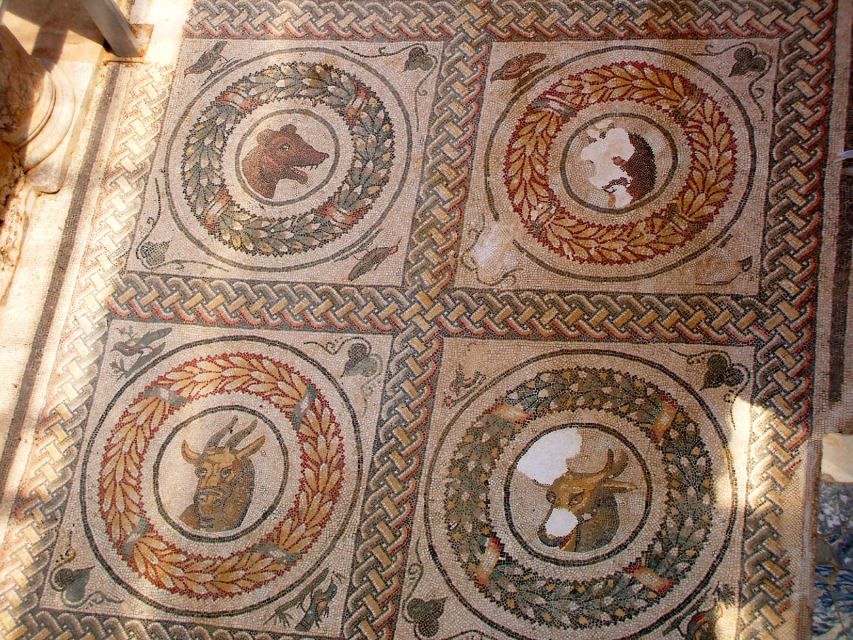
One of the first “wow” moments for me is the peristyle area. The peristyle floor is made entirely from mosaic, and it includes drawings of European and African animals. This is the kind of detail that makes you realize the villa was not trying to imitate nature casually. It was staging a worldview, with imagery that links different parts of the Roman world into one elegant floor.
As you continue, you also get a sense of layout and purpose. The garden area, the dining spaces, the reception-style halls, and the baths all read like different chapters. You are not just walking past rooms, you are watching daily Roman life organized into a single property.
The garden fountain with 3 pools: a calm pause inside a complex
Between major mosaic rooms, the tour includes time outdoors. You stroll through the garden area enriched by a large fountain composed of 3 pools.
The outside is covered in marble, while the inside uses mosaics, and that contrast matters. It is a reminder that Romans treated water and surfaces as part of the design language. Even if you are mostly focused on the big mosaic floors, this is a good moment to look at how materials and patterns shift with light and space.
I also like this stop because it gives your eyes a break. After long stretches of floor and walls filled with figures, outdoor pauses help you reset, so the later interiors hit harder.
A different sort of day out around Piazza Armerina:
- Piazza Armerina & Caltagirone Guided Tour
★ 5.0 · 4 reviews
Great Hall Corridor and its provincial symbolism
Next comes the Great Hall Corridor. The standout detail here is two columns depicting female figures that symbolize two peripheral provinces of the empire.
It is easy to think mosaics are always about entertainment, like hunting scenes and sport. But this corridor pushes you toward an idea of propaganda and identity. The empire was big, and symbols helped people in the provinces feel connected to the center. Standing in that corridor, you can see how art and politics could share the same floor.
If you enjoy layers like this, stay attentive here. When a mosaic has a clear symbolic theme, the guide’s explanation makes your attention click into place, and suddenly the entire villa reads like a message, not just a pretty building.
Oval triclinium and private rooms for domestic life
The tour then moves into the oval-shaped triclinium, a dining room. This is where you get a sense of the theater of meals in an elite Roman home. The shape alone suggests a space designed for conversation and display, and the mosaics around dining spaces often reinforce social status.
After that, you pass into private rooms reserved for domestic people. This part is important, because it balances the villa’s glamour. The home was built for an elite household, but it operated through work and service. Seeing these rooms in a single guided sequence helps you understand the villa as something lived in, not just visited.
Great Hunt mosaic: the action you can almost feel
The Great Hunt mosaic is one of those pieces you will likely remember long after Sicily. Hunting scenes are not new to Roman art, but the way they are handled here makes the whole scene feel energetic and organized, like a frozen moment with motion built into the composition.
In a guided setting, you do not only stare at animals and hunters. You also learn how scenes of hunting functioned as status symbols and entertainment. It is a Roman fantasy with a serious edge, showing power, skill, and control over the natural world.
If you are short on time in Piazza Armerina and decide to focus on just one interior mosaic, make it this one. The guide will help you notice the organizing elements, so your view stops being random and becomes intentional.
The Bikini mosaic: sports, bodies, and why it still surprises
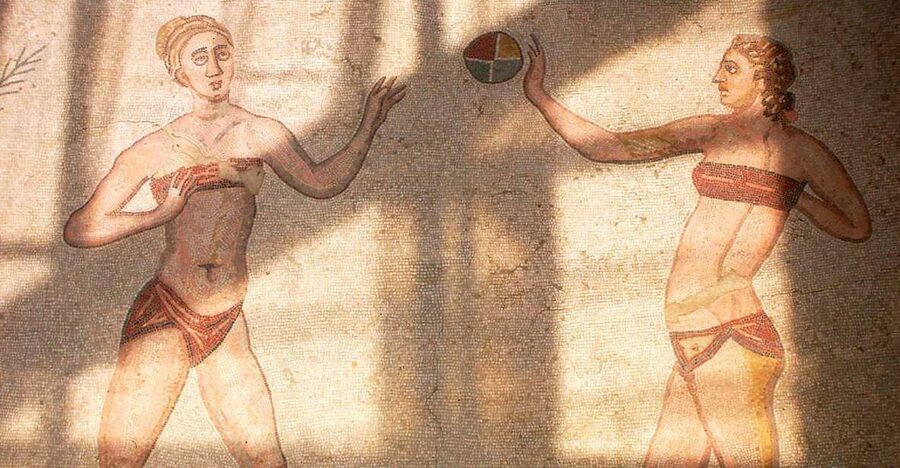
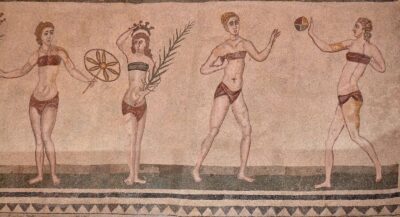
Then comes the famous room depicting 10 girls in bikinis playing sports. You get to see athletes throwing a discus, playing with a ball, exercising with weights, and even cross country style movement.
Even if you have seen a photo of this before, seeing it inside the villa changes how it lands. The setting makes the scene feel more like part of a living Roman culture than a modern meme. It also underlines how Roman mosaics could be surprisingly playful while still being highly crafted.
This stop is one of the most praised parts of the experience because it is both visually arresting and easy to understand. When your guide points out the way the action is broken into clear moments, you get why the floor has become a star.
Basilica with polychrome marble floors: when color becomes architecture
The Basilica is the next highlight. This is not just another room of mosaics, it is a space known for its polychrome marble floors.
Polychrome means multiple colors, and here you can feel the difference between mosaic picturing and marble patterning. Mosaics tend to tell stories with figures. Polychrome floors do something else: they emphasize geometry, rhythm, and the luxury of materials.
In a tour, this kind of contrast helps you see the villa as a full design concept. You start noticing that the owner was not only investing in pictures. He was building a complete environment.
Bedroom alcove with theater masks and the lovers medallion
You then enter a bedroom featuring a rectangular alcove with mosaic decorations. One of the most distinctive elements is the presence of theatrical masks, plus a famous central medallion showing lovers.
The masks are a clue that Roman art loved performance and symbolism, not just literal scenes of daily life. The lovers medallion shifts the mood too. It is intimate. You are moving from public or semi-public spaces toward a more personal corner of the domus.
If you enjoy symbolism, take a moment here and slow down your eyes. This is the kind of mosaic detail where the guide’s explanation makes the difference between seeing a nice pattern and reading a meaning.
Domus baths: frigidarium and tepidarium
After the bedroom, the tour reaches the domus baths, including the frigidarium and tepidarium. Roman bathing was not just about cleaning. It was part of social life, routine, and comfort.
Even though the name sounds simple, the idea of moving between cold and warm spaces is a key part of Roman engineering and daily culture. This stop helps you understand the villa as a place of bodily care, not only feasts and fancy floors.
In terms of pacing, baths are also a good way to break up the visual intensity. The mosaics may not always dominate every surface in the same way, and that gives you a different kind of appreciation.
Circus Hall as a gym, plus the Circo Massimo mosaic
The tour ends in the Circus Hall, a space used like a gym. This is where you see a mosaic reproduction of the Circo Massimo in Rome.
That connection matters. Circo Massimo is a big name to drop, and seeing a local villa version of the Roman capital’s famous venue makes the empire feel close. It is Roman identity again, but expressed through sport and leisure rather than myth.
This is also a fitting finale because you just spent the tour moving through hunting, dining, domestic spaces, theater imagery, and baths. Ending in a gym-like hall brings the focus back to active life, sport, and performance.
If you love when art references big city Rome, this closing stop will click for you.
Price and group size: is $325.13 per group good value?
The price is listed as $325.13 per group up to 15, which is the key to thinking about value. Because it is per group rather than per person, you can stretch the cost better if more people share it.
For a place like Villa del Casale, where you are paying for a licensed guide and a structured tour through major rooms, paying a group rate can make sense, especially if you want someone to help you read the mosaics instead of walking through as a silent spectator.
The flip side is the duration. At 1.5 hours, you need to be ready to focus. If your travel style is slow and you hate feeling rushed, you might want extra time at the site on your own after the guided portion, if your schedule allows.
Also, entrance tickets are not included, so you should budget for that separately. Transportation pickup is not included either, so plan your own way to the SP90 meeting point.
Language options and the guide experience that makes the mosaics click
This tour uses a licensed guide, and the live tour guide is available in Spanish, English, French, German, and Italian. That matters because the villa is detail-heavy. If you can follow the explanation comfortably, you will pick up more from each mosaic room.
The best guide experiences are the ones that put the villa into context. In particular, Stefania is highlighted for making the villa make sense, pointing out what is most important and also what is most interesting.
So if you book and you get a guide with that energy, you will feel the difference fast. You are not just reading plaques. You are getting a guide who helps you connect the stories, symbols, and everyday scenes into one coherent picture.
Should you book this Roman Villa del Casale mosaics tour?
Book it if you want the major mosaics, the floor symbolism, and a guided explanation in about 1.5 hours. This is a great fit for couples, small groups, and anyone who wants to see the big scenes like the Great Hunt and the Bikini athletes without guessing what they mean.
Skip or adjust your expectations if you prefer lots of solo time with slow wandering. The structure is helpful, but it is still a time-limited tour inside a crowded site environment.
If your goal is to leave Piazza Armerina understanding why Villa del Casale is famous, and not just leaving with photos, this tour is a solid choice.
FAQ
How long is the Roman Villa del Casale mosaics tour?
The tour duration is 1.5 hours.
Where do I meet for the tour?
The meeting point is the entrance to the archaeological site on SP90, 94015 Piazza Armerina EN, Italy.
What is the price?
The price is $325.13 per group, for groups up to 15.
Is the entrance ticket included?
No. The entrance ticket is not included.
Is transportation or pickup included?
No. Transportation or pickup is not included.
Is the tour private?
Yes. It is listed as a private group.
What languages are available for the live guide?
The live guide is offered in Spanish, English, French, German, and Italian.
Can I cancel and still get a refund?
Yes. Free cancellation is available up to 24 hours in advance for a full refund.
Is pay later an option?
Yes. Reserve now & pay later is available, so you can book a spot and pay nothing today.
Just reviewed in Piazza Armerina
- Piazza Armerina: Villa Romana del Casale Guided Tour★ 4.7 · 97 reviews
- Piazza Armerina: Private Villa Romana del Casale Guided Tour★ 4.8 · 4 reviews
- Piazza Armerina & Caltagirone Guided Tour★ 5.0 · 4 reviews
- From Catania: Agrigento-Piazza Armerina Audio-guided Tour★ 3.9 · 17 reviews
Villa Romana del Casale Tours, compared.
Valley of the Temples and Villa Romana del Casale Day Trip from Taormina
Read our review →
Valley of the Temples & Piazza Armerina with Snack
Read our review →
Piazza Armerina: Villa Romana del Casale Guided Tour
Read our review →
Browse the lists this tour appears in