
Reviewed in full · WALKING TOURS IN TAORMINA
Private Taormina Top City Sights Walking Tour
Taormina is interesting because it packs huge stages of Greek and Roman life onto a small hillside town you can actually walk through. In two hours, you get a clear route through the highlights, plus the kind of commentary that helps the ruins make sense.
I like two things most. First, you get an expert-led stop inside the Ancient Greek Theatre, not just a photo from outside. Second, the loop through Porta Messina, Porta Catania, Corso Umberto, and back again gives you a practical way to orient yourself in Taormina quickly.
One consideration: the theatre ticket is not included, so you’ll plan for an extra cost of about €10 per person on the day. Comfortable shoes matter too, since you are walking around an old town on uneven surfaces.
Quick take: what makes this Taormina walk work
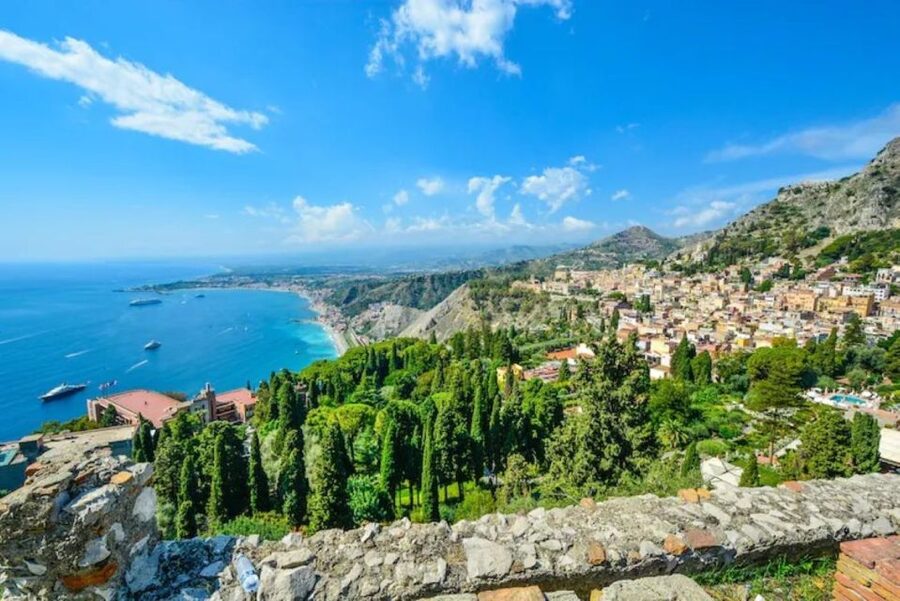
- Inside Ancient Greek Theatre visit led by your guide, with the entrance ticket bought on site
- Porta Messina start and end makes it easy to find your way back
- A tight 2-hour format that focuses on the real headline monuments
- Duomo Square and Corso Umberto add the lived-in, everyday Taormina feel
- Private group keeps the pace under your control, especially for questions
Taormina is made for short climbs and big viewpoints
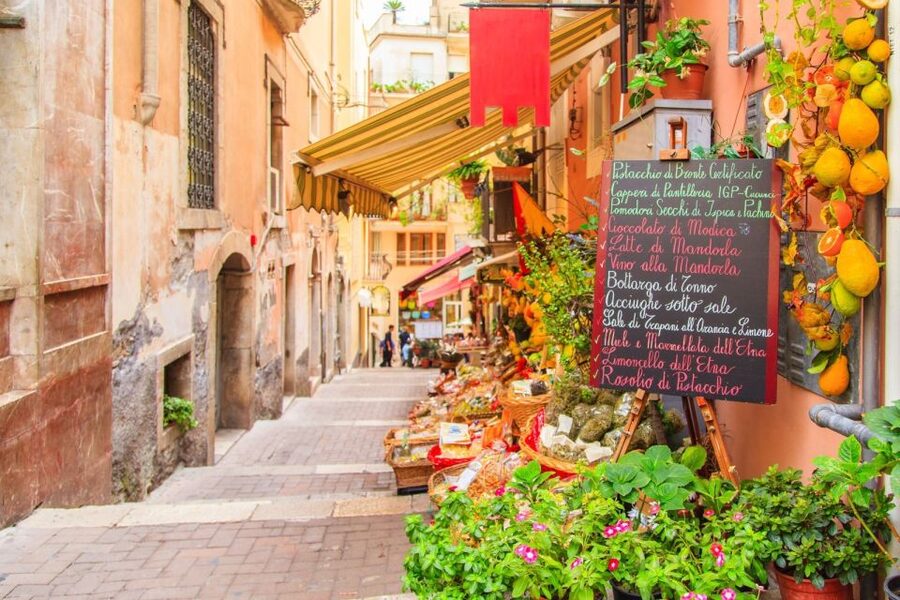
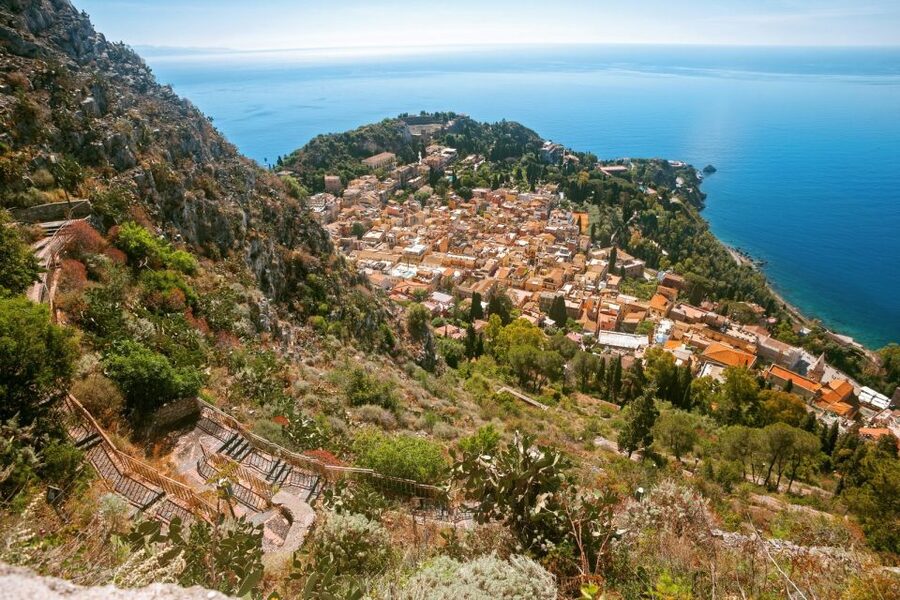
Taormina sits dramatically on the side of a mountain, with the Mediterranean pulling your eyes outward whenever you turn a corner. That geography is part of why the town became a favorite on the Grand Tour. Long before package tours, northern Europeans came for the views, the culture, and the feeling of being somewhere different.
You’ll hear how Taormina’s story goes in chapters. It was founded in the 4th century BC and enjoyed a period of prosperity under the Greek ruler Gelon II. The Romans later took over and left their stamp. Then the town quieted down after the Normans conquered it in 1087. The “reboot” as a tourist destination came much later, in the 18th century, when visitors discovered Taormina and writers like DH Lawrence made it part of their lives between 1920 and 1923.
On this tour, the background matters because the sights are not random. They’re connected. When you stand in front of a gate, a theatre, and a palace in sequence, you start to understand how the town worked, what it celebrated, and what it kept reusing over centuries. And since this is a walking tour, you’re not just looking at buildings. You’re moving through the same kind of street-level reality that shaped the town’s history.
More Walking Tours in Taormina
- Taormina Food and Wine Walking Tour (Small Group or Private)
★ 4.5 · 180 reviews - The Pearl of Sicily: Private Taormina Walking Tour
★ 5.0 · 179 reviews - Taormina: Shared or Private Food & Wine Walking Tour
★ 4.6 · 167 reviews
Meeting at Porta Messina: the walking route that loops the old town
You start at Porta Messina, at the meeting point just under the big ancient arch. It’s a good opener because city gates are more than decoration. They tell you where the movement was, where people entered, and how the town connected to the outside.
From there, you continue along the route toward Porta Catania. You’ll pass it, not linger as long as you will at the main theatre stop. Still, it’s helpful because it gives you a sense of scale. Taormina isn’t a vast city, but the gateways show you how strategic this hillside setting was.
This is also a practical tour design. The highlights are spaced so you keep moving without getting exhausted early. And since the experience ends back at Porta Messina, you’re not left stranded somewhere inconvenient. If you want to keep exploring after the two hours, you can pick up right where you started.
Also, it’s private, which changes the feel. You’re not fighting crowds for a quick answer or waiting behind a pack to get your bearings. If you like to understand what you’re seeing instead of just walking past it, this format fits.
Porta Catania and Duomo Square: the religious and civic center feel
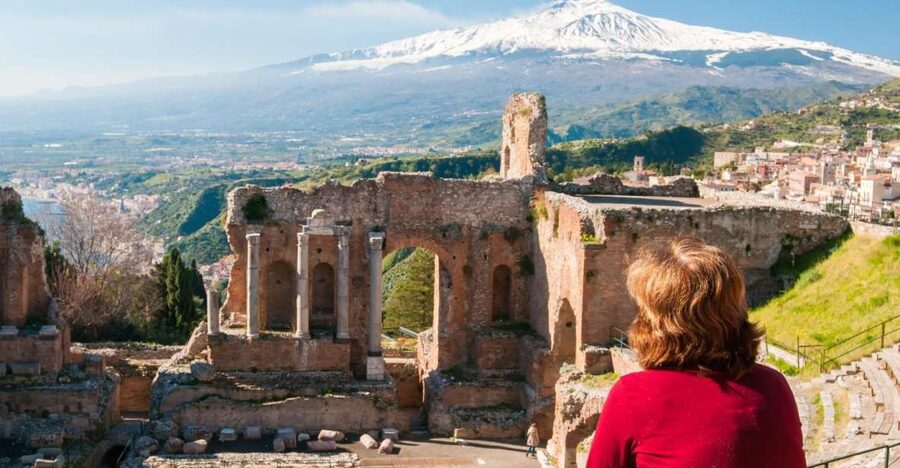
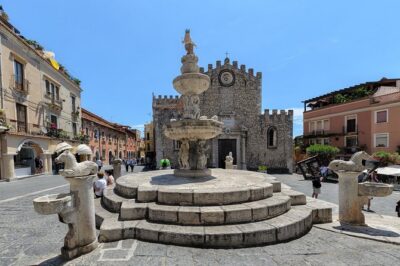
After Porta Catania, you head toward Duomo Square. This is where Taormina’s everyday life and its religious center meet. Even if you do not spend time deep inside a church on this specific walk, the square frames the town’s identity. You get the sense of what locals focus on now, not just what happened centuries ago.
What I like about hitting the Duomo area mid-tour is the contrast. Greek and Roman structures pull you toward the ancient past. Then you step into a more current public square, and Taormina feels alive again. It stops being a set of ruins and becomes a real town you could spend a full day in.
You’ll walk and pass by along the way, so the pacing stays smooth. The tradeoff is that this is not a slow “stop and study everything” kind of tour. If you want extended time for the duomo itself, you’ll likely want to plan extra hours on your own after the tour ends.
Tip for your footwear: bring comfortable shoes. Old-town stone and narrow lanes can be slippery, and you don’t want achy feet when the tour’s big highlight happens later.
Entering the Ancient Greek Theatre for the guided inside visit
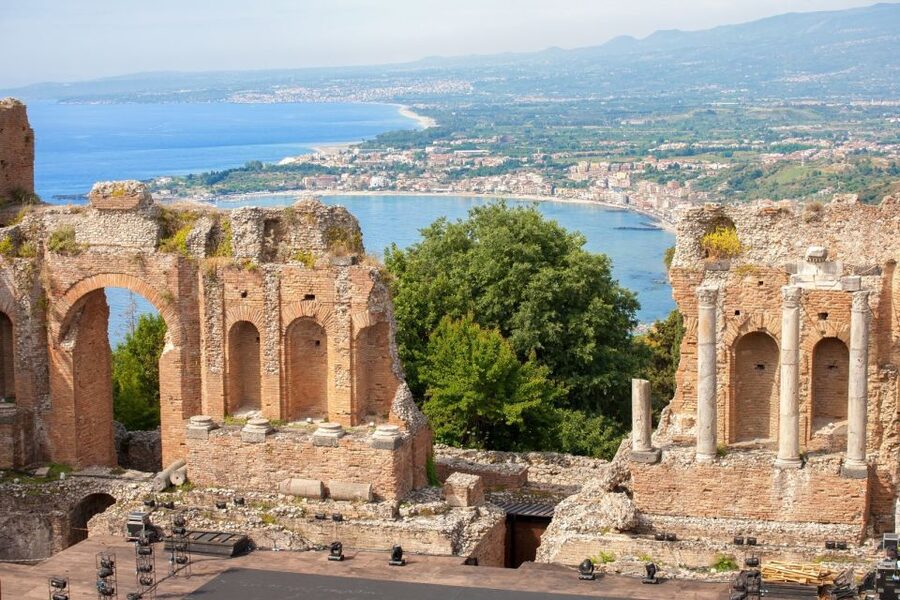
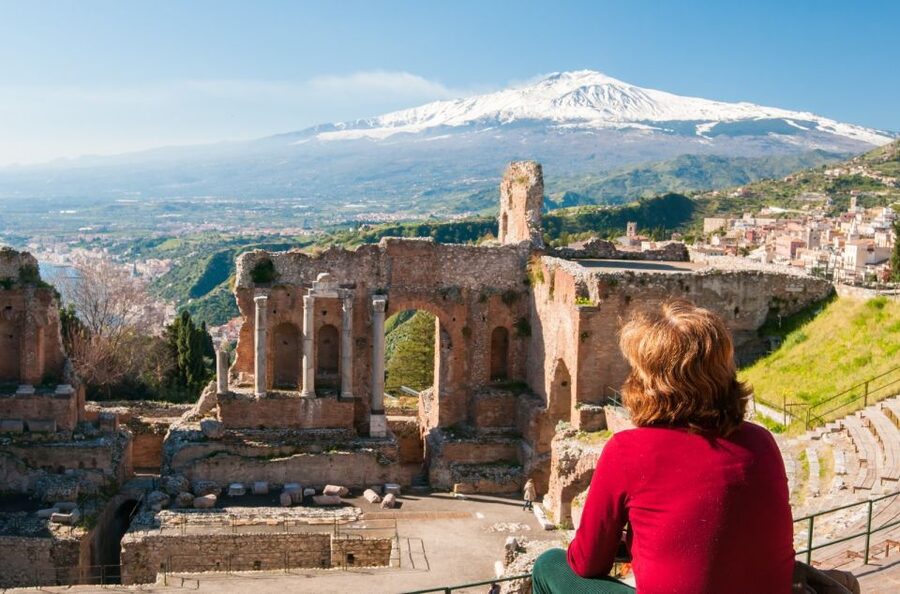
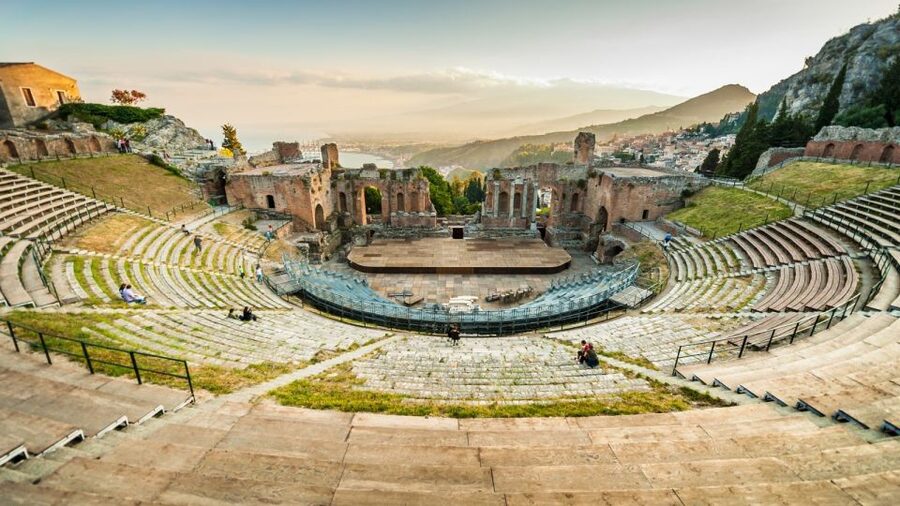
The standout moment is the stop at the Ancient Theatre of Taormina. This is the one you’ll remember after you go. The theatre is a major landmark and it’s also one of those places where context changes everything.
Here’s what matters for your planning: the guided visit inside is included, but the theatre ticket is not. You buy it on the spot for about €10 per person. If you’d rather avoid surprises, factor that into your budget from the start.
What you should expect inside is not just sightseeing. A guide helps you connect the dots. You learn how these spaces were used, why Greek design still influences what you feel when you sit or stand there, and how the town’s evolution affected how structures were reused and remembered.
This stop is valuable even if you’ve seen other theatres in Italy, because Taormina’s setting is different. The hillside feel and the way the theatre relates to the surrounding area make it feel more like a living stage than a static ruin. It’s the kind of place where you can almost picture the movement of people, even though you’re standing in present-day silence.
One more practical note: since the ticket is required for entry, you’ll want to keep an eye on timing. If you’re traveling in peak season, buying the ticket and entering may take a bit of extra minutes. Still, the guide-led pacing usually helps keep it from feeling chaotic.
A different sort of day out around Taormina:
- Taormina: Ancient Theater Skip-the-Line Ticket & Audio Guide
★ 4.5 · 1,701 reviews - Seaview Cooking Class & Taormina local flavors with Chef Mimmo
★ 5.0 · 665 reviews - Taormina: Opera Performance in the Nazarena Theater
★ 4.7 · 651 reviews - Taormina: Boat Tour with Aperitif on Isola Bella
★ 4.2 · 647 reviews
Odeon, Corvaja Palace, and what Rome and Greece left behind
After the main theatre, you pass by the Piccolo Teatro Odeon, often called the Odeon. This is a clever next stop because it gives you a comparison point. If the big Greek theatre is the main headline, the Odeon helps show how performance spaces worked at a smaller, more intimate level.
Then you move toward Corvaja Palace. This is one of the places where Taormina’s layers show up clearly. Palace architecture and old stone detailing tend to make you slow down, even on a fast two-hour walk. It’s a strong stop for absorbing atmosphere because palaces were about power and presence, not just spectacle.
What I like about this section is the flow. You are moving from performance culture into civic and elite identity. That mix is what makes the town more than a view. You start to notice how different parts of Taormina’s past serve different purposes, and how those purposes shape what you see on the street today.
And because the tour continues with walking passes and a main street segment afterward, you get variety without feeling like you are sprinting between distant sites. It’s a good way to spend limited time in town while still feeling like you got real content.
Corso Umberto stroll to Porta Messina: streets, surprises, and pace
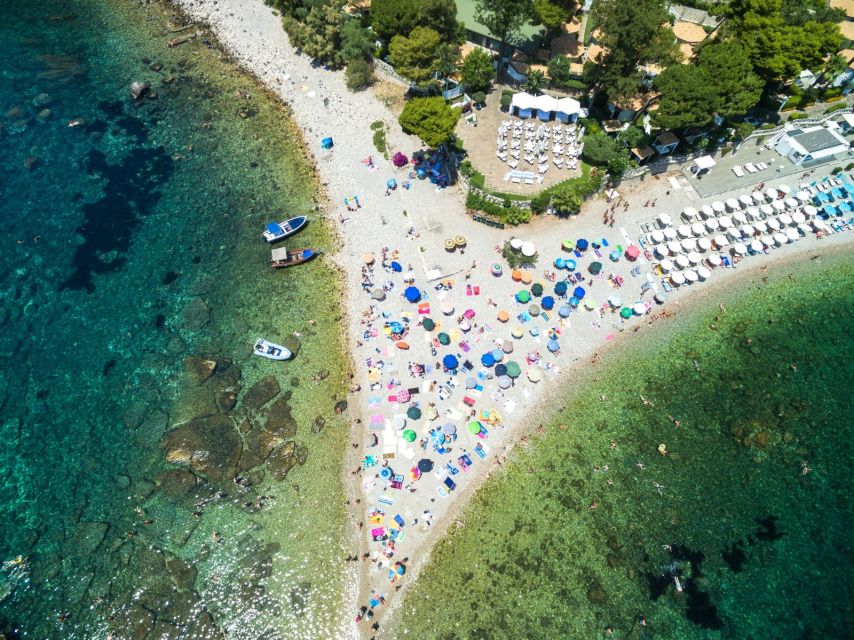
Next comes Corso Umberto, the main street that helps define Taormina’s rhythm. This is where you start seeing how people move through the town now. Shops, everyday pedestrians, and the natural “pause to look around” feeling all show up here.
This part of the tour is important because it ties everything back together. When you’re only focused on monuments, it’s easy to forget how a place actually feels. Corso Umberto reminds you that Taormina is not a museum. It’s a functioning town shaped by the same hillside constraints that shaped the ancient buildings.
As you near Porta Messina again, you have a full loop experience. You end back at the arch, and that matters more than you might think. It reduces the stress of navigation, especially if you’re on a travel schedule and need to get moving quickly after the tour.
If you still have energy, this is the moment to plan your next step. You can use the orientation you gained to decide where to wander next. If you’re the kind of traveler who likes to return later for a slower look, ending where you started makes that easy too.
Price and ticket math for the Ancient Greek Theatre
At $158.60 per person for a 2-hour private guided walk, you are paying for three things: expert guidance, private time, and the included guided entry into the theatre area.
Here’s the math reality. The Ancient Greek Theatre ticket is extra, around €10 per person, bought on the spot. So your true per-person cost is your tour price plus that theatre entry. If you’re traveling with a group, this is still straightforward. Just remember it is a separate payment for entry, not a surprise added at the last minute.
Is it good value? I think it is, if you want more than a casual stroll. The included inside visit is the big value driver. Many walking tours stop at viewpoints. This one builds in a structured, guided moment where the theatre’s meaning lands.
The “private” part also matters. You can ask questions without feeling rushed, and the guide can keep the group moving at a comfortable pace. That’s not a guarantee, but it’s usually what you get when a tour is designed as a private group experience.
One small consideration: the tour is two hours, so it’s not built for slow photography marathons. If you want extended time in multiple places, treat this as your orientation and monument highlights session, then plan additional time afterward.
Languages, private groups, and who should take this walk
The guide language options include Spanish, English, French, German, and Italian. That’s helpful if you want explanations in your own language instead of relying on basic gestures.
This also works well if you care about clarity. One past highlight connected to the guide name Margarita, praised as amazing, which tells me these tours can be guided with real care rather than just a script.
This tour suits you if:
- You want a concentrated Taormina highlights walk in two hours
- You care about understanding sites like the theatre beyond surface photos
- You prefer a private group pace over crowd energy
- You’re comfortable walking on uneven old-town paths
It is not suitable for wheelchair users, so if mobility is a factor, you’ll need a different plan.
If you’re traveling with kids, you might find the theatre portion particularly engaging, but the walk still runs at a guided pace. For families, it often helps to plan snacks and water for after, since the experience is short and monument-focused.
Should you book this Taormina walking tour?
Book it if you want a smart, time-efficient way to see Taormina’s most important monuments and you like the idea of an included guided inside theatre visit. The price makes sense when you factor in expert guidance and the theatre entry you don’t have to arrange yourself.
Skip it or consider an alternative if you want to spend long unbroken stretches inside multiple buildings, or if you need wheelchair access. Also, if you hate buying tickets on the spot, keep that €10 per person theatre cost in your head.
My final take: this is a strong choice for first-timers. You’ll leave with a sense of where everything is, how Taormina developed over time, and why the Greek and Roman landmarks still feel so central in a modern seaside town.
FAQ
How long is the Private Taormina Top City Sights Walking Tour?
It lasts 2 hours.
Where does the tour start and end?
It starts at the meeting point just under the big ancient arch of Porta Messina and ends back at the same meeting point.
Is the Ancient Greek Theatre ticket included?
No. The ticket is not included, and you buy it on the spot for about €10 per person.
What monuments and areas will I see?
You’ll pass by Porta Catania and Duomo Square, visit the Ancient Theatre of Taormina, pass by the Odeon and Corvaja Palace, walk along Corso Umberto, and return via Porta Messina.
What languages are available for the live guide?
The live guide is available in Spanish, English, French, German, and Italian.
Is the tour wheelchair accessible?
No, it is not suitable for wheelchair users.
Just reviewed in Taormina
- Old Sicily and Etna wine tasting tour from Taormina★ 4.3 · 22 reviews
- Naxos: Cruise on Isola Bella with swimming, fruit & prosecco★ 4.3 · 11 reviews
- Etna Basic Tour 1900 metres★ 4.2 · 63 reviews
- Mt. Etna Private Tour with Food and Wine Tasting★ 4.8 · 19 reviews
- Mini-cruise Isola bella with snorkeling from Giardini Naxos★ 4.6 · 7 reviews
- Messina Shore Excursion: Private Trip to Taormina & Etna★ 4.5 · 4 reviews
- Messina, Savoca, Taormina e Castelmola★ 5.0 · 3 reviews
- Taormina: Paragliding Tour with Instructor and GoPro Video★ 5.0 · 6 reviews
Walking Tours in Taormina, compared.

Taormina Food and Wine Walking Tour (Small Group or Private)
Read our review →
The Pearl of Sicily: Private Taormina Walking Tour
Read our review →

Mt Etna Private guided walking Tour with Wine Tasting
Read our review →Browse the lists this tour appears in