
Reviewed in full · GUIDED
Benedictine Monastery of Catania – English Guided Tour
This is a tour that feels like a course in time travel, because the monastery connects 2,000 years of layers in one complex. I like how the guide storytelling stays sharp in English, with names like Carmen, Giovanni, and Nicola popping up in the best guides. I also like that you get access to areas that are usually off limits, not just the postcard rooms. One possible drawback, though, is the tight 75-minute pace, so you may want to return on your own if you like to linger.
In plain terms, you’re paying a small amount for a guided circuit through cloisters, kitchens, cellars, and a library space now tied to the university. If you hate guided tours where you’re constantly moving, this may feel a bit brisk. If you like structure, clear explanations, and a steady rhythm, it’s a great fit for a Catania half stop.
Key Things You Should Notice
- Cloisters, kitchens, and cellars all in one compact circuit, so you see monastic life from prayer to practical work
- A lava-built cellar that ties the story of the site to Sicily’s geology
- Roman houses under a modern mezzanine, where students study above ancient spaces
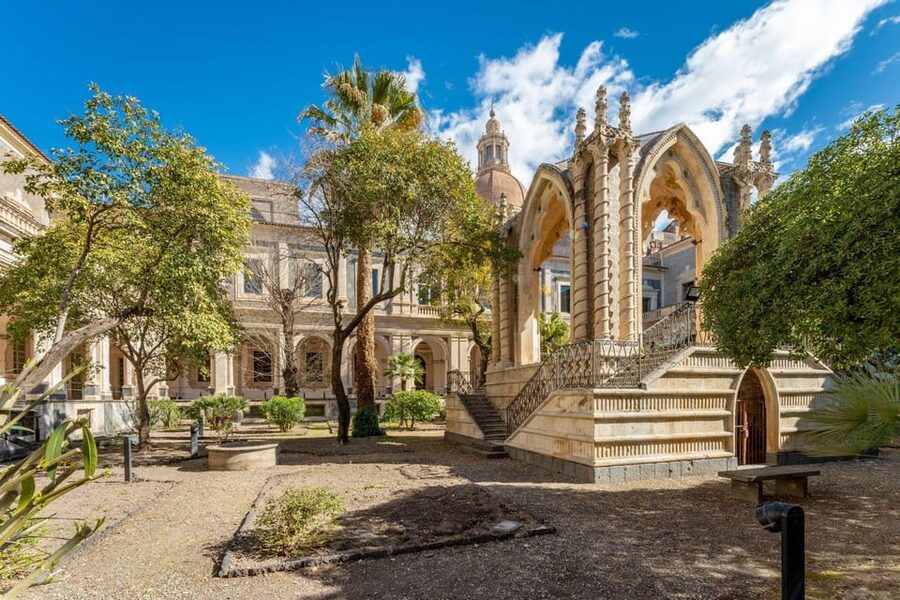
- Two cloisters plus gardens, including the Garden of the Novices, for a real sense of layout and daily routines
- Guides with humor and patience, often praised for answering questions without rushing you
- Architectural storytelling, including work by Vaccarini and a later refurbishment linked to Giancarlo De Carlo
Where San Nicolò l’Arena Turns Into a Story You Can Walk Through
The Benedictine Monastery of Catania, officially San Nicolò l’Arena, is not a museum that sits still. It’s a building complex that has been repurposed and reworked across centuries, and the best part of this tour is how the guide helps you read those changes as you move.
You’ll start with a guided approach to the parts that normally stay closed. That matters because the monastery’s power is in its layers. You’re not just seeing a single era of stonework. You’re seeing how older structures, like Roman remains, ended up buried or repurposed, then later expanded into the huge monastic complex you see today.
I also appreciate how the tour doesn’t treat the monastery as a holy object only. It treats it as a real machine of daily life: kitchens, dining rooms, cloisters, and the underground spaces where storage and production would have happened. That practical focus is why the experience lands, even if you’re not a devoted architecture person.
Other Catania options side by side
- Catania: Mount Etna Morning or Sunset Day Trip with Tasting
★ 4.8 · 4,028 reviews - Catania: Sunset Jeep Tour of Mount Etna and Lava Flow Caves
★ 4.8 · 2,113 reviews - Mount Etna: Trek to 3000m with cable car and jeep
★ 4.7 · 1,978 reviews
Price and Time: Real Value for an “Access Included” Tour
The cost is about $11 per person for a 75-minute English guided visit. At that price, you’re not paying for a long, slow visit. You’re paying for three things: a live guide, access to areas you typically cannot enter, and a route that connects major points instead of dumping you in a pile of rooms.
If your goal is to see the big highlights efficiently, this is strong value. Skip the ticket line, store your baggage at the meeting point, and let the guide do the hard part, which is turning a complicated site into a clear path.
The only caution I’d give is timing. If you arrive late, or you’re the type who needs long breaks to recover your energy, 75 minutes can feel like it comes and goes fast. Also, if you’re hoping to access a specific viewing spot, do a quick check before booking, since at least one guest reported they could not go up to a viewing platform on their version of the tour.
Meeting at Piazza Dante and Getting Oriented Fast
You meet at the Benedictine Monastery of San Nicolò l’Arena. The info point is in the courtyard on the right as soon as you pass the main gate on Piazza Dante. It’s a straightforward meet up, and the big benefit is that you start already positioned at the complex, not hunting for a distant street corner.
This matters because the monastery layout can feel like a maze once you’re inside. When the guide starts you with a clear orientation, you waste less time figuring out where you are and more time understanding what you’re looking at.
Stop 1: The Two Cloisters That Define the Rhythm
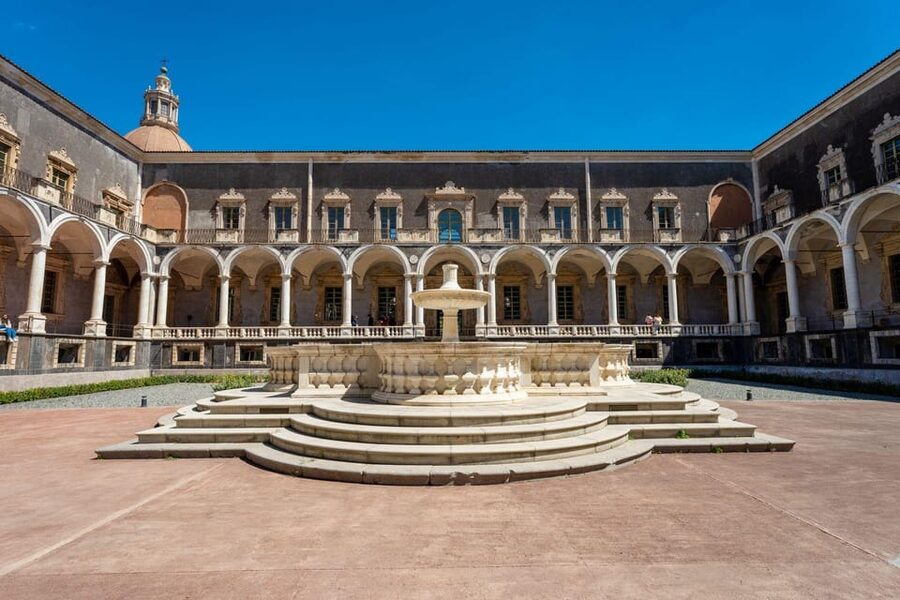
The tour centers on the main monastic spaces, and the two cloisters are the backbone of that experience. Cloisters are not just pretty courtyards. They’re built to create a rhythm: movement without chaos, silence with purpose, and a protected outdoor pocket you can return to again and again.
What I like about seeing cloisters with a guide is the way the explanation helps you connect architecture to behavior. You begin to understand why the monastery needed spaces that could host daily walks, processions, and quiet breaks, even when the surrounding world was noisy and unpredictable.
You’ll also get help reading the late baroque feel of the complex, because the guide connects style to function. Late baroque here isn’t just decoration. It’s how power, wealth, and devotion were shown in stone.
A different sort of day out around Catania:
- Sicily: Etna and Alcantara Gorges Full-Day Tour with Lunch
★ 4.8 · 1,766 reviews - Mount Etna: Roundtrip Cable Car and 4×4 Bus Ticket
★ 4.3 · 1,602 reviews - Catania: Etna Sunset Tour with Pickup and Drop-off
★ 4.8 · 1,348 reviews - Mt. Etna and Taormina village full day tour from Catania
★ 5.0 · 1,155 reviews
The Novices Garden: A Quiet Contrast You Can Actually Feel
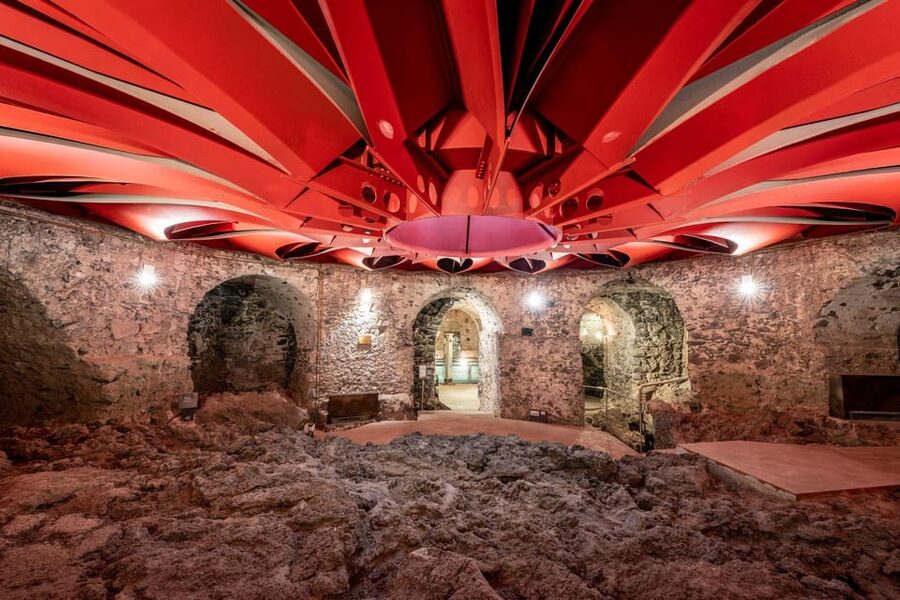
Next comes the Garden of the Novices. Even when you’re moving quickly, this stop tends to reset your attention. It’s calmer. It gives your eyes a break from corridors and monumental staircases, and it adds a human scale to a complex built for institutions.
The value is not only aesthetic. You’re seeing a designed space tied to training and formation. That gives the rest of the tour more meaning, because the tour keeps returning to the idea of daily life: who did what, where they moved, and how the monastery managed routines.
If you’re visiting in hot weather, you may find that the underground and shaded areas feel like a relief later on, and the garden helps you shift gears before you head into cooler stone spaces.
The 18th-Century Kitchens: Where Monastic Wealth Becomes Physical
One of the highlights is the visit to the famous 18th-century kitchens, plus the dining rooms and cellars connected to food and storage. This is where the monastery stops being an abstract idea and becomes a real workplace.
It’s also where you can see why the tour highlights Benedictine wealth. A kitchen that looks substantial tells you the monastery could support large communities, long-term preparation, and consistent operations. It’s not just about monks eating in a simple way. It’s about sustaining a whole system.
What you’re learning, in a practical sense, is how religious life was supported by logistics. That’s one reason this tour scores so well with people who think they might only enjoy “old buildings.” The tour frames it as how people actually lived.
Roman Houses Beneath a Modern Mezzanine
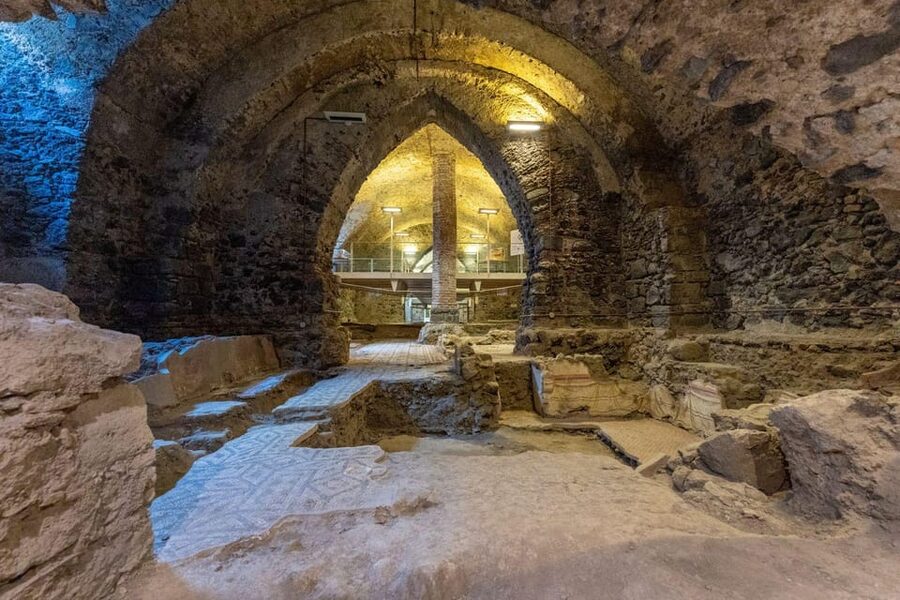
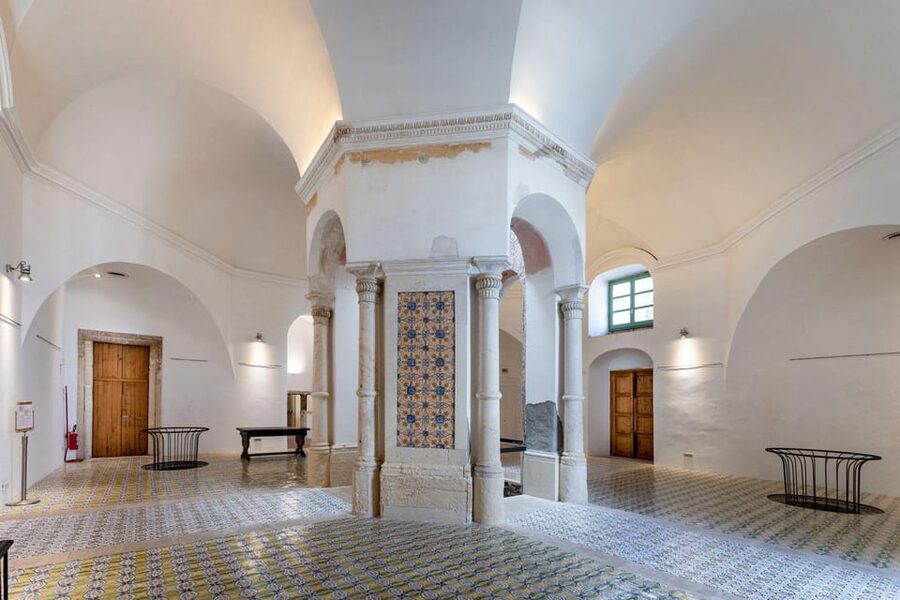
A standout element is the Roman houses visible under a modern mezzanine used by students as part of the university library. This is the kind of layering that makes a building complex worth touring with a guide, because your eyes might not catch what matters unless someone explains what you’re seeing.
In a single view, you get two time periods stacked on top of each other. Roman structures sit below, and modern academic life happens above, in a space that includes part of the library program. It’s a clever reminder that cities don’t erase the past. They build on it.
This stop also helps you understand why access matters. Without a guided route, you might miss the point of these visible remains and just see “some floor space.” With a guide, you’re taught to read the structure as an archaeological story.
The 16th-Century Cellar and the Library Connection
One of the tour’s most important areas is the 16th-century cellar, now used as part of the Library of the Department of Humanities. This is not a random repurpose. It’s the monastery’s infrastructure turned into a place for study and preservation.
You’ll see how the cellar space works, and how the university use changes the meaning of the room. The practical takeaway for you is this: you’re touring architecture that still has an active purpose. It’s not “dead” history. It’s history with function.
If you like libraries, pay attention to how the guide frames it. The cellar becomes a bridge between the monastic world and today’s education system. That makes the site feel current, even while it stays rooted in older stone.
Lava Cellar Built on Sicily’s Ground
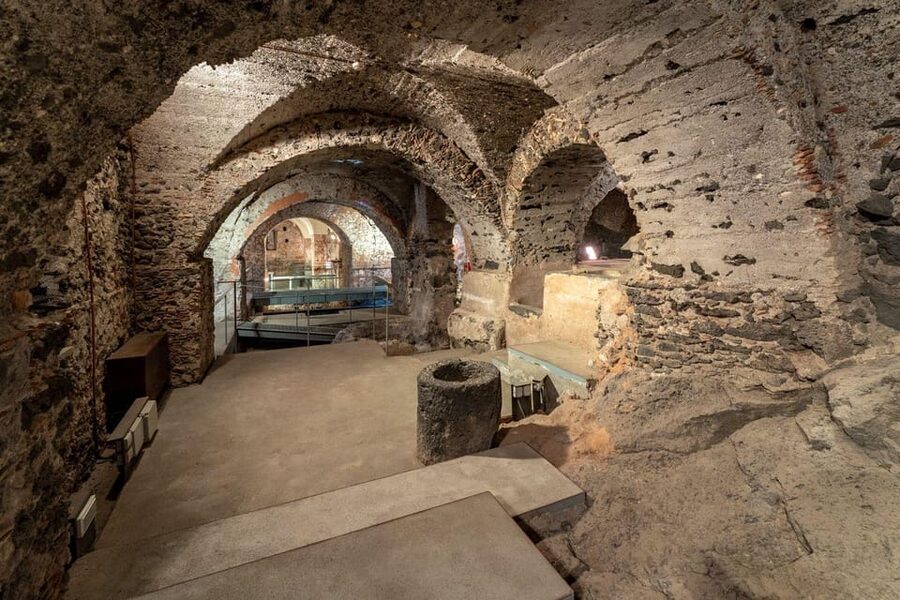
Then there’s the cellar built on the lava, a detail that gives the tour a distinctly Sicilian flavor. Sicily’s landscape is not just scenery here. It’s part of the architecture and the reason certain spaces exist the way they do.
This stop adds a different kind of interest compared with baroque courtyards or cloisters. You’re looking at building choices shaped by environment. It’s a reminder that “heritage” is not only style. It’s also materials, geology, and the survival instincts of communities that had to build on real ground.
In warm weather, underground spaces also feel like a practical perk. Several visitors have called the lower areas refreshing, and it makes sense. Even if you’re not a heat person, stepping from open stone to cooler depths can be a relief.
Vaccarini, Giancarlo De Carlo, and Why the Restoration Took Over 30 Years
The tour doesn’t just show rooms. It explains the transformation process that made them visitable. Restoration took more than 30 years, and the guide connects what you see now to the work required to bring it back into usable form.
Two names come up in the architectural storytelling: Vaccarini and Giancarlo De Carlo. Vaccarini is tied to the work you’ll notice in the architecture, while De Carlo connects to the contemporary refurbishment that makes today’s student use and tour access possible.
For you, this is the difference between “I saw pretty places” and “I understand why this place looks the way it looks.” Restoration is messy. It’s part science, part design decisions, part compromise between old structures and modern needs. When the guide explains it, you start noticing details like transitions between levels and how spaces were adapted without wiping out the past.
The Monumental Staircase and Labyrinthine Corridors
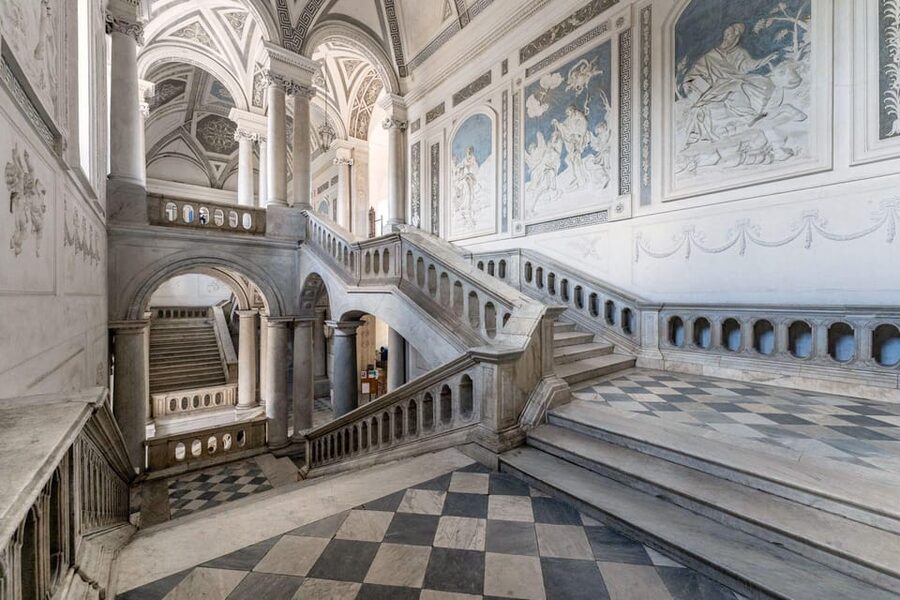
You’ll move through corridors and up a monumental staircase, and that’s one of the tour’s most sensory parts. Corridors in such a complex aren’t just hallways. They shape how sound travels, how light hits walls, and how your sense of direction changes from turn to turn.
I like this moment because it shows the monastery’s scale. This is one of those sites where you feel small in a good way. The building’s size makes it easier to understand the monastery as a power center, not a quiet footnote.
The guide helps you not get lost in your own head. With the explanations, the corridors become a map. Without that, they might feel like “just more rooms.”
Humor, Questions, and Guides Who Keep It Moving
The experience is heavily influenced by the guide. The strongest feedback you’ll find centers on guides who speak excellent English, keep the tour lively, and answer questions patiently. Names you may encounter include Carmen, Giovanni, and Nicola.
This matters because the monastery is complicated. If the guide is dry, you’ll feel lost. If the guide is engaging, you can keep up even if you’re not obsessed with architecture. Many guides are praised for mixing humor with clear explanations, including anecdotes about Catania and how local identity ties to the city and its view of Etna.
That tone makes a short tour feel full. You still cover everything important in 75 minutes, but it doesn’t feel like rushing through a checklist.
Who Should Book This Tour
This is a great fit if you want:
- A structured way to see a huge complex in 75 minutes
- Access to parts you might not be able to visit on your own
- A tour that connects architecture to real daily life, kitchens, storage, and the way institutions function
It’s also a good choice for first-timers in Catania who want one high-impact stop without spending half the day on one site.
If you dislike guided tours or you need tons of personal time in each room, you may feel the pace. In that case, you can still book, but plan to come back later if the place hooks you.
Quick Practical Notes for Your Day
A few details are worth building into your plan:
- You start at the monastery complex near Piazza Dante, so it’s easy to combine with other central Catania sights.
- Your baggage storage is handled at the meeting point, which helps if you’re still traveling between locations.
- If you prefer translated help, written translations in French or Spanish can be provided when English is not your main language.
- The tour is wheelchair accessible, which is a big plus for an older stone complex.
Should You Book the English Guided Tour?
I’d book it if you want one clear, guided route through San Nicolò l’Arena that hits the biggest monastic rooms and the standout layers like the Roman houses and the lava cellar. For the price, you’re getting live interpretation, skip-line entry, and access to areas that make the visit far more complete than a walk-through.
I’d pause before booking only if you strongly care about a specific bonus access point, like a viewing platform, since at least one guest reported it was not available on their tour. If that matters to you, ask in advance so you’re not disappointed.
Overall, this is one of those Catania tours where the time is short but the payoff feels substantial, because the guide turns an architectural maze into a story you can actually follow.
FAQ
How long is the Benedictine Monastery of Catania English guided tour?
The tour lasts 75 minutes.
Where do I meet for the tour?
Meet at the Benedictine Monastery of San Nicolò l’Arena. Pass the main gate on Piazza Dante, and the info point is in the courtyard on the right.
What is included in the ticket price?
It includes access to the monastery (including parts not normally accessible), a live English guide, baggage storage at the meeting point, and skip-the-ticket-line entry.
Is the tour wheelchair accessible?
Yes, the tour is wheelchair accessible.
Is there translation help if I do not speak English?
The tour is in English, and written translations in French or Spanish can be provided if English is not your main language.
Can I cancel and get a refund?
Yes. You can cancel up to 24 hours in advance for a full refund.
Just reviewed in Catania
- Piano Provenzana: Guided Mt. Etna Snowshoeing Trek★ 5.0 · 3 reviews
- Mount Etna: Central Crater Guided Hike for Advanced Hikers★ 4.8 · 106 reviews
- Nicolosi: Mt. Etna Guided Quad Tour Adventure★ 4.2 · 6 reviews
- Nicolosi: Excursion Etna Craters at 3000 mt.★ 4.2 · 3 reviews
- Mount Etna Tour to 1900m from Taormina★ 4.9 · 11 reviews
- Mount Etna: Winery Tour and Tasting★ 4.8 · 92 reviews
- Mount Etna & Taormina Multi-language Tour from Palermo★ 4.3 · 8 reviews
- Mount Etna: trek with vintage car, tasting sicilian produtcs★ 5.0 · 5 reviews
Guided, compared.
Mount Etna: Guided Volcano Summit Hiking Tour with Cable Car
Read our review →
Ancient Theater Skip-the-Line Ticket & Audio Guide
Read our review →
Mount Etna Adventurous Tour with a Volcano Guide
Read our review →
Street Food Walking Tour with Local Guide & Tasting
Read our review →Browse the lists this tour appears in