Reviewed in full · EVENING EXPERIENCES
Siracusa Tour: Ortigia by Night in English
Ortigia at night has a special trick up its sleeve. With the street lamps softly lighting stone and a guide weaving in Greek myth and monument stories, the island’s history feels close, not museum-distant. I like that the route threads together Greek temple remains, Gothic and Baroque architecture, and the calm back streets in one walk. One thing to consider, though, is that it is not a stop-and-go ride. You will be on your feet for the full experience.
What I’d call the best part is the pacing: about 2 hours of wandering with English live storytelling. You are not just looking at buildings, you’re learning how to read them as you move. The tour is also a real walking plan, so comfortable shoes matter.
Highlights That Make This Ortigia Night Tour Worth It
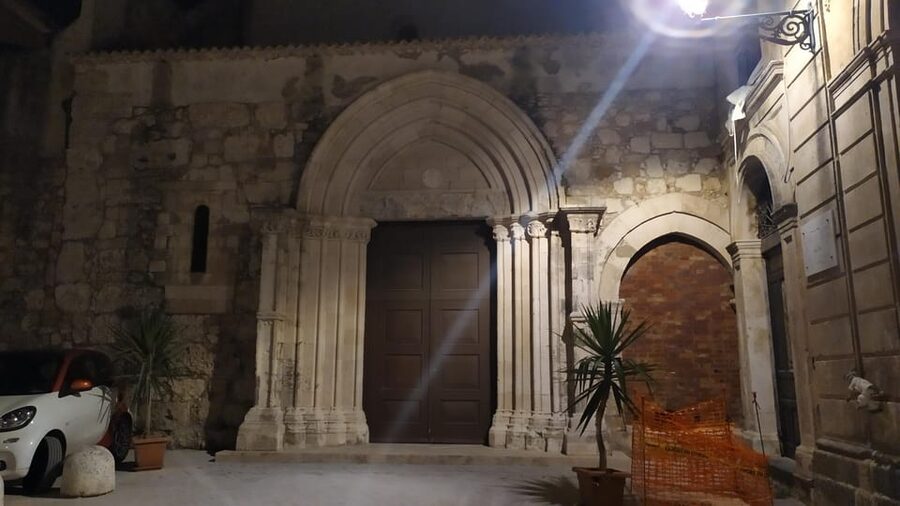
- Apollo Temple at the start: The walk begins at the ruins of the Greek Temple of Apollo, so you get context right away.
- Dim light, big mood: Low lighting from street lamps makes monuments feel dramatic without the harsh midday glare.
- Myths and legends, not just dates: The guide connects the ancient sites to stories that make the stones feel alive.
- A strong mix of styles: You’ll see Greek temple remains alongside Gothic and Baroque palaces.
- A gentle neighborhood feel: You move through alleys and piazzas at an easy nighttime tempo.
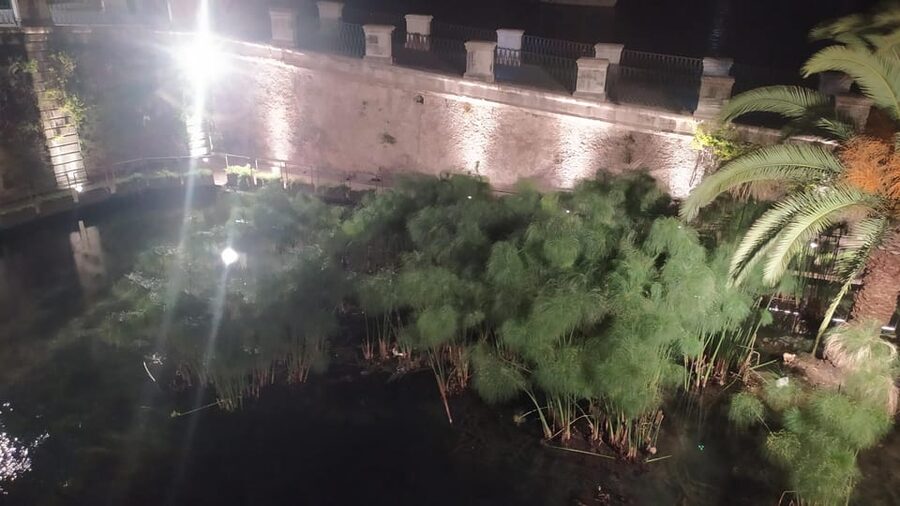
- An ending that feels poetic: The tour finishes at Fonte Aretusa, a fitting Siracusa moment to close the loop.
Ortigia After Dark: What Changes When the Lights Come On
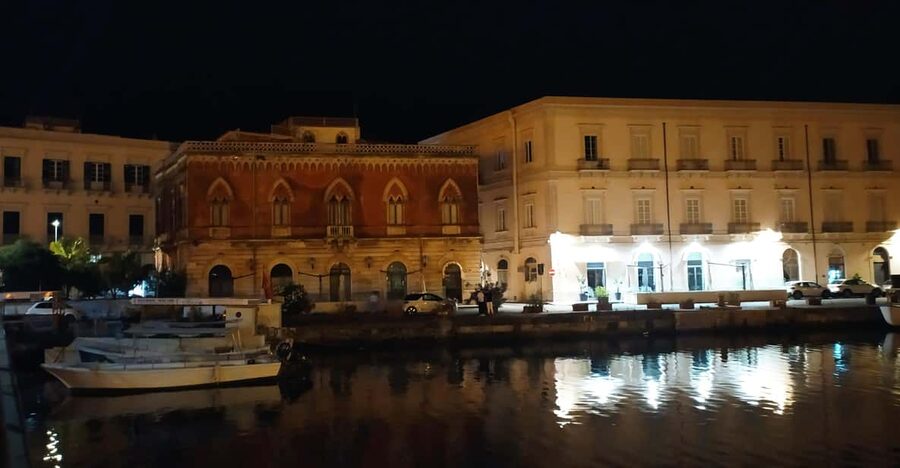
Ortigia, Siracusa’s older core, has a way of turning dramatic after sunset. During the day, you often see architecture as a list of sights. At night, those same stones pick up character because light comes from street lamps and windows instead of the sun.
That matters because the tour is built around atmosphere. You’ll walk through alleys and piazzas, and the guide uses the setting to connect the Greek-era remains with later eras like Gothic and Baroque. The result is that you don’t just memorize what something is. You learn why it matters where it sits.
Also, the time of day is practical. Night makes the walking feel calmer and often more comfortable than peak daytime heat. And since you’re with a live guide, you’re not stuck guessing at what you’re looking at.
Other Sicily options side by side
- Etna Sunset Tour (starting from Catania)
★ 5.0 · 294 reviews - Trapani: Salt Pans Sunset Tour and Flamingo Way
★ 4.4 · 252 reviews - Etna at sunset – 4×4 tour with Sicilian sweet aperitif
★ 5.0 · 247 reviews
Starting at Tempio di Apollo: Set Your Brain to Ancient Mode
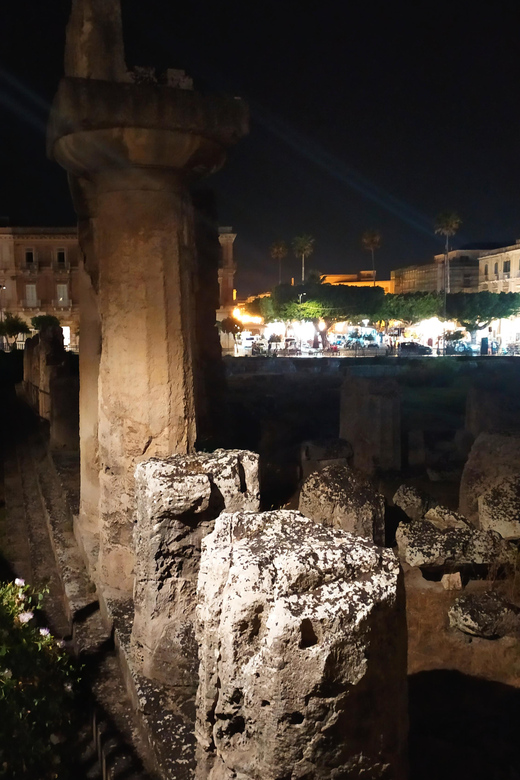
The tour kicks off at the ruins of the Greek Temple of Apollo, the Apollonion area. Starting here is smart because it anchors the whole walk in the oldest layer first. Instead of scrambling for context later, you get the big framework immediately.
At this point, you can expect your guide to focus your attention. You’ll look at the temple remains and hear stories that connect the site to the wider Greek world. Since the tour is billed around seeing Greek temple remains of Apollo and Athens in the narrative, the opening moment helps those references land.
This is also where night lighting can do its best work. Remains look different when you aren’t dealing with hard overhead light. You’ll likely notice shadows and textures more clearly, and it makes the stones feel less like ruins and more like evidence.
Via Dione and Palazzo Montalto: How Side Streets Tell a Bigger Story
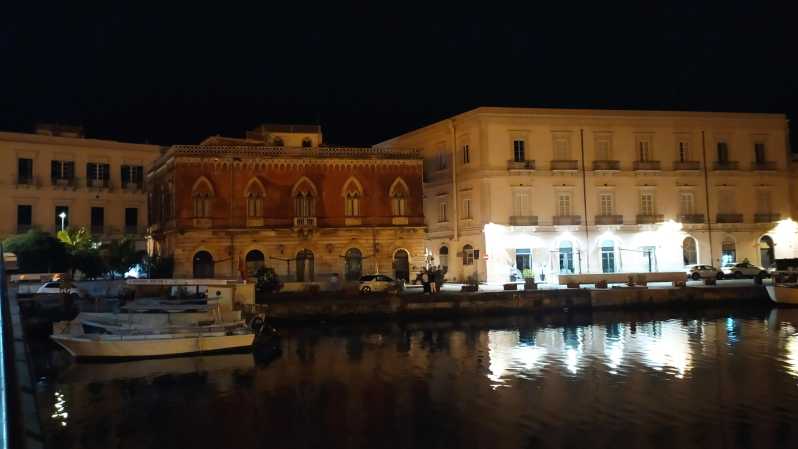
After the Apollo start, you head along Via Dione, with a guided segment around 10 minutes. A street stop may sound small, but it is exactly how Ortigia works. Much of the “wow” is in how neighborhoods are stitched together: narrow corridors of buildings, turns into little plazas, and views that pop up when you least expect them.
Your guide uses these stretches to explain transitions. You’ll hear how the Greek-era foundation ties into the later city. Then, at Palazzo Montalto, the stop is shorter, about 5 minutes, which usually means it’s a pointed, high-impact moment.
What I like about this part of the route is that you don’t spend the whole evening stuck at one big monument. You get a steady rhythm, plus a chance to look at details. Even if you only pick up a few visual cues, the guide’s stories help you remember what you were seeing.
A possible drawback here is that you may want more time for photos at the palace and street corners. The stops are timed, so if you’re the type who likes to linger, just keep your camera ready and move when your guide calls you.
Via della Maestranza: Gothic and Baroque Without the Lecture Tone
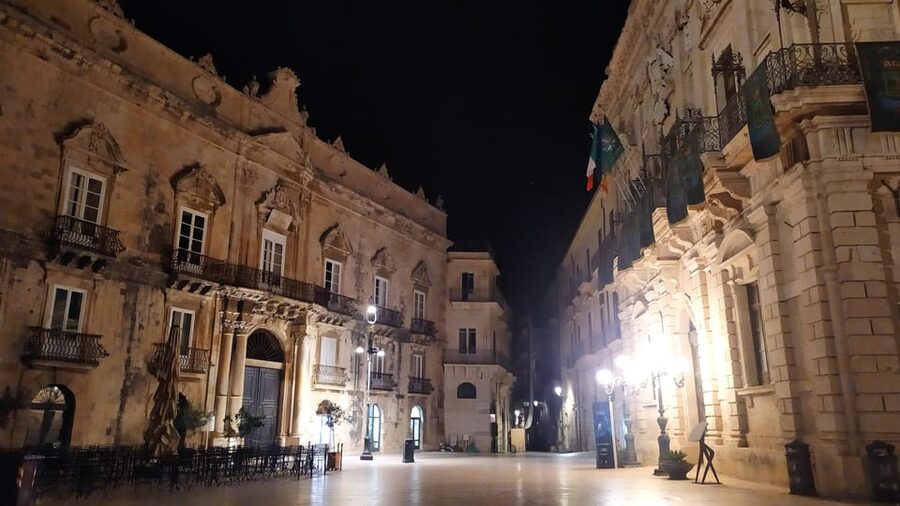
Next comes Via della Maestranza, again around 10 minutes. This is where the tour’s architectural mix really comes through. Ortigia has layers, and your walk helps you notice that buildings are not one uniform style. Gothic and Baroque influences show up in different ways, and at night they can look especially sculptural.
In this segment, the guide typically points out how certain facades, openings, and street layouts reflect shifting tastes over time. Because the tour is English and story-led, you should expect explanations that connect the architecture to people and legends, not only to construction trivia.
I also like that the pacing stays easy. You’re walking enough to feel the district, but not so fast that you miss the details. If you’re visiting for the first time, this is a good way to avoid the common problem of seeing Ortigia as a blur of alleys.
Keep in mind that this is still a night walk. If you’re visiting during a busier season, the streets can be more crowded at certain times. The guide can usually keep the group moving smoothly, but it’s worth expecting a little traffic of foot power.
A different sort of day out around Sicily:
- Etna Morning Trip
★ 4.5 · 1,241 reviews - Syracuse: Boat Trip of Ortigia Island and Sea Caves
★ 4.7 · 937 reviews - Tour of the island of Ortigia and exploration of sea caves with baths.
★ 5.0 · 668 reviews - Pub Crawl Palermo
★ 5.0 · 595 reviews
Via della Giudecca: The Neighborhood Layer You Can Feel
Via della Giudecca comes next, with another guided segment around 10 minutes. This is one of those street names that signals there’s more going on than the surface. Without getting overly academic, the guide uses places like this to sketch the social history behind the stone.
What you can take from this stop is the way Ortigia feels lived in. Even at night, you’re not trapped in a tourist bubble. You’re moving through the working texture of the island’s oldest quarter.
The benefit for you is clarity. The guide’s stories help you connect what you see to why it exists, which makes the evening more than just a route through pretty streets. And once your brain understands the neighborhood layer, you start noticing patterns everywhere: building heights, alley angles, and how piazzas open up.
This is also a great place to slow your walking for a minute and simply look around. The street lamps create a soft glow that changes the mood. You might find yourself pausing more than planned, especially if you like street photography.
Church of Saint John Baptist and Via Roma: Small Stops, Big Compass
The itinerary then includes the Church of Saint John Baptist for about 5 minutes. Short church stops can be surprisingly meaningful on this kind of tour. They act like compass points, reminding you that Ortigia’s story is not only ancient Greek. It’s also layered religious and civic life.
Right after that, you’ll go along Via Roma for around 5 minutes. Via Roma often functions like a visual connector in many Italian cities, and here it helps shift your perspective from the older, tight alley rhythm to a broader street feel.
In these shorter segments, the guide’s job is usually to keep you oriented. You should expect a fast, focused story that gives you something to hold onto even if you barely have time for a photo. This is where the English narration really matters, because it turns quick glimpses into something memorable.
If you’re hoping for long inside visits, this likely won’t be your style. This tour is about guided viewing and storytelling in public spaces. Still, those quick segments can make the walk feel structured and satisfying.
Piazza Duomo at Night: The Grand Pause
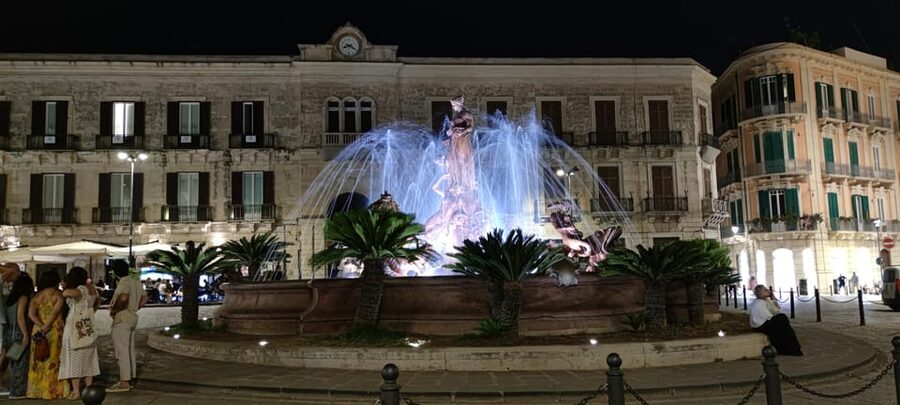
Piazza Duomo is next, with about 10 minutes guided. This is often the emotional center of Ortigia. It’s the kind of square where architecture and atmosphere meet, and night lighting can make it feel almost theatrical.
You’ll likely notice how the monuments relate to one another in the square. The guide may connect what you see back to earlier parts of the walk, including the ancient Greek layer. That helps the evening feel like one story rather than disconnected stops.
This is also a good place to reset. You’ve walked through alleys and smaller streets. In the piazza, you can take a breath, take in the wider view, and let the stories sink in before you finish.
If you’re traveling with a camera, this is the moment you’ll probably want to get the best shots. Light is softer and less harsh, and you can frame monuments with the glow from surrounding streets. Just be mindful of group flow, since the tour is timed.
Finishing at Fonte Aretusa: A Calm Ending to a Lively Story
Your walk ends at Fonte Aretusa. Finishing at a famous place like this gives the tour a natural closing scene. The guide has brought you through ancient remains, palace architecture, and story-filled streets, so the finish point becomes a payoff.
Fonte Aretusa also fits the vibe of Ortigia after dark: a place you can imagine as part of daily life and folklore. It’s a good “stand and look” stop, so even if you didn’t snap every photo, you can still enjoy the moment.
I like that this ending feels reflective rather than rushed. You’re not sprinting to another ticket line. You’re reaching a destination where you can simply absorb the night atmosphere.
And because the whole tour is about connections, your guide’s earlier stories should give you something extra to think about while you’re there.
Why the English Guide Makes a Difference (Galina)
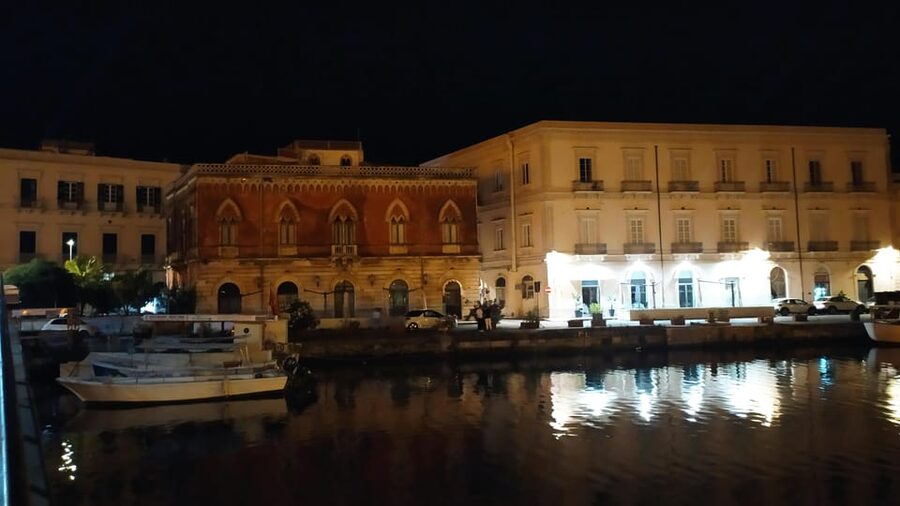
One of the most praised aspects of this tour is the guide. Galina is consistently described as passionate about Ortigia, and you should expect that energy to show up in how she tells myths and monument stories. Instead of dumping information, she tends to make it feel tied to the places you are standing in.
You’ll also appreciate the human touch. People mention that she’s friendly and sympathetic, and that she works well with different group needs, including families. That matters because a night walk can feel very different depending on who’s in your group.
In practical terms, a good guide helps you avoid the biggest Ortigia trap: walking past things without knowing what they are. Here, the narration helps you look longer, remember more, and feel more grounded in the district’s layers.
If you care about understanding what you’re seeing, Galina’s style is a strong reason to book. The experience is not just a scenic walk. It’s a guided reading of Ortigia in nighttime light.
Duration, Group Size, and What It Means for Your Evening
The tour runs for about 2 hours. That’s a sweet spot. Long enough to cover the key stops and have the guide’s stories make sense, short enough that you can still enjoy the rest of your night in Siracusa.
The price is listed as $192.58 per group, up to 1. That setup can make the tour feel like a flexible small-group or private-style experience. For value, what you’re really paying for is the guide time plus the curated route that hits Greek temple remains, architectural stops, and a finishing highlight at Fonte Aretusa.
It’s not just convenience. Without a guide, Ortigia at night can still look pretty, but it’s harder to connect the Greek and later architectural layers. With the tour, the stories give you meaning, and that tends to make the cost feel more justified.
Practical Tips So You Enjoy the Full 2 Hours
Bring comfortable shoes. The route is walking-heavy, and Ortigia streets can be uneven in places. A light jacket can also help, since nights in Sicily can feel cooler as the walk goes on, but that depends on the season.
Bring a camera. Night lighting can make monuments look dramatic, and you’ll have multiple chances to photograph temple remains, palace facades, and the square at Piazza Duomo.
Plan to start with energy. Because the first stop is the Apollo Temple, you’ll want to arrive ready to look and listen, not still figuring out the meeting point.
And if you’re traveling with kids or a mixed-age group, this tour’s story focus tends to work well, as long as everyone’s comfortable walking. The guide has a track record of adapting to diverse interests within a family group.
Who This Tour Is Best For
You’ll likely love this experience if you enjoy walking tours with a story focus. It suits:
- Couples who want a romantic night stroll with real context
- History-minded visitors who want myths and monument explanations
- Anyone who likes architecture, especially when Gothic and Baroque styles share the frame with Greek-era remains
- Small groups or families who want flexible attention from the guide
If you’re after a mostly seated, check-the-box sightseeing plan, this probably won’t fit. The tour is built for movement, street lighting, and narrative pacing.
Also, it is not suitable for wheelchair users, so plan an alternative if mobility access is a priority for you.
Should You Book This Ortigia By Night Tour?
I think you should book it if you want Ortigia to feel understandable, not just scenic. Starting at the ruins of the Greek Temple of Apollo sets the tone, and the later stops connect the district’s Gothic and Baroque architecture to the older Greek world.
It’s also a strong choice if English storytelling matters to you. A guide like Galina adds personality and makes myths and legends land at the exact places they belong. And the finish at Fonte Aretusa gives the evening a calm, satisfying close.
Skip it if you hate walking, or if you need long, slow time at fewer monuments. This is a two-hour evening walk with timed stops, so you need to be comfortable with that pace.
If you’re ready for a night where the stones talk back, this one is a very good use of your time in Siracusa.
FAQ
Where does the tour start and end?
It starts at the ruins of the Greek Temple of Apollo (Tempio di Apollo). The tour ends at Fonte Aretusa.
How long is the Ortigia by Night tour?
The duration is 2 hours.
Is the tour offered in English?
Yes, the live tour guide speaks English.
What is included in the price?
A professional local tourist guide is included.
What is not included?
Hotel pickup and drop-off are not included, and food and drinks are not included.
What should I bring?
Bring comfortable shoes for walking and a camera for photos.
Is the tour suitable for wheelchair users?
No, it is not suitable for wheelchair users.
Just reviewed in Sicily
- Bikes★ 5.0 · 3 reviews
- Full Day Private Boat Tour San Vito Lo Capo – Castellammare★ 5.0 · 101 reviews
- Authentic Sicilian cooking class with Francesca★ 5.0 · 5 reviews
- Best of Godfather and Taormina Tour with Street Food Tasting★ 5.0 · 3 reviews
- Basic Tour of the Soap Museum in Sciacca★ 5.0 · 8 reviews
- Baroque Noto private walking tour★ 4.5 · 15 reviews
- Syracuse Bicycle Rental★ 5.0 · 9 reviews
- Cook, Eat & Embrace Sicily-An Authentic Cooking Experience★ 5.0 · 42 reviews
Evening Experiences, compared.
Mount Etna Morning or Sunset Day Trip with Tasting
Read our review →
Sunset Jeep Tour of Mount Etna and Lava Flow Caves
Read our review →
Valley of the Temples Skip-the-Line Sunset Tour
Read our review →
Stromboli: Sunset Trekking at Sciara del Fuoco
Read our review →