
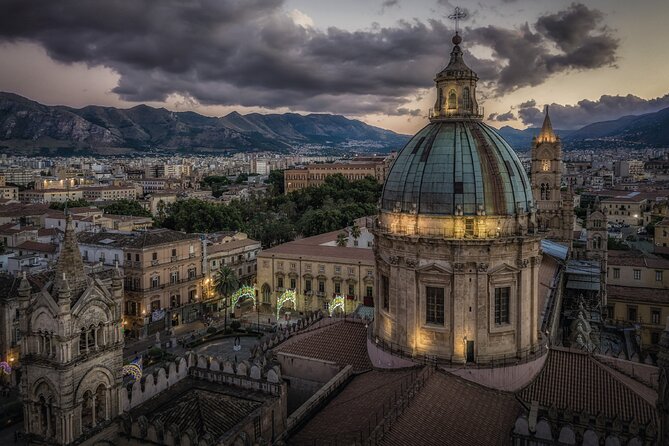
Reviewed in full · WALKING TOURS IN PALERMO
Palermo Walking Tour with Audio and Written Guide by a Local
Palermo works best when you wander with a plan you can bend. This walking experience is interesting because it pairs a local-style audio guide with an easy walking order, so you can pause, replay, and explore at your pace instead of waiting for a group. You also get written info to back up the audio when you want details.
I especially like two parts. First, the Google Maps connection makes the route simple to follow and helps you stay oriented across the historic center. Second, the audio guide plus text covers the big landmarks and the smaller curiosities, so you get more meaning than you would with a quick look-and-go.
One thing to consider: it’s phone-based. You need a smartphone with internet connection, and you’ll have to activate the digital guide using instructions in your voucher. Also, some monument entries cost extra, so have a small cash or card plan for tickets.
Key highlights worth your attention
- UNESCO Arab-Norman focus: San Giovanni degli Eremiti, Norman Palace, and the cathedral area give you the core story of Palermo’s mixed eras
- Big sights, sensible walking flow: the route moves from religious monuments to palaces, then into squares and markets
- Multi-language audio and text: English plus Spanish, Italian, German, and French
- Audio you can use your way: play through your phone speakers or headphones
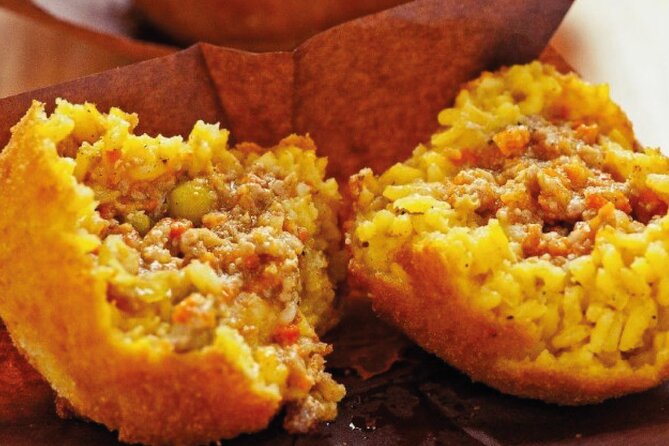
- Market time built in: La Vucciria brings you into the day-to-day Palermo feel
- Restaurant pointers included: you get best advice for authentic local food
Why this Palermo walking route makes sense on your feet
Palermo can feel like it has too many directions at once, streets twisting and neighborhoods changing character fast. This route helps you cut through that chaos by steering you through a logical loop that hits the major landmarks without turning your day into a taxi hunt.
You’re walking between heavyweight UNESCO sites, classic squares, and at least one market, which means you’re not just collecting photos. You’re also seeing how the city breathes, from monumental stonework to everyday street life.
You’ll likely spend about 6 to 7 hours, depending on how often you stop for stories and how long you linger in museums or churches. And because it’s a self-guided setup, you control your timing instead of being yanked forward.
More Walking Tours in Palermo
- Palermo: NO Mafia Walking Tour
★ 4.8 · 2,431 reviews - Palermo Original Street Food Walking Tour by Streaty
★ 5.0 · 2,105 reviews - Palermo: Street Food and History Walking Tour
★ 4.9 · 1,294 reviews
Price and value: what you really pay for
The price is $7.21 per person, which is strikingly low for a full day of audio and text guidance. The catch is that monument tickets are mostly not included.
Here’s the ticket reality based on what’s listed:
- Chiesa degli Eremiti: 7€ (extra)
- Palazzo dei Normanni (Norman Palace): 17€ (extra)
- Teatro Massimo: 12€ (extra)
- Palermo Cathedral: free entry listed
- Quattro Canti, Piazza Pretoria, La Vucciria, La Kalsa: free listed
- Palazzo Abatellis and the Museum of Maioliche Stanze al Genio: tickets not included, costs not specified in the info
So the value isn’t that every building is included. The value is the guidance that turns these stops into a coherent story. With audio and maps, you’re less likely to wander into a dead end, miss the key context, or rush past the parts that actually matter.
And reviews back up this “efficiency” angle. People liked that the route covers the main sights in an order that keeps you moving, while still letting you choose your own pace.
Before you start: the digital guide setup that affects your day
This experience gives you:
- A digital guide to visit Palermo on your own
- Audio and written guidance in multiple languages (Eng, Esp, Ita, De, Fr)
- Best advice for local restaurant with authentic food
- Tips for monuments, history, and curiosities
- Connectivity with Google Maps
- A mobile ticket
What you need from your side:
- A smartphone with internet connection to use the digital guide
- To activate the guide using details in your voucher, and follow the access instructions carefully
One review issue to take seriously: one person said accessing the audio required connecting to a website with a password. I can’t promise that will happen for everyone, but it’s a good reason to test your access route before you head out. If your phone struggles with login steps, your “relaxing walk” can turn into “where’s the audio?”
If you’re the type who likes walking with headphones and stopping when something catches your eye, this will feel smooth. If you hate phone dependencies, plan to bring a power bank.
Stop 1: Chiesa di San Giovanni degli Eremiti and the Arab-Norman story
You start at the Church of Saint John of the Hermits, on Via dei Benedettini 16. This church is part of the UNESCO route for Arab-Norman Palermo. That label matters because it’s not just about one building. It’s about the way Palermo layers cultures.
The site’s background is fascinating. Before the church, there was a monastery dedicated to Saint Hermes. During Muslim rule, the place included a mosque. Later, it shifted to the Benedictines, and the abbot served as a confessor to the king.
Expect an experience where the audio helps you see the building as part of a timeline, not just a pretty church. You’re also told to budget about 25 minutes here.
Practical note: admission is extra (7€), so decide if you want to go in immediately or save it for later in the day depending on your energy.
A different sort of day out around Palermo:
- Palermo: Hop-on Hop-off Bus Tour 24-hour Ticket
★ 3.9 · 2,410 reviews - Segesta, Erice and Salt Pans Full-Day Excursion from Palermo
★ 4.2 · 1,791 reviews - Palermo: Teatro Massimo Opera House Guided Tour
★ 4.5 · 1,573 reviews - From Palermo: Monreale and Cefalù Half-Day Trip
★ 4.2 · 1,354 reviews
Stop 2: Norman Palace (Palazzo dei Normanni), plus what’s under it
Next up is the Norman Palace, also called the Royal Palace. It’s described as the oldest royal palace in Europe, and it sits on older structures dating back to Punic-Roman times. Even underground areas you can still visit are said to show remains of the first Punic settlements.
This is one of those stops where a guided explanation helps a lot. Without context, you might look at the palace and miss what the “layers” idea really means. With the audio and text, you can follow the timeline and understand why the site matters.
You’re given a long block here, about 2 hours. That’s a strong hint: don’t treat it as a quick photo stop. This is where your day can slow down in a good way.
Ticket info: Palazzo dei Normanni admission is listed as 17€ and not included.
Stop 3: Cattedrale di Palermo and Santa Rosalia’s Chapel
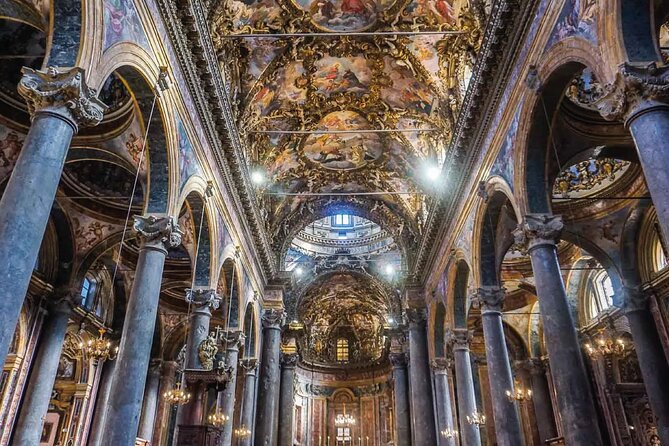
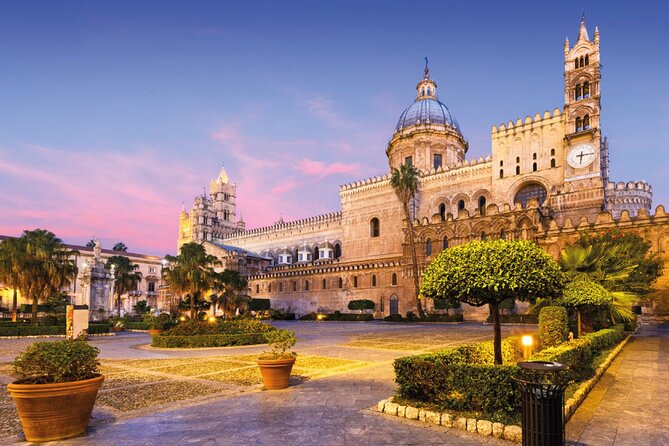
The Palermo Cathedral combines Byzantine, Islamic, and Latin elements. UNESCO lists it as World Heritage, and it’s still an active Christian worship site, plus it houses a Diocesan Museum.
The big reason to stop: it includes the Chapel with the relics of Santa Rosalia, Palermo’s patron saint. You can also learn about the tombs of the Norman kings. So yes, this is religious space. It’s also political and historical space.
Your time here is shorter, about 25 minutes, and entry is listed as free. That makes it a low-risk, high-reward stop. Even if you only skim the key areas with the audio, you’re getting major context for Palermo’s Norman era and the city’s spiritual identity.
Stop 4: Teatro Massimo, Palermo’s opera power
Teatro Massimo is Italy’s largest opera house and the third in Europe, according to the info. It’s also a classic “where old meets new” landmark, positioned between the historic center and the northern expansion.
It’s neoclassical and designed by Giovanni Battista Filippo Basile, which is exactly the kind of detail that makes an audio guide useful. A building like this can look impressive but vague unless you have the story in your ear.
Plan about 1 hour here. Admission is listed as not included, with a ticket cost of 12€.
If you love architecture or theatre history, this can be a highlight. If you’re more into street scenes, you may want to focus on the exterior and audio cues and treat the interior visit as optional depending on energy and budget.
Stop 5 and 6: Quattro Canti and Piazza Pretoria, geometry with attitude
After monuments, the route shifts to urban design. First is Quattro Canti (Piazza Villena), created in the 17th century where Via Maqueda meets Via Vittorio Emanuele, also known as the Cassaro.
The key idea is how the intersection divided the city into four districts, called mandamenti. With audio and text, you can connect the square to the city’s planning logic. It’s the kind of place where you can either shrug at it or actually understand what you’re looking at.
Then comes Piazza Pretoria. It’s famous and also a little infamous because it’s known as Piazza della Vergogna, tied to the fountain in the center of the square itself. You’ll spend about 15 minutes here, and entry is listed as free.
These two stops are great for a midday reset. You’re not paying a ticket. You’re getting structure, views, and context for how Palermo’s old streets were organized.
Stop 7: La Vucciria market, where Palermo feels like Palermo
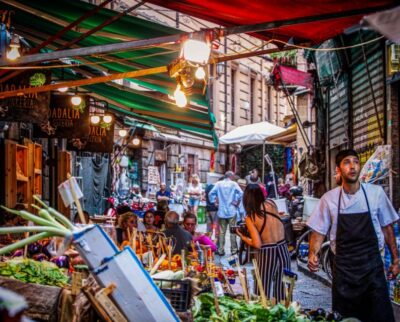
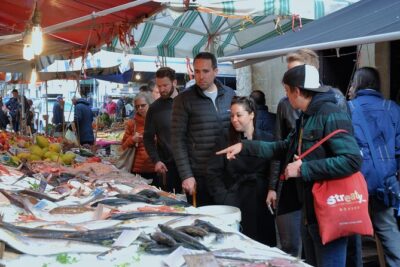
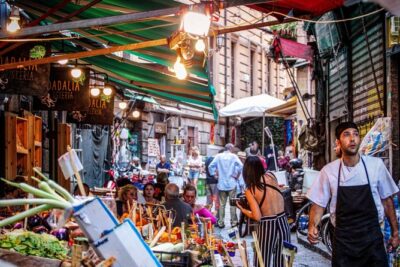
Now for the senses. La Vucciria is one of Palermo’s historic markets, and it’s a must even if you’re not a big shopper. The info notes it was one of the most lively and chaotic central markets in the past, and the name comes from the French boucherie, meaning butcher’s shop. Meat used to be sold here.
The route places it in the historic Loggia district between Via Roma, Piazza San Domenico, and Via Vittorio Emanuele.
Plan about 25 minutes. This is not just sightseeing. This is your chance to see daily rhythms. If you want a snack break, this is a good moment. The included restaurant advice can help you decide whether you’re aiming for something quick and local or a proper sit-down meal later.
Practical advice: markets can be crowded and loud. If your audio is on, keep one ear open for traffic and push through without trying to “hear every word.” The point is to experience the atmosphere while the guide adds background.
Stop 8: La Kalsa, an old neighborhood with an oriental feel
La Kalsa is one of Palermo’s oldest neighborhoods and dates back to the era of Islamic domination. The info says it still keeps an oriental atmosphere, supported by Arab-Norman style monuments.
This stop is only about 15 minutes and entry is listed as free, so it’s more of a walking orientation than a destination that demands long time. Think of it as a bridge between the market energy and the next set of palaces and museum-style stops.
If you like wandering for architecture details, this can be your reward. If you’re tired, treat it as a quick taste and save your energy for the longer indoor visits later.
Stop 9: Palazzo Abatellis, where Gothic meets Renaissance
Palazzo Abatellis sits in Piazza Magione and is a 15th-century example of Gothic and Renaissance architecture. It was built for Francesco Abatellis, a Sicilian nobleman, and the info credits Matteo Carnilivari for the design.
This is a stop that benefits from pausing. The mixed style can be easy to miss if you rush. The audio and text help you spot the shift between Gothic elements and Renaissance influence, so you understand why the building feels like more than one era at once.
You’re given about 1 hour here. Admission is listed as not included, but no price is provided in the info. Build that into your budget planning.
Stop 10: Museum of Maioliche Stanze al Genio and the tile obsession
If you like majolica, this is where you’ll geek out. The Museum of Maioliche Stanze al Genio is a private collection distributed across eight rooms.
The collection is organized by era and geographical origin, with tiles produced mainly in Campania and Sicily between the 15th and 19th centuries. They were used for floors in noble and bourgeois homes, so you’re not just seeing decorative objects. You’re seeing craft made for everyday architecture in elite spaces.
You’re allocated about 1 hour and admission is listed as not included.
This last stop is a smart way to end the day because it turns the “big monument” energy into a more intimate, tactile story. Tiles also give you an easy souvenir plan if you’re the type to want something beautiful but not bulky.
How to pace the 6 to 7 hours without rushing or dragging
Because you’re moving through a mix of free sights, paid entries, and at least one museum, your pace matters. Here’s a practical way to keep it enjoyable:
- Move briskly between paid stops, but don’t cut the free squares short. Quattro Canti and Piazza Pretoria are quick, but they help you understand the city layout.
- Give yourself extra time at the Norman Palace and the Cathedral. Those are your context anchors.
- In the market area, keep it simple. One snack, a quick look, then back to the route.
Also, carry a phone charger. You’ll want your maps working smoothly, and you’ll likely replay audio segments you liked.
Who this Palermo walking tour is best for
This walk is ideal if you:
- Like self-guided travel but still want structure
- Want a route that hits major UNESCO and historic-center stops without a stressful scramble
- Enjoy listening while walking, with audio you can control
- Appreciate local-food direction, not just monuments
It’s less ideal if you:
- Strongly prefer a live guide and don’t want phone-based access
- Hate managing logins or internet-dependent apps
- Want every single attraction included in the ticket price (several key sites have additional admission costs)
The route should work for most travelers, and service animals are allowed. If you plan to use headphones, remember that streets and crossings in historic centers still require full attention.
Final verdict: should you book this Palermo walk?
If you want an efficient introduction to Palermo with strong context, I think this is a smart buy at $7.21. The route makes sense, the audio is described as detailed and easy to use, and the Google Maps connection is a big deal for keeping your day smooth.
I’d only hesitate if you know you’ll be annoyed by smartphone dependence, especially if you might run into password or activation steps. If you’re comfortable troubleshooting tech on the go, this is an easy way to get a memorable Palermo day without paying for a full live-guiding experience.
FAQ
What languages does the audio and written guide include?
The guide includes audio and text in English, Spanish, Italian, German, and French.
Is this tour self-guided or led by a live guide?
It uses a digital guide with audio and written instructions that you follow on your smartphone.
How long does the Palermo walking experience take?
The duration is listed as about 6 to 7 hours.
Which monument tickets cost extra?
Chiesa degli Eremiti is listed at 7€, Palazzo dei Normanni is listed at 17€, and Teatro Massimo is listed at 12€. Palermo Cathedral is listed as free, and Quattro Canti, Piazza Pretoria, La Vucciria, and La Kalsa are listed as free. Other stops are noted as not included without specific prices.
Do I need internet to use the guide?
Yes. The information says you will need a smartphone with an internet connection to use the digital guide.
Where does the experience start and end?
It starts at Church of Saint John of the Hermits, Via dei Benedettini, 16, Palermo. It ends at the Rooms at the Museum of majolica Genius, Via Giuseppe Garibaldi, 11, Palermo.
Just reviewed in Palermo
- Sicilian Winery Tour with Wine Tasting from Palermo★ 5.0 · 12 reviews
- Palermo: Medieval castles of Caccamo & Cefalù. Small Group Tour★ 5.0 · 24 reviews
- Traditional Sicilian Recipes in Palermo★ 5.0 · 4 reviews
- Palermo on a plate: Traditional Food & Wine tour (by Streaty)★ 5.0 · 119 reviews
- Valley of the Temples★ 5.0 · 43 reviews
- Private Transfer from/to Trapani★ 5.0 · 3 reviews
- Private Transfer from/to Castellammare del Golfo★ 5.0 · 24 reviews
- Transfer From Palermo to Catania with a Stop in Agrigento Valley of Temples★ 5.0 · 35 reviews
Walking Tours in Palermo, compared.
Palermo Original Street Food Walking Tour by Streaty
Read our review →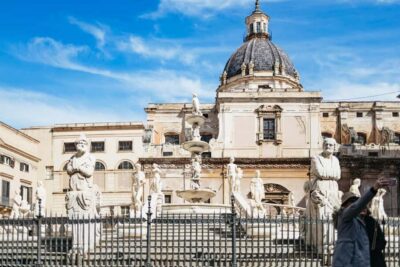
Palermo No Mafia walking tour: discover the Anti-mafia culture in Sicily
Read our review →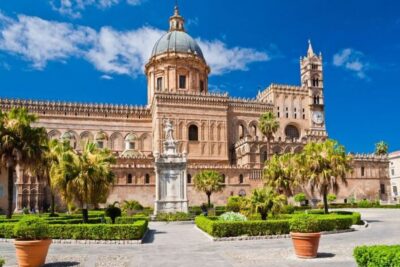
Street Food Walking Tour with Local Guide & Tasting
Read our review →
UNESCO World Heritage Sites Guided Walking Tour
Read our review →Browse the lists this tour appears in