
Reviewed in full · MOUNT ETNA TOURS
2002 Crater Excursion – Northern Etna
A crater-focused hike on the quieter north side of Mount Etna is interesting because you’re not just looking up, you’re walking the route the 2002 eruption carved. Starting and ending at Piano Provenzana, the whole outing feels like a guided story you can step through.
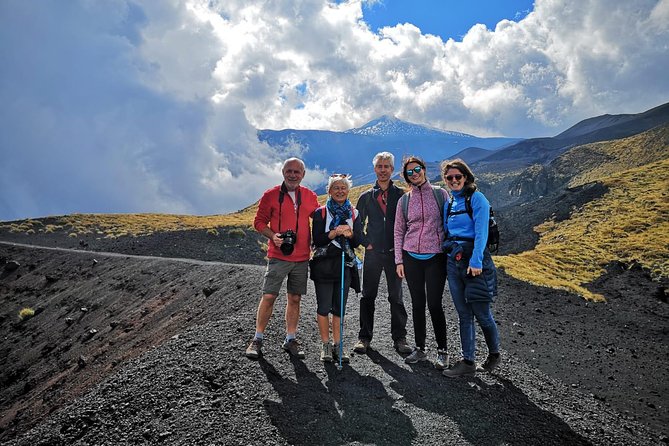
I love the combo of an authorized volcanology guide and a hike that stays realistic. If you get a guide with the friendly, funny style of Giuseppe or Luca, you’ll likely get clear explanations plus moments of laughter, not a dry lecture. I also love how much you actually see in about 3 hours, including the buried remnants of places that now sit under lava, and the chain of old craters along the way.
One possible drawback: the route can bring you near crater edges, and the guidance notes say vertigo may be an issue for sensitive folks. You also need proper trekking shoes, because without adequate shoes you are not covered by accident insurance, even though the tour is not technically hard.
Key highlights worth knowing
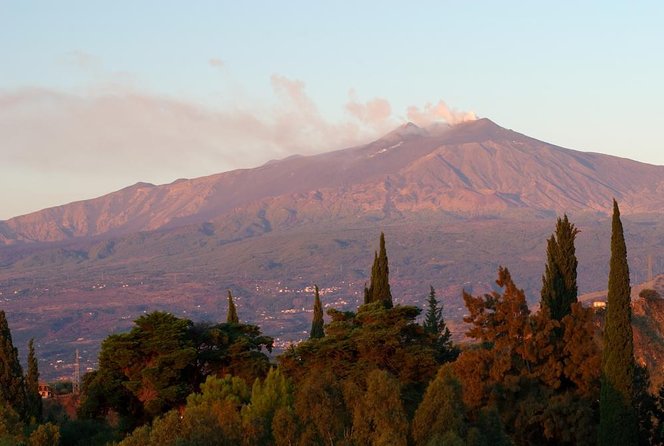
- North-side Etna, less crowded than many other routes, with a calmer start at Piano Provenzana
- Walk the 2002 lava flow and see what’s left after hotels and facilities were buried
- Crater-edge moments along the eruptive fracture, with volcanic bombs in the canyon
- A guide-led pace with natural breaks that keep the hike doable for most people
- Compact day on Etna at about 3 hours total, not a whole day grind
Mount Etna’s North Side, the 2002 Story You Can Walk
This excursion is built for people who want Etna to feel real, not just scenic. You meet at the Etna North guide office in Linguaglossa (Via Provenzana, 35) at 9:15 am, then you head to the base area on the north side where the volcanic terrain is dramatic even before you start climbing.
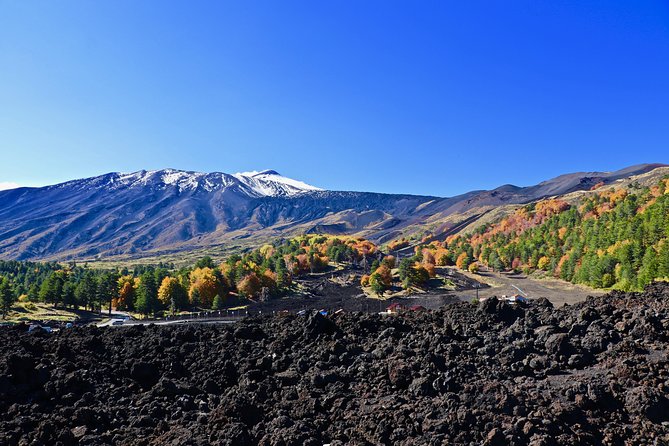
The big hook is the 2002 eruption route. The hike follows a path across the massive 7.2 km lava flow from the October 27, 2002 event. You’re also moving through older lava flows, including areas tied to the 1911 and 1923 eruptions, and you end up near the eruptive fracture system that produced the destructive flow.
What makes the north side especially appealing is the atmosphere. Piano Provenzana is described as less crowded than other Etna stations, and in real life that means fewer bottlenecks, less waiting, and more time to watch the details underfoot and in the rock walls around you. It’s a practical choice if you want Etna time that still feels like you left the crowds behind.
More ways up Etna from Sicily:
- Etna Morning Trip
★ 4.5 · 1,241 reviews - Mt. Etna nature and flavors half day Tour from Catania
★ 5.0 · 545 reviews - Etna excursion 3000 meters with 4×4 cable car and Trekking
★ 4.5 · 504 reviews
Meeting Point and Start Timing That Actually Works
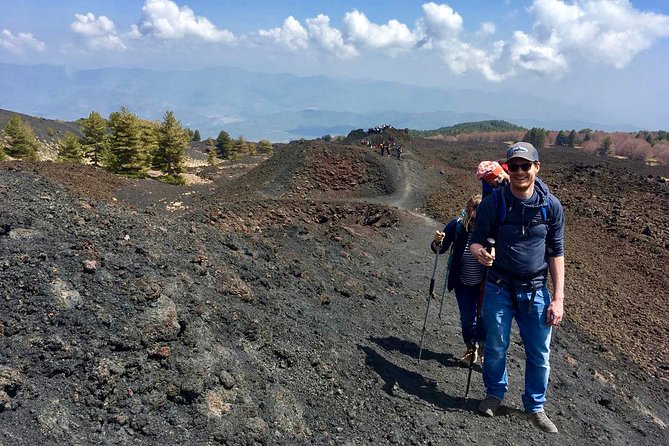
The tour starts at Ufficio Guide Vulcanologiche Etna Nord, Via Provenzana, 35, 95015 Linguaglossa CT, Italy. The start time is 9:15 am, and the activity ends back at the same meeting point.
This matters because it keeps the day tidy. You’re not negotiating a full-day transfer or getting stuck waiting for hours. Also, you’re starting from a place with services: the area around Piano Provenzana has souvenir shops, cafés and bars, plus spots to refill water bottles.
Practical note: there’s no pickup service from your accommodation. If you’re staying in or near Catania or Taormina, plan on driving or arranging your own transport to Linguaglossa and the meeting area. Parking is not included, and you’ll need to pay the day rate on site.
Stop 1 at Piano Provenzana: Quiet Setup, Ski Resort to Volcano Base
Piano Provenzana is where you settle in before the hike truly begins. It’s on Mount Etna’s north side and is reachable by private or rental car on fully paved roads. The area sits among pine forest and lava fields, and it’s shaped by the October 2002 eruption, which destroyed the original facilities and left a volcanic scene of real historic interest.
You get about 30 minutes here. Use it well.
What to do in that window:
- Grab water refills since bottled water is not included
- Check your gear, especially shoes
- Take a moment to scan for the kind of ground you’ll be walking on, because volcanic soil can be incoherent and unstable
- Ask your guide any quick questions, since the guide controls what you do based on conditions
In winter, Piano Provenzana is a ski resort, and in summer it becomes a launch point for guided hikes and excursions. Even if you’re not in a ski season, you’ll notice the infrastructure mindset here: it’s built to host people moving outdoors.
The drawback at this stage is subtle: if you arrive without the right shoes, you’re setting yourself up for stress. The tour explicitly states that without adequate shoes you are not covered by accident insurance.
Stop 2 Across the 2002 Lava Flow: What You See Is the Point
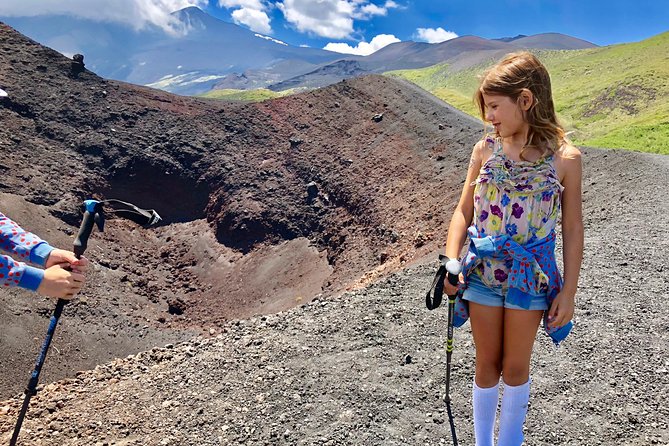
This is the heart of the excursion. The hike is about 5 km round trip, with roughly 300 m ascent and descent. It’s guided and lasts about 2.5 to 3 hours, with Stop 2 itself clocked at around 2 hours on the schedule.
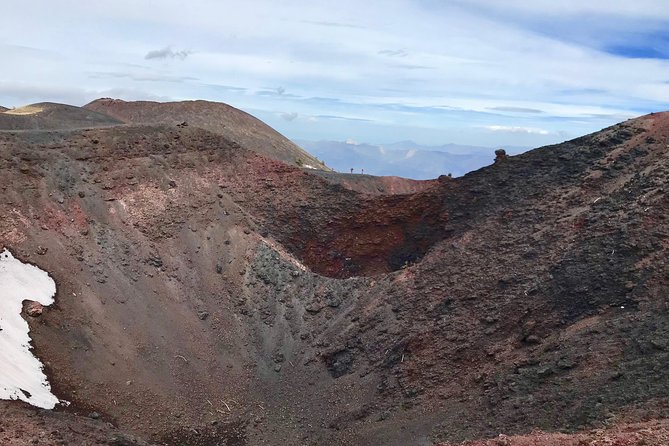
You’ll cross the 7.2 km lava flow from the October 27, 2002 eruption. In this section, the scale of the eruption becomes obvious fast: you can walk through land that forced hotels, shops, restaurants, and a large car park to be buried. Only the roof of one hotel remains visible. That visual is the kind of detail that makes Etna feel personal, not abstract.
Then the route continues through forest and across older flows:
- Through areas tied to the 1911 and 1923 eruptions
- Past a chain of craters formed in 1911, with shafts reported to be 7 to 40 m deep
- Up toward the huge 2002 eruptive fracture, described as a canyon strewn with volcanic bombs
The “bombs” detail is one of those things that sounds dramatic until you’re standing close enough to see how violent the material can look. It’s not a place for rushing, because the ground can be uneven and volcanic soil can shift underfoot.
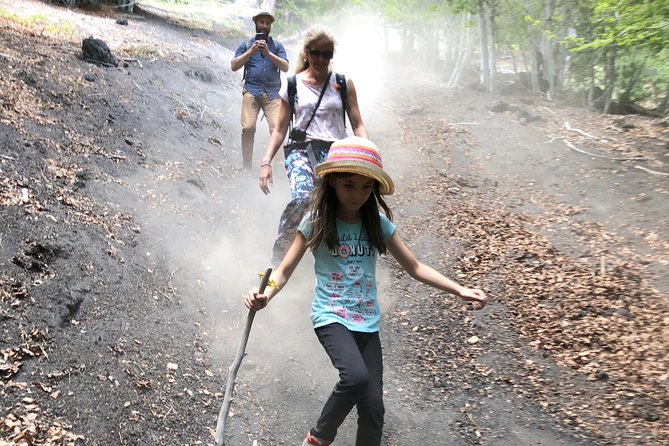
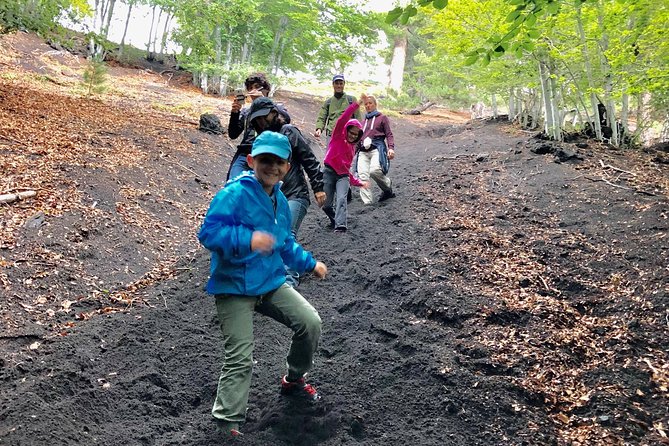
Next comes the descent. You’ll follow soft ash channels through beech forest and ski slopes back toward the start area. This is where good footwear earns its keep. Several comments highlight that taller boots can help on the downhill, and hiking sticks can make the lava rock crossing easier. Trekking poles are not included in the tour, but if you have them, they can be worth bringing depending on your comfort level.
A different sort of day out around Sicily:
- Syracuse: Boat Trip of Ortigia Island and Sea Caves
★ 4.7 · 937 reviews - Tour of the island of Ortigia and exploration of sea caves with baths.
★ 5.0 · 668 reviews - Pub Crawl Palermo
★ 5.0 · 595 reviews - SALT TOUR-all inclusive: salt tour: Trapani, Paceco, Nubia
★ 5.0 · 589 reviews
Stop 3 Back at Piano Provenzana: Wrap-Up With a Clearer Head
After the hike, you return to Piano Provenzana, where Stop 3 is another block of about 30 minutes. This is your decompress time, not a second hike.
Use it for practical things:
- Check how your legs feel before you drive further, especially if you’re continuing the day elsewhere in Sicily
- Refill water again if you need it
- Take a last look at the lava terrain while it’s still fresh in your mind
This stop also reinforces a big point of the tour: you are not just collecting photos. You’re mapping a volcanic event onto real terrain. The return makes that easier to grasp.
How Hard Is It, Really? The “Easy” Part and the “Pay Attention” Part
The tour notes say trekking is not recommended if you usually do little motor activity. It also says the trek does not have particularly difficult passages and can be manageable for most people, as long as you’re in good physical health and you do not have certain conditions like cardio vascular, respiratory issues, or hypertension.
What you should take seriously:
- The route includes ascent and descent (about 300 m total elevation change)
- Volcanic soil can be incoherent and unstable
- Vertigo can be a problem near crater edges
- You’re treating volcanic ground with care, because it can shift in ways normal hiking trails often do not
So I’d describe it like this: it’s a solid hike, not a hardcore climb, but it’s not a walk in the park. You’ll want steady pacing and shoes that grip.
If you’re traveling with kids, this kind of route can still work, because the guide handles pacing and breaks. If you want a kid-friendly day, plan on your child sitting the break times out if needed and not sprinting ahead on the craters.
The Guide Makes the Difference: Facts, Breaks, and Fun
This tour is authorized to use a volcanological guide, and that license matters. You’re not just walking through lava. You’re learning what you’re seeing and why it happened.
The best part, based on what people consistently praise, is how guides use explanations that fit the hike. You get breaks timed so the trek stays doable. You also get tips for steep sections on the way down, which is exactly when most people start losing confidence.
A few people specifically call out guides like Giuseppe and Luca for being friendly and highly engaging, sometimes mixing humor into the science. Even if your guide is more quiet, the common thread is that you’ll be guided with a focus on safety and understanding, not lectures.
And yes, there can be fun moments. Some descriptions mention a playful race at the end. That tells you something about the vibe: this is not stiff. It’s practical, but not joyless.
What’s Included, What Isn’t, and How to Pack Smart
The tour includes:
- Accident insurance
- An authorized volcanological guide
Not included:
- Bottled water
- Trekking shoes (you can rent them on site for €5 per pair)
- Hat and gloves (especially in winter, spring, and autumn)
- Trekking poles
- Pickup service from your accommodation
- Parking Fees (parking ticket is €5 for the entire day on weekdays and €8 on Sundays and public holidays)
- Snowshoe rental in winter at €15 per person (paid on the spot)
Here’s how I’d pack for this kind of ground:
- Shoes first. If you don’t have good trekking shoes, rent them on site so you meet the requirement for accident insurance coverage.
- Long pants are a smart idea. The terrain can be irregular and coarse.
- Bring a hat and gloves if the season calls for it. Weather can shift, and the guidance specifically calls out these items for cooler times of year.
- Skip the idea of “light and thin.” Even if it feels warm at the base, volcanic ground can be abrasive and your legs will notice.
Also, remember that most travelers can participate, but not everyone should. If you’re unsure about cardio or respiratory limits, the tour notes are clear that people with certain conditions should reconsider.
North Etna Value: Why This $43.55 Feels Fair
At $43.55 per person, you’re paying for something more than access to a view. You’re paying for a guided, safety-minded hike with an authorized volcanological guide and accident insurance.
The value comes from three things:
- Time efficiency: about 3 hours total, so you can fit this into a Sicily itinerary without losing a whole day.
- Real-world geology: you walk across the 2002 flow and near crater features, not just a scenic overlook.
- Guide-led learning: the science is tied directly to what you step on, which makes it stick.
If you’re the type who hates paying for tours that feel like a slow line of photo stops, this one is built differently. You earn the experience on foot.
When Weather Changes the Plan
This excursion requires good weather. If conditions are poor, you’ll be offered another date or a full refund. Guides can also change the itinerary or interrupt the activity if environmental, atmospheric, or volcanic conditions change in a way that affects safety.
This is one reason to treat Etna as a “flexible block” in your schedule rather than a locked event. If a day turns icy, stormy, or otherwise unsafe, you want to be able to shift plans.
Who Should Book This and Who Might Skip It
Book this tour if:
- You want to see Mount Etna’s north side and prefer fewer crowds
- You’re comfortable with a 5 km hike and about 300 m of climbing and descending
- You like learning while you move, especially about the 2002 eruption and older flows like 1911 and 1923
- You want a guide who helps you manage steep bits, keep the pace, and stay safe near crater edges
You might skip this tour if:
- You get strong vertigo or you know crater-edge terrain triggers anxiety
- You usually do little motor activity and think you might struggle with sustained hiking
- You have cardio vascular, respiratory issues, or hypertension and want to avoid anything outside your comfort range
Should You Book the 2002 Crater Excursion on Northern Etna?
If you want Etna to feel hands-on, not just watched from a distance, this is a strong pick. The north-side setting at Piano Provenzana makes it calmer, and the route is tightly focused on the 2002 story, plus older eruption traces that you can actually walk through. You also get guide support plus accident insurance, which is a comfort multiplier for volcano hiking.
My simple decision rule: if you can handle steady hiking and you have (or will rent) proper trekking shoes, you’ll likely leave with that rare mix of awe and understanding. If crater edges make you uneasy, or if your fitness level is low, choose a gentler Etna option instead.
Just reviewed in Sicily
- Pillirina, Ortigia, Sea caves: Boat Tour and Snorkeling★ 4.4 · 7 reviews
- Etna Southern Slope Guided Easy Trek★ 4.8 · 36 reviews
- Lampedusa: Dolphin watching with aperitif at sunset★ 3.2 · 9 reviews
- Hot spring and Temple★ 5.0 · 3 reviews
- From Trapani: Egadi Islands Day Tour by Boat★ 4.7 · 23 reviews
- From Taormina or Messina Port: Body Rafting + Lunch★ 4.7 · 3 reviews
- Enoteca dell’Etna: Iemu Spizzicannu Tasting★ 5.0 · 9 reviews
- Capo d’Orlando: Mini-cruises to Vulcano, Panarea, Stromboli★ 2.2 · 6 reviews
Mount Etna Tours, compared.
Mount Etna Morning or Sunset Day Trip with Tasting
Read our review →
Mount Etna: Guided Volcano Summit Hiking Tour with Cable Car
Read our review →
Sunset Jeep Tour of Mount Etna and Lava Flow Caves
Read our review →
Mount Etna: Trek to 3000m with cable car and jeep
Read our review →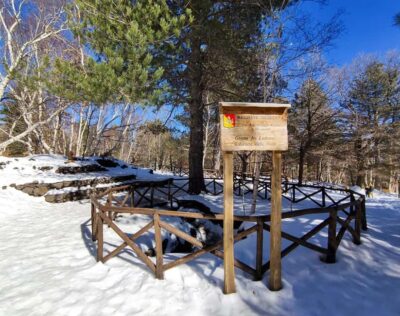
Etna and Alcantara Gorges Full-Day Tour with Lunch
Read our review →
Mount Etna: Roundtrip Cable Car and 4×4 Bus Ticket
Read our review →
Mount Etna Trekking Trip off the Tourist Path
Read our review →Browse the lists this tour appears in