Reviewed in full · TOURS
Archaeological excursion to the Rocca della Falconiera in Ustica
Rocca della Falconiera is interesting because it turns one rocky hill into a timeline, Roman stone spaces, island exile history, and a wide panorama all in one outing. I like that the visit connects Roman hypogea with what people believed about death, not just what archaeologists found. You also get the payoff view from the top, where Ustica suddenly makes sense as an island and a crossroads.
Two things I really like here: the way the guide brings Antonio Gramsci, Amedeo Bordiga, and Nello Rosselli into the story of Ustica, and the focus on the island’s physical clues, including the only volcano on Ustica that’s still visible. The result feels practical and human, not like reading a museum placard for two hours.
One consideration: you’re walking and climbing up to the hilltop, so plan on a bit of effort, and this experience depends on good weather. Also, bottled water is not included, so bring a small bottle if you get thirsty while climbing.
Key things you will notice on this Rocca walk
- Roman hypogea tied to burial meaning: you learn how the rock-cut spaces were understood as sacred places connected to death
- The exile island thread, from the 1920s to the 1960s: you connect Ustica’s confinement history with major political figures
- A volcano story you can actually see: the tour points out the island’s only still-visible volcanic element
- Via Calvario to the fortress viewpoint: the route is part history lesson, part gradual climb
- A guide who tells with humor and clarity: Vittorio is repeatedly praised for storytelling that keeps people engaged
- A manageable group size: with a maximum of 75 travelers, you should feel part of the group rather than lost in a crowd
Rocca della Falconiera: Roman necropolis spaces and the view you came for
This is not just a quick photo stop. You enter Rocca della Falconiera, a place described as home to several civilizations, and the core of the archaeology centers on Roman burial spaces. The big idea is that you are not only looking at old rooms. You’re being guided through how people understood death, and why those hypogea mattered.
Inside the story, the Roman chapter is especially strong. You’ll be shown the Roman hypogea and the necropolis reality, with an explanation of the sacredness of death. That framing changes how you look at the stonework. You start to notice the logic of the layout and the quiet atmosphere, even when you’re only there for a relatively short part of the tour.
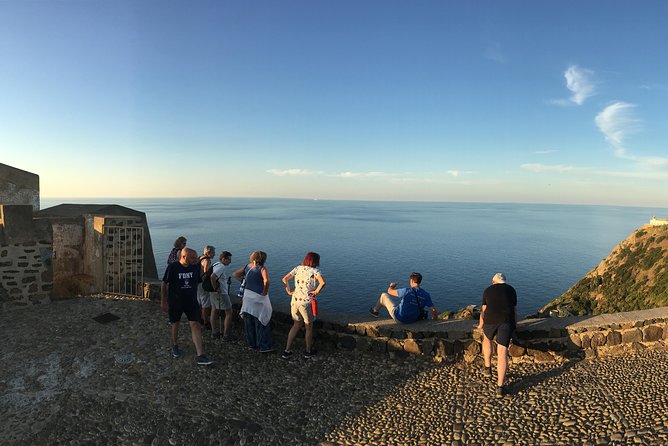
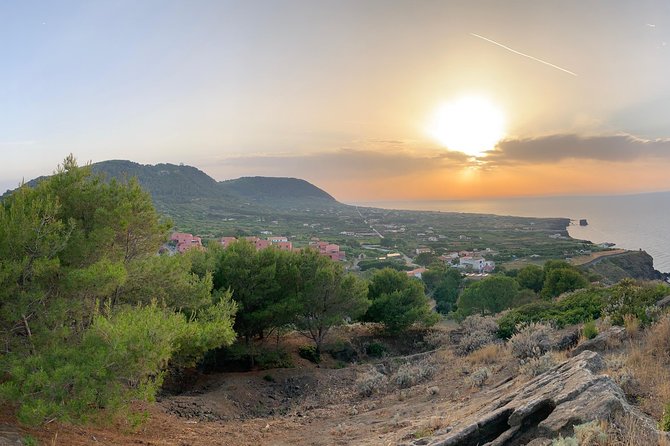
Then you get the payoff that makes Ustica feel like Ustica. The walk ends with a climb to the top of the hill, and from there you can admire a panorama of the whole island. On an island this small, distance cues matter. From the fortress vantage point, you get a better sense of where everything sits, including the coastline and the terrain that makes the Roman and later chapters possible.
What to watch for: the view is the end goal, so don’t spend all your energy sprinting ahead. Keep a steady pace, because you’ll want time to look out over the island after the final climb.
Also running in Sicily:
- Etna Morning Trip
★ 4.5 · 1,241 reviews - Syracuse: Boat Trip of Ortigia Island and Sea Caves
★ 4.7 · 937 reviews - Tour of the island of Ortigia and exploration of sea caves with baths.
★ 5.0 · 668 reviews
Via Calvario at 6 pm: how the route turns history into a walkable story
The tour starts at 6:00 pm at Via Dottore Mario Randaccio, 11 in Ustica, with the experience returning back to the meeting point. Even if you’re not a “history person,” the timing helps, because the island light at evening often makes stone and sea scenery feel more dramatic.
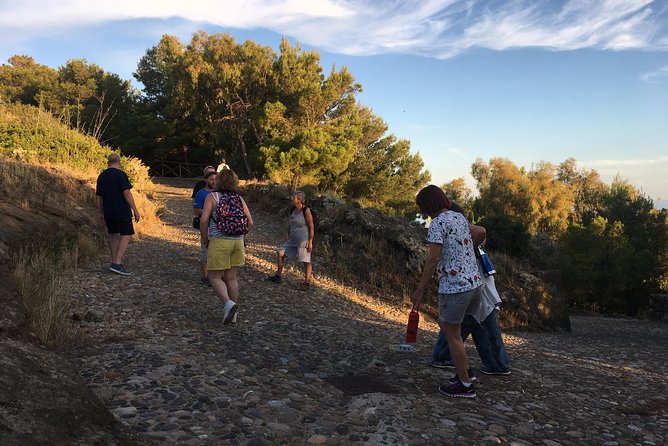
You begin along via Calvario, and that route matters. It’s where the guide can connect the human story to the geography. As you walk, you hear about the history of the two wars and the confined people who lived on the island. Then the tour pivots into the Roman chapter, moving from lived experience to rock-cut architecture.
Walking through an archaeological site works best when it’s paced. Here, the structure is built around that. There is a clear sequence: walk the route, cover the key historical themes, enter the Roman spaces, then finish with the hilltop climb for the panorama.
Possible drawback: because it’s evening, your visibility is more sensitive to weather and light. If skies are hazy or rainy, the view may not hit as hard. That’s one reason this experience is weather-dependent.
Ustica’s 1920s to 1960s confinement story, plus the big names you can place
What makes this tour feel more than generic archaeology is the way it ties Ustica’s past to specific people and specific decades. The tour includes an overview of the history of the confined people from the 1920s through the 1960s. That’s a long span, and it gives you time to understand Ustica not as a single event, but as a place used in different political moments.
And it does not stay abstract. You hear about historical personalities linked to that story: Antonio Gramsci, Amedeo Bordiga, and Nello Rosselli. Even if you only know one or two names, it helps to hear them connected to an island you can stand on. You’re not just memorizing facts. You’re building a mental map of why Ustica mattered.
Then the guide brings in the theme of “the two wars.” That context helps explain why places like this became important. Ustica’s story becomes a mix of political history and strategic geography, with the archaeological site acting as the physical anchor.
If you enjoy tours that connect past and place, this is a strong match. If you only want Roman archaeology and nothing else, you may find the broader historical framing a lot. But the way it’s delivered seems designed to connect the stone site to the lived island experience.
The still-visible volcano clue: why geology matters for understanding Ustica
You’ll also hear about the island’s volcano element, specifically the only volcano on the island that is still visible. That’s the sort of detail that makes a small island feel real in your head. Without geology, Ustica can seem like a pretty dot in the sea. With it, you start to understand why the landscape looks the way it does, and why certain locations become strategic or sacred.
This part of the tour is typically delivered as a guided explanation while you’re on the walk and before you reach the final viewpoint. That timing helps. When you hear a geology story, you want to see it immediately, not later from memory.
If you’re traveling with kids or anyone who likes science but hates lectures, this volcano element is a good bridge. It adds a different kind of curiosity without derailing the overall flow.
A different sort of day out around Sicily:
- Pub Crawl Palermo
★ 5.0 · 595 reviews - SALT TOUR-all inclusive: salt tour: Trapani, Paceco, Nubia
★ 5.0 · 589 reviews - Mt. Etna nature and flavors half day Tour from Catania
★ 5.0 · 545 reviews - Boat tour Giardini Naxos Taormina Isola Bella Blue Grotto
★ 4.5 · 541 reviews
Entering Roman hypogea: what “sacredness of death” changes in your perspective
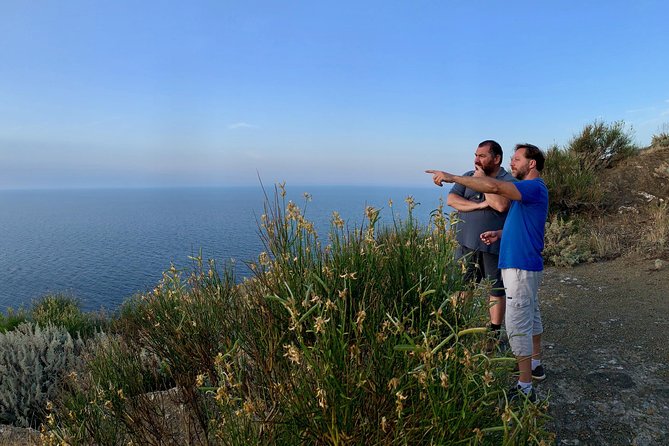
Roman burial spaces can feel cold or confusing if you treat them like a checklist. Here, the tour gives you a concept: the Romans understood these spaces as sacred, connected to death in a meaningful way. When you hear that ahead of entering, your brain starts reading the site differently.
Instead of just noticing rock-cut forms, you think about the ritual logic behind them. You also notice the quietness more. Even in a short visit, that shift makes the experience feel more like a human story and less like a technical stop.
This is also where the “necropolis stands out” idea becomes clear. Ustica’s archaeology is not just a few scattered stones. It’s tied to an organized burial reality that reflects Roman practices and beliefs.
One practical note: stone interiors and rock spaces can feel cooler. If you tend to get cold easily, bring a light layer even in warm months.
The guide factor: why Vittorio’s storytelling style matters on this tour
You’ll be in good hands with the guide behind this excursion, often described as Vittorio Arnò. The repeated theme in the feedback is that his presentations are engaging, clear, and often funny. That matters more than it sounds.
Archaeology and island history can become heavy if the guide just recites dates. With Vittorio’s style, you get a story arc. You get context. And you get little moments that keep people paying attention.
Several comments also highlight that he makes people feel welcomed, like you’re discovering the island with a friend who genuinely cares about it. That’s not fluff. On a 2-hour tour with walking and an evening start, the “keeps it moving” effect is real. You’re less likely to feel bored or lost when the narrative is strong.
Price and logistics: is $20.90 good value for a 2-hour Rocca experience?
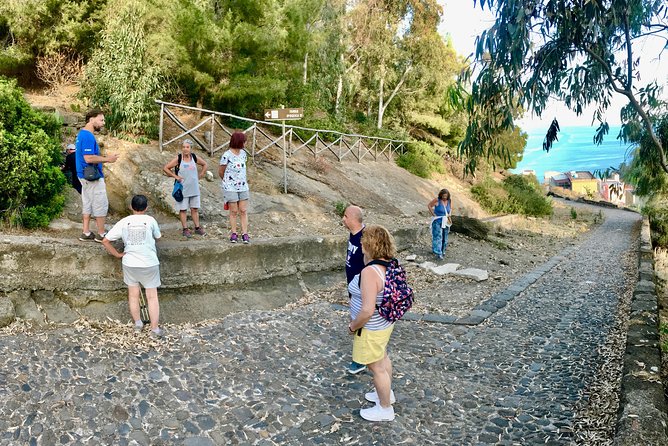
At $20.90 per person, this excursion is priced like an island activity meant to be accessible. For that money, you’re getting a guided walk, entry tied to the Rocca visit, and a structured explanation of both archaeology and island history.
What makes the value better is what’s included. Masks are included, and there is an admission ticket component built into the experience. For a short evening outing, that can save you time and decision-making.
What is not included is also worth flagging. Bottled water is not included, so factor in a small purchase beforehand or bring your own.
A few logistics points you should know up front because they change how smooth the start feels:
- Pickup is offered, which can be helpful if you’re not staying close to Via Dottore Mario Randaccio
- You’ll use a mobile ticket
- The activity runs in a group capped at 75 travelers, which is large enough for organization but not so huge that you can’t follow along
- It works best in comfortable clothes and shoes, since you’ll be walking and climbing
The short duration is a big part of the appeal. You can fit this into a day without sacrificing the rest of Ustica, especially if you’re also choosing sea, geology, or astronomy-style outings.
Who this tour fits best, and who might want a different option
This excursion is a great fit if you:
- want Roman archaeology but also like the bigger story of how people lived on the island
- enjoy guides who explain with narrative and humor
- want a viewpoint payoff without spending half the day climbing
- like learning about political history connected to real places, not just books
It may be less ideal if you:
- hate walking uphill or have mobility limits, since the route includes a climb to the hilltop
- want a purely Roman archaeology-focused visit, because you’ll also hear about the wars and the confined people from the 1920s to the 1960s
If you’re the kind of traveler who likes “place-based history,” this is one of the easier ways to get that on Ustica.
Should you book this Rocca della Falconiera archaeological excursion?
I think you should book it if you want an evening activity that does three useful things at once: you get Roman necropolis context, you learn how Ustica’s confinement story connects to major political figures like Gramsci, Bordiga, and Rosselli, and you finish with a hilltop panorama you can’t get from the harbor.
If you’re on a short trip and trying to choose one cultural experience, this is a strong candidate because it’s compact. If weather is good, it’s also easier to trust you’ll get the best views.
Quick decision checklist for you:
- Bring comfortable shoes and plan on a climb
- Pack or buy water since it’s not included
- If you care about both archaeology and human history, this is the right balance
- If you dislike mixed-topic tours, consider whether you prefer a more specialized focus
If that sounds like you, I’d book it and plan the rest of your Ustica day around the kind of views you’ll understand better after this walk.
FAQ
What time does the tour start?
The start time is 6:00 pm.
How long is the experience?
It lasts about 2 hours.
Where do I meet the group?
The meeting point is Via Dottore Mario Randaccio, 11, 90051 Ustica PA, Italy.
Does the tour offer pickup?
Yes, pickup is offered.
Is the ticket mobile?
Yes, you’ll use a mobile ticket.
Is there an admission ticket included for Rocca della Falconiera?
Yes, an admission ticket is included as part of the experience.
Are masks included?
Yes, masks are included.
Is bottled water included?
No, bottled water is not included.
What should I wear?
Wear comfortable clothes and shoes, since there is walking and climbing to the top of the hill.
Is the tour dependent on weather?
Yes. The experience requires good weather. If it’s canceled due to poor weather, you’ll be offered a different date or a full refund.
Just reviewed in Sicily
- Bikes★ 5.0 · 3 reviews
- Full Day Private Boat Tour San Vito Lo Capo – Castellammare★ 5.0 · 101 reviews
- Authentic Sicilian cooking class with Francesca★ 5.0 · 5 reviews
- Best of Godfather and Taormina Tour with Street Food Tasting★ 5.0 · 3 reviews
- Basic Tour of the Soap Museum in Sciacca★ 5.0 · 8 reviews
- Baroque Noto private walking tour★ 4.5 · 15 reviews
- Syracuse Bicycle Rental★ 5.0 · 9 reviews
- Cook, Eat & Embrace Sicily-An Authentic Cooking Experience★ 5.0 · 42 reviews
Tours, compared.
Mount Etna: Guided Volcano Summit Hiking Tour with Cable Car
Read our review →

Sunset Jeep Tour of Mount Etna and Lava Flow Caves
Read our review →
Palermo Original Street Food Walking Tour by Streaty
Read our review →
Segesta, Erice and Salt Pans Full-Day Excursion from Palermo
Read our review →
Etna and Alcantara Gorges Full-Day Tour with Lunch
Read our review →