
Reviewed in full · MARKET TOURS
Palermo, a tour of unique monuments and colorful markets
Palermo has a way of mixing empires, faith, and street life into one tight city center. This tour is a practical route that strings it all together, starting near Teatro Massimo and ending in Piazza dei Quattro Canti, with stories that make the sights feel like they belong to today, not just a textbook. You also get the fun stuff, like the legend tied to Teatro Massimo.
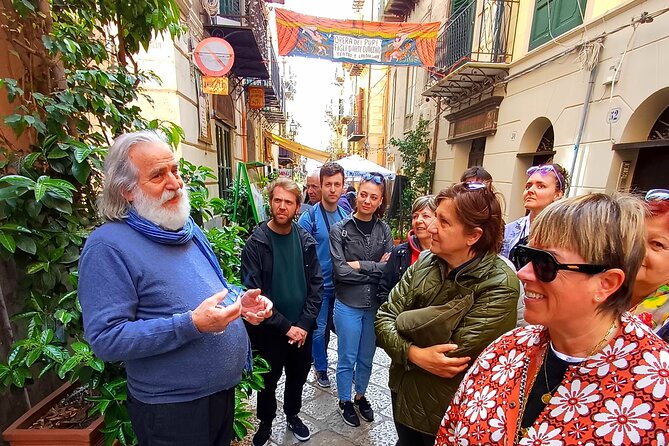
I love how organized the experience feels for a short time. Two things stand out for me: the professional, authorized guide who keeps explanations clear and keeps offering helpful suggestions, and the way the route connects UNESCO-level landmarks with the Mercato del Capo street scene, including a free stop for typical street food.
One thing to consider is that this is a walking-focused tour and it’s weather-dependent. Also, cathedral entry is free when there are no religious services, so your access could depend on what’s happening that day.
Key points worth knowing
- Small group size (max 20) so you actually hear the stories and get quick advice
- UNESCO Palermo Cathedral visit with free entry when there are no services
- Mercato del Capo street food stop that helps you taste local daily life, not just see it
- A mix of monuments and legends, from the Beati Paoli story to Teatro Massimo’s ghost lore
- Easy central route, starting by Teatro Massimo and ending at Quattro Canti, right in the heart of town
Start in Piazza Giuseppe Verdi and learn Palermo’s layout fast
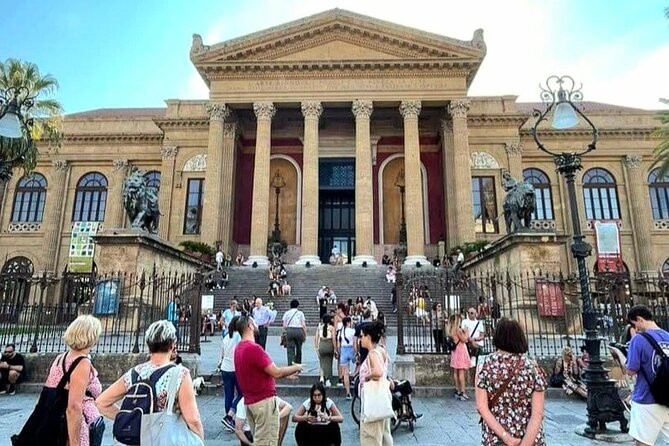
The tour starts at 10:30 am at Piazza Giuseppe Verdi, right in the central area near Teatro Massimo. If this is your first time in Palermo, I like this starting point because it helps you form a mental map right away. Within a few blocks, you’re already moving between grand architecture, smaller baroque corners, and the market quarter.
The whole experience runs about 3 hours, which is long enough to feel like you got somewhere, but short enough that you can still plan another meal, church visit, or evening stroll afterward. Because the group is kept to up to 20 people, the guide can slow down when needed and still keep things flowing.
One practical tip: wear comfortable shoes and be ready for a mix of sun and shade. Most of the route is outside, so good weather matters. If the day turns bad, the operator notes that the tour can be rescheduled or refunded.
More market mornings in Sicily:
- Markets and monuments: walking tour and street food in Palermo
★ 5.0 · 159 reviews - Palermo: Street Food and Local Market Tasting Tour
★ 4.9 · 540 reviews - Palermo: Walking Tour of Historic Markets and Monuments
★ 4.9 · 478 reviews
Piazza Olivella: baroque views and a museum neighborhood
Your first stop is Piazza Olivella, a scenic baroque square anchored by the church of Sant’Ignazio. Even though the stop is brief, it’s a smart early moment because baroque Palermo has a specific look and feel. You get a quick introduction to how the city uses shape, light, and church facades to impress.
This square also sits near the National Archaeological Museum, which means you’re standing in a part of town that reflects Palermo’s long timeline. If you ever want to do more museum time later, this early orientation helps you understand where you are and why that museum area matters.
Teatro dell’Opera dei Pupi: UNESCO puppet opera in plain sight
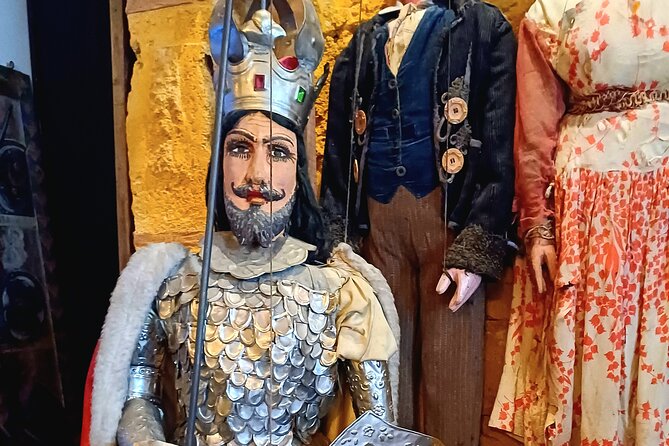
Next you’re at the Teatro dell’Opera dei Pupi, one of the most famous puppet opera theatres in Palermo. It’s listed as a UNESCO heritage site, which is a big deal for something people sometimes think of as a small local tradition. Here, puppet opera is not kids’ entertainment. It’s a cultural form with deep local roots, and it still feels alive.
The stop is short, so don’t expect a full show. But even a quick look gives you context for Palermo’s theatrical side. It’s also a reminder that UNESCO here is not only about ancient stones. It’s about living culture, too.
Piazza Massimo and Teatro Massimo: Florios, belle époque, and a legend
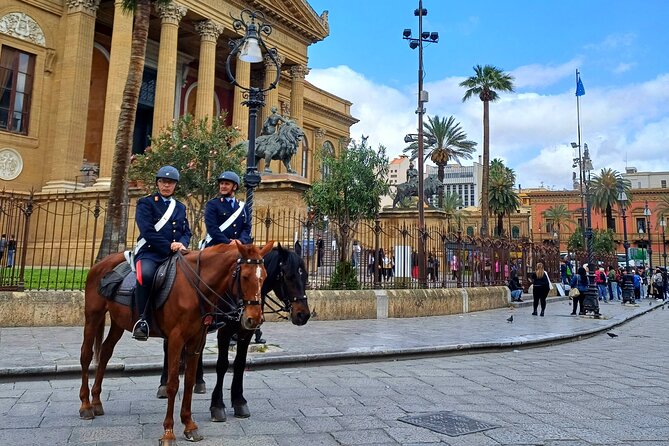
From there you move to Piazza Giuseppe Verdi, also called Piazza Massimo, where the presence of Teatro Massimo dominates the view. This is the moment when Palermo’s grand, confident side shows up loud and clear.
The guide tells the story of Palermo’s belle époque and the Florio family, which is useful because it turns the theatre from a pretty building into a clue about who had power, money, and ambition in the city. And yes, you’ll hear the mystery legend tied to Teatro Massimo’s ghost. Even if you’re not the type to chase spooky stories, the legend helps you understand how myths become part of local identity.
If you’re into atmosphere, this is one of the highlights. If you prefer only factual history, it can still work. The legend is told like a cultural snapshot, not a gimmick.
A different sort of day out around Sicily:
- Etna Morning Trip
★ 4.5 · 1,241 reviews - Syracuse: Boat Trip of Ortigia Island and Sea Caves
★ 4.7 · 937 reviews - Tour of the island of Ortigia and exploration of sea caves with baths.
★ 5.0 · 668 reviews - Pub Crawl Palermo
★ 5.0 · 595 reviews
Porta Carini and the old walls: walking from history into the markets
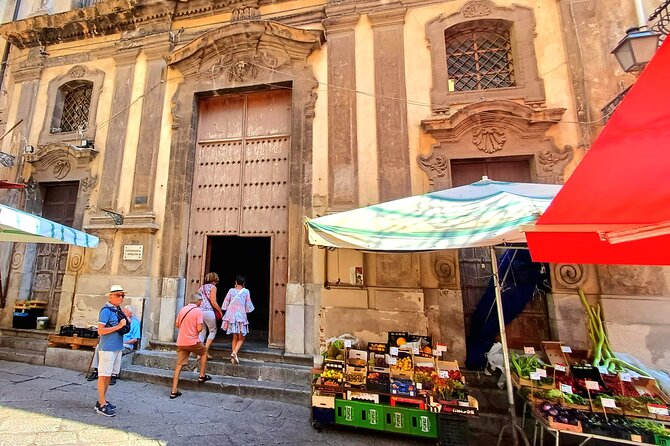
One of the best shifts in the itinerary is how it transitions from monuments to the Capo area. You pause near Mura, Bastione e Porta Carini, where you can spot a glimpse of Palermo’s older defensive structure and a city gate that historically helped people enter this quarter.
The wall portion connects to the idea that Palermo grew and changed in layers. Seeing a gate and a section of older city walls makes the market area feel more like a place with a past, not just a shopping zone.
Timing here also matters. As you approach the Capo area, you feel the energy increase, but you do it with context. That makes the market stop more meaningful later, because you’re not walking in cold.
Mercato del Capo: Arab-origin market life and a smart street food stop
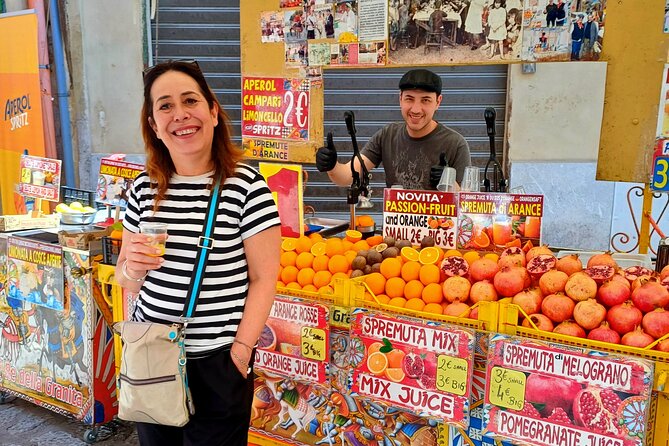
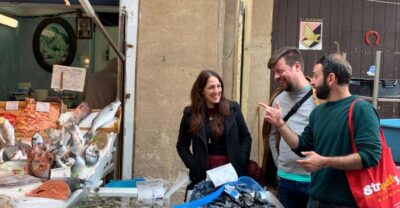
Then comes Capo Street Market, described as an ancient Arab-origin market. The guide sets you up to understand why Palermo’s food and street culture grew the way it did. You’re not just looking at stalls. You’re watching a living system of daily life.
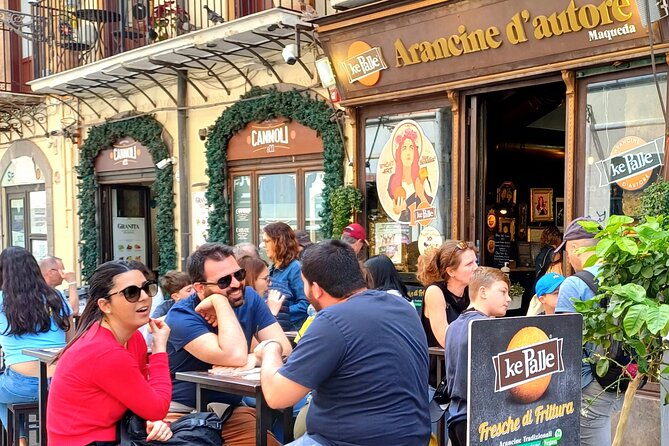
This is also where you get a free stop to taste typical Palermo street food. I like food stops that are guided, because the guide can help you choose items that match what you like and avoid the common mistake of buying something and realizing too late that it was the wrong texture, spice level, or portion for you.
To get the most out of this part:
- Go with a little space in your stomach so you can actually enjoy the flavors
- Use the taste stop as a sampler, not a full meal, so you can still eat elsewhere if you want
- Ask the guide what to order first, since street food works best when you know the local order of operations
The market area is also great for photos, but I’ll keep it practical: focus on the stalls and hands-on food moments, not only the widest angles. It’s those details that feel real.
Grotta dei Beati Paoli: legends tied to social justice
After the food and the noise, the tour slows down near Grotta dei Beati Paoli. This is where the story turns darker and more human. You hear about the Beati Paoli, described as an ancient secret sect said to have avenged wrongs suffered by poor people.
Even if you treat the legend as storytelling, it’s still useful. It shows how Palermo’s myths often grew out of real social tensions, not random campfire fantasy. The guide’s job here is to connect the legend to the city’s mindset, and that makes the grotto stop feel less like a random detour.
For some people, this is the most memorable stop because it adds emotional texture. It’s also a reminder that cities have stories people need, even when facts are hard to pin down.
Palermo Cathedral: Norman-Arab roots and the kings of Sicily
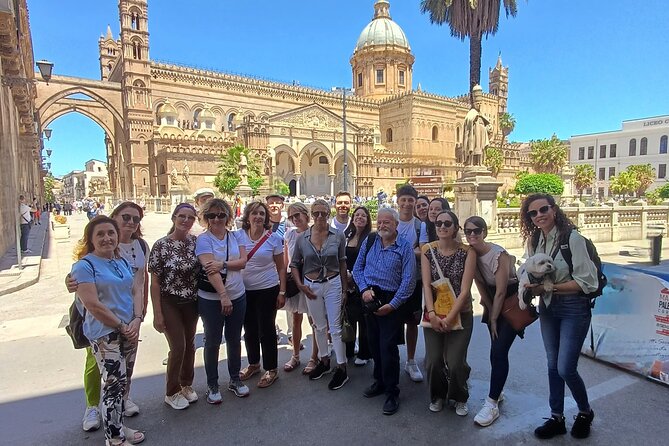
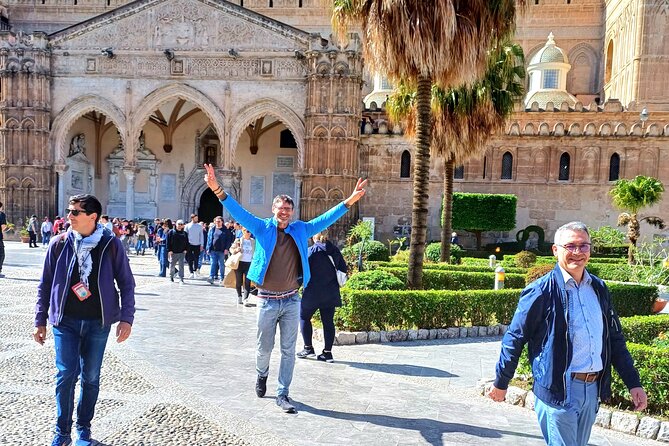
The biggest landmark on the route is Cattedrale di Palermo, a UNESCO world heritage site built in the Norman Arab style in 1185. The guide explains that this cathedral is tied to the foundation of the kingdom of Sicily, which immediately gives you a reason to pay attention beyond the architecture.
Inside, you’ll learn that it houses the tombs of the first kings of Sicily. That detail matters because it shifts the visit from sightseeing to a feeling of place. You’re standing where political history, religious power, and art all overlap.
Entry is included as long as there are no religious services. So if you see worship happening when you arrive, don’t panic. It’s normal for historic churches to have active schedules, and the guide can help you understand what’s possible that day.
This is one of the most valuable stops because it’s both UNESCO-level and practical, with a free entry condition that saves you time and keeps the visit from feeling like another paid ticket you have to plan separately.
Via Vittorio Emanuele and Quattro Canti: the city’s symbolic crossroads
After the cathedral, you head along Via Vittorio Emanuele, described as the oldest street in Palermo. The point of this stop is not only that it’s historic, but that it’s packed with monuments, art, and references you can keep noticing as you walk. A guided route is perfect for this kind of street, because you learn what you’re looking at instead of staring at random facades.
Then you reach Quattro Canti, the central square of ancient Palermo. This area is scenic and full of symbols, which makes it feel like a city blueprint. Because it’s in the center, it also works as a natural ending point. You get to anchor your understanding of Palermo’s layout right where the streets meet.
If you like taking photos, this is an easy place to do it without feeling rushed. If you prefer calm, it’s still interesting to watch how the square holds movement from every direction.
Piazza Pretoria: the Renaissance fountain and the Santa Caterina dessert story
To close strong, the tour includes a stop at Piazza Pretoria, known for its extraordinary Renaissance fountain. What I like about this stop is that it connects art and design to everyday life around it. You can see the fountain as a centerpiece, but you also notice how the surrounding historic buildings shape the space.
The tour also mentions the convent of Santa Caterina, where many of the most famous Sicilian desserts were born. That line is more than trivia. It tells you that Palermo’s culinary culture has deep institutional roots, not only street stalls.
This part is a nice transition from monuments to food memories. Even if you already ate, you’ll probably leave craving a sweet stop later, just because the dessert connection is so direct.
Price and value: what $34.83 buys you in real time
At $34.83 per person for a roughly 3-hour guided walk, the value comes from what’s included, not from the fact that it’s low or high.
You’re paying for:
- A professional, authorized, certified guide
- Free entry to the Cathedral if there are no religious services
- Assistance and information for further visits, plus transport and gastronomy suggestions
For a first-time visit, that kind of human guidance can be worth more than a few euros saved on admissions. You’re getting the storytelling that helps Palermo click: how the city moved through different eras, why the market district matters, and where to look next.
There’s also a practical value to group format. A small group means fewer people competing for attention and easier questions. And because Palermo can be a maze if you’re guessing, a guided route that ends in a central square helps you keep momentum instead of backtracking.
The tour is often booked in advance, with an average of about 9 days. If you’re traveling in peak season or on a short schedule, I would secure a spot earlier rather than waiting.
Who should book this Palermo monuments and markets tour
This tour fits best if you want a classic Palermo introduction without getting stuck in logistics.
You’ll probably enjoy it if you:
- Like your sightseeing mixed with everyday city life (and you don’t mind street food)
- Enjoy UNESCO sites, but also want culture that happens outside museums
- Want legends and history explained in a way that helps you understand the city’s tone
- Prefer a short, guided route over building your own day plan
You might skip it if you:
- Want long, in-depth time inside multiple churches or museums
- Prefer a slower pace with lots of time sitting down at each stop
- Are traveling on a day that is very unpredictable for weather, since the tour requires good conditions
Should you book this tour?
If you want a tight, high-impact overview of Palermo’s center, I think this is a strong choice. The combination is what makes it work: major monuments plus markets, UNESCO credibility plus street-level reality, and a guide who stays helpful with suggestions.
Book it if you’re the kind of traveler who likes to learn fast, then wander on your own afterward with a clearer sense of where you are. Consider holding off or rebooking if weather is unstable, since the experience depends on conditions.
In Palermo, the best days feel like stories you can walk through. This one gives you that feeling without turning your schedule into a marathon.
FAQ
How long is the Palermo monuments and colorful markets tour?
The tour lasts about 3 hours.
What is the meeting point and where does it end?
It starts at Piazza Giuseppe Verdi in Palermo and ends at Quattro Canti.
What time does the tour begin?
The start time is 10:30 am.
What does the tour cost?
The price is $34.83 per person.
What is included in the price?
You get a professional, authorized, certified guide, free entry to the Cathedral if there are no religious services, and assistance and information for further visits, transport, and gastronomy.
Is the ticket mobile?
Yes, it’s a mobile ticket.
Is the tour affected by weather?
Yes. The experience requires good weather. If it is canceled due to poor weather, you will be offered a different date or a full refund.
Just reviewed in Sicily
- Pillirina, Ortigia, Sea caves: Boat Tour and Snorkeling★ 4.4 · 7 reviews
- Etna Southern Slope Guided Easy Trek★ 4.8 · 36 reviews
- Lampedusa: Dolphin watching with aperitif at sunset★ 3.2 · 9 reviews
- Hot spring and Temple★ 5.0 · 3 reviews
- From Trapani: Egadi Islands Day Tour by Boat★ 4.7 · 23 reviews
- From Taormina or Messina Port: Body Rafting + Lunch★ 4.7 · 3 reviews
- Enoteca dell’Etna: Iemu Spizzicannu Tasting★ 5.0 · 9 reviews
- Capo d’Orlando: Mini-cruises to Vulcano, Panarea, Stromboli★ 2.2 · 6 reviews
Market Tours, compared.
Discover Palermo in 3 hours. Art, history, markets and street food
Read our review →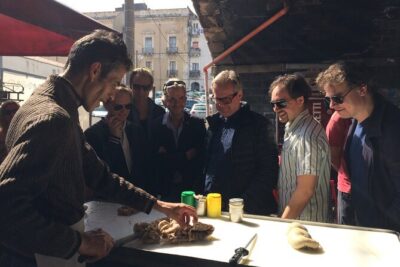
The Original Catania Street Food and Market Tour by Streaty
Read our review →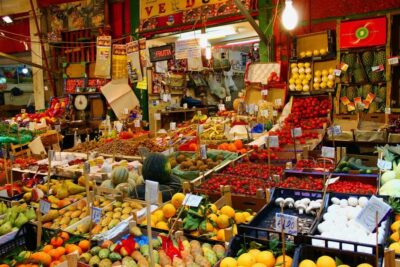
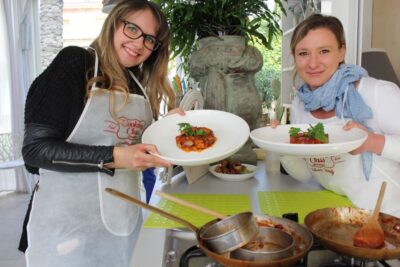
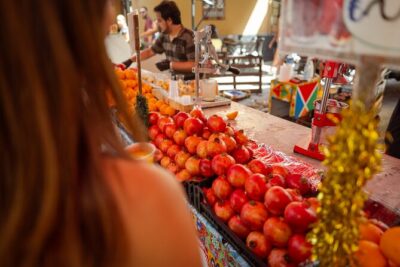
Wanna be Sicilian: Palermo Cooking Class and Market Tour
Read our review →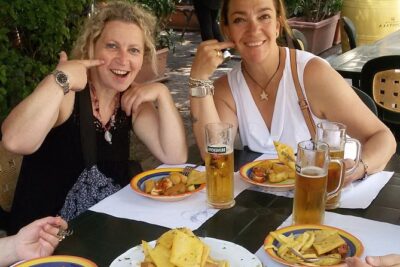
Markets and monuments: walking tour and street food in Palermo
Read our review →Browse the lists this tour appears in