
Reviewed in full · WALKING TOURS
Messina: 2-Hour Walking Tour with a Private Guide
Messina is interesting because you can cover a surprising amount in two hours, and the town’s layers of conquest, rebuilding, and science show up in the same tight walking loop. I especially like the stop at Piazza del Duomo with the Fountain of Orion, and the way the guide connects the astronomical bell tower to Sicilian history. One possible drawback is that this is a concentrated walk, so if you prefer slow, stop-every-30-minutes sightseeing, you might want a longer visit.
Expect strong storytelling, with guides such as Joanna and Lydia mentioned in the feedback for being friendly and easy to follow. You’ll get architecture explanations that actually help you look better, not just take photos. If you’re unlucky with timing, you may miss the daily noon animation on the bell tower, but the clock and statues are still impressive.
Key Tour Takeaways
- Fountain of Orion (1500) right at the start, with Latin verses and the four rivers theme
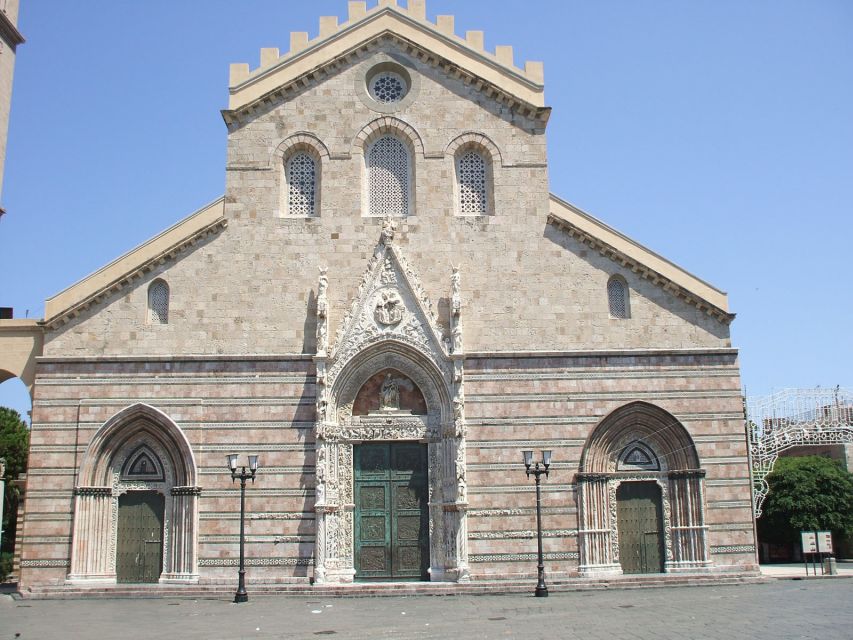
- Santa Maria Assunta Cathedral showing Byzantine roots, Swabian-era expansion, and later layers through 1900
- The bell tower clock described as the biggest mechanical and astronomical clock in the world, with statues that move at noon
- War of the Vespers connection (1282) woven into the tower’s figures and symbolism
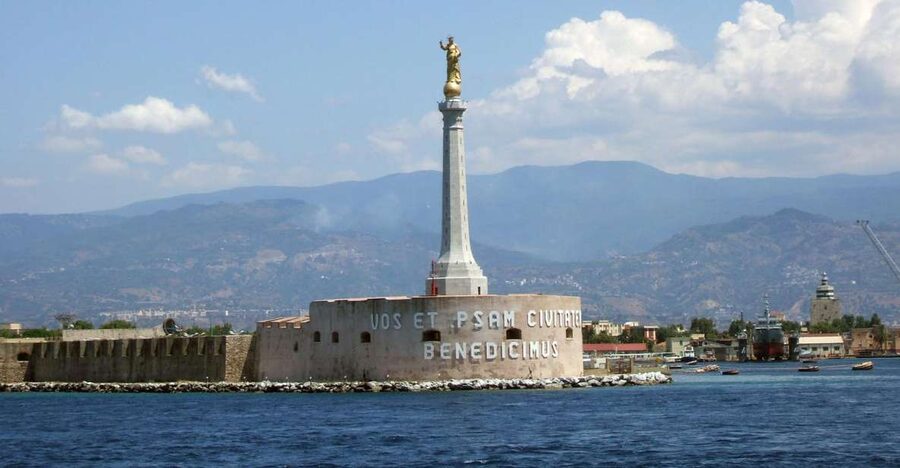
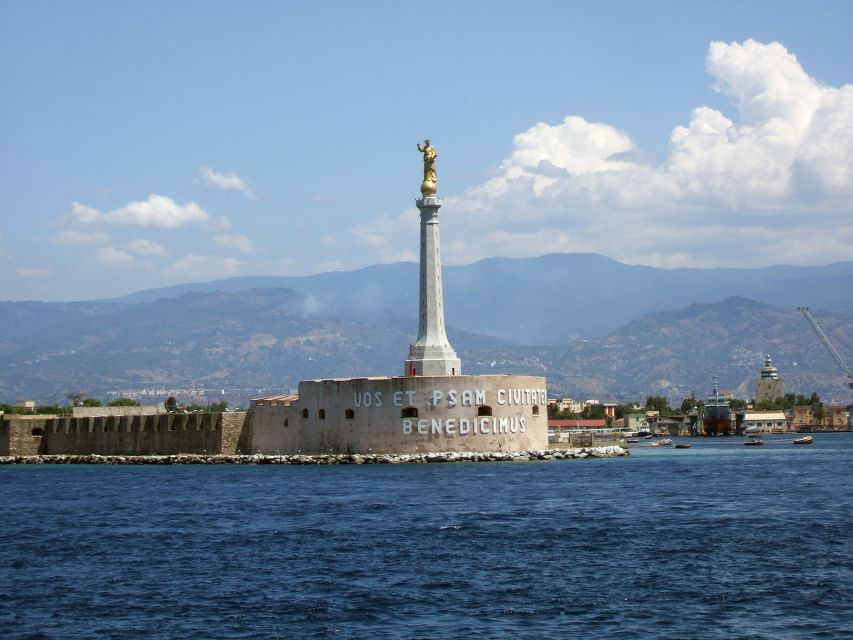
- Port promenade views toward the largest port in Sicily, with skyline views at the end
- Private licensed guide in multiple languages, with a group size up to 25
Why This 2-Hour Messina Walk Works So Well
This tour is built for people who want real context, fast. Two hours sounds short until you realize the core sights are packed around Piazza del Duomo, then the route flows naturally toward the promenade and port views. That keeps your energy where it matters: looking up, reading details, and letting someone explain what you are seeing.
I also like the focus. You are not just drifting through pretty streets. You are getting the logic behind Messina’s architecture, from Byzantine beginnings to later renovations, and then a science-and-religion showpiece in the bell tower.
The other good news: you can choose your language. The live guide can speak Spanish, English, French, German, or Italian, so you do not have to rely on guesswork to understand the symbolism.
Starting at Piazza del Duomo: Orion Fountain, Latin, and Fast Orientation
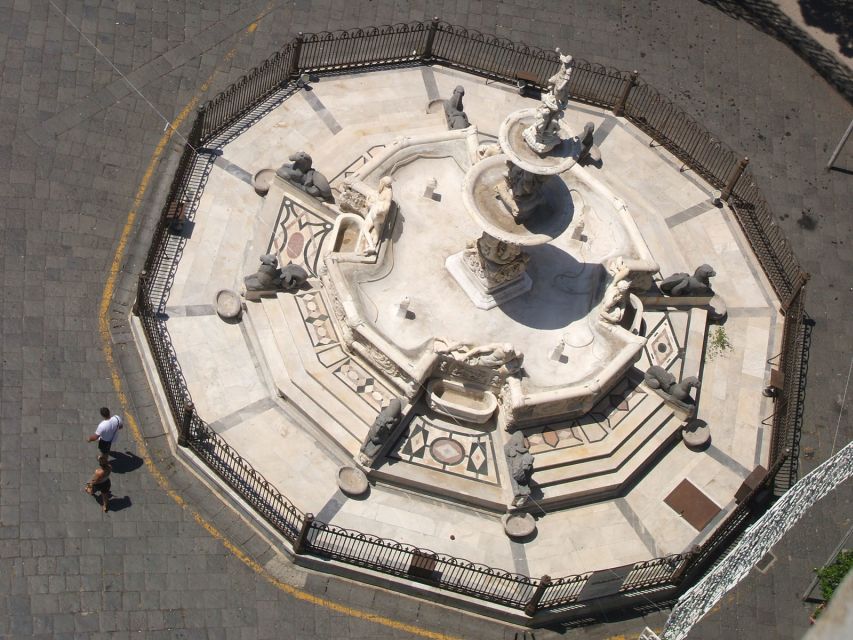
Your walk begins in Piazza del Duomo, next to the Fountain of Orion. This matters more than you might think. Starting here means you begin with a landmark that anchors the rest of the route, so the explanations stay grounded.
The fountain itself is a great attention-grabber. It was built in 1500 by a disciple and collaborator of Michelangelo Buonarroti. The design includes the four rivers, and the upper basin is decorated with verses in Latin. Even if Latin sounds intimidating, you do not need to translate it to appreciate the idea: this was civic art meant to teach and impress.
Here’s a practical tip. Arrive a minute early and take 20 seconds to look from different angles. Fountains tend to reveal details only when you step to the side. If you are the type who likes photos, this is a good place to get the one solid shot before the church absorbs your attention.
More walking tours in Messina:
- 2,5-Hour Messina Walking Tour
★ 4.5 · 291 reviews - Messina: Guided City Highlights Walking Tour
★ 4.5 · 89 reviews - Palermo: NO Mafia Walking Tour
★ 4.8 · 2,431 reviews
Santa Maria Assunta Cathedral: One Building, Many Time Periods
Next up is the cathedral dedicated to Santa Maria Assunta. This is where Messina’s history becomes visible, not abstract. The tour frames the cathedral as a living document, with multiple eras stacked on top of each other.
You’ll hear the main timeline. It was built in the Byzantine era, then expanded when the Swabians were in power. Then came destruction in 1254 during the funeral of King Corrado IV, son of Frederick II Hohenstaufen. Later, the cathedral was rebuilt in 1908.
That sequence is a big part of why this stop feels worth your time. When you stand inside, you are not looking at one clean “style.” You are looking at survival, interruption, and rebuilding, all in the same sacred space.
The tour also points out the layered decorations you’ll encounter:
- Renaissance decorations
- Baroque decorations
- Decorations from the 1900s
You’ll also see statues, marbles, and mosaics that are described as copies of the original versions, now lost. That detail is useful for your own mindset. If something looks slightly different from what you expected, the guide’s explanation helps you understand that you are seeing preservation choices, not missing something you should be able to find.
Finally, the exterior gets its own spotlight. The façade is decorated with multi-colored bands, embellished with marble, and includes 14th century reliefs. So even if you only glimpse the church from the square, you still get something to react to.
A small drawback to consider: cathedrals are often busy and lighting can be uneven. If you need perfect indoor photos, plan to accept “good enough” shots. The real value here is comprehension, not a flawless camera moment.
The Bell Tower and Its Mechanical Astronomical Clock at Noon
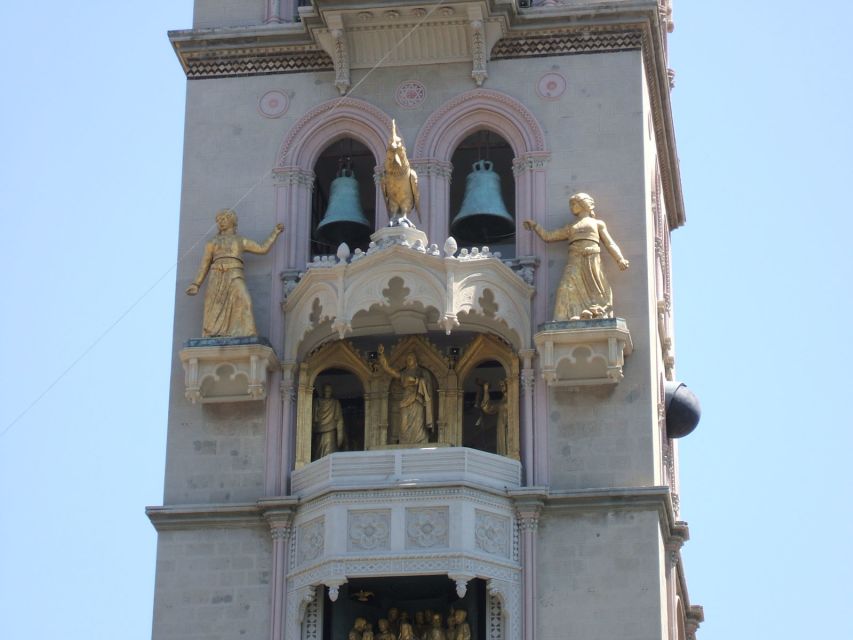
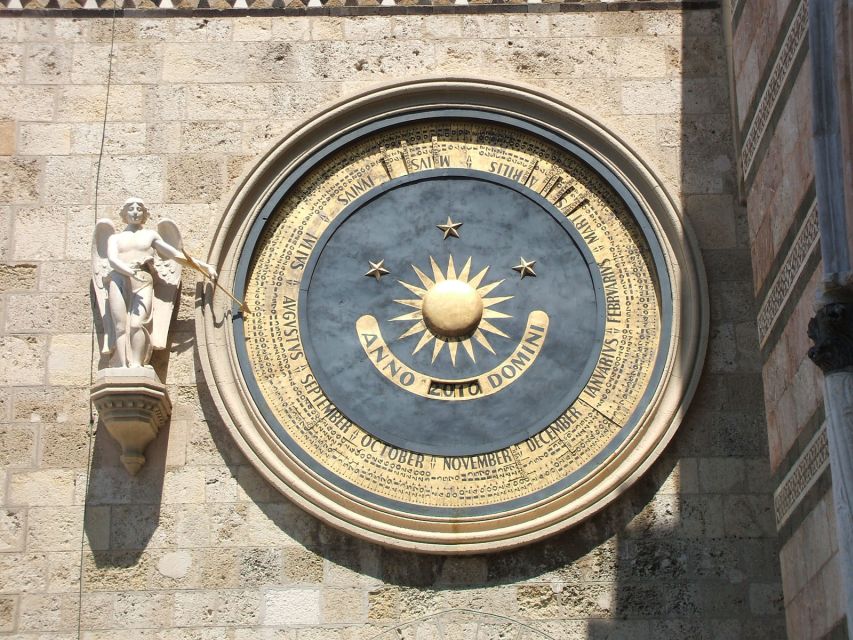
If you care about clocks, science, or any kind of “how did they do that” engineering, the bell tower is the headline. The outside of the tower is described as 90 meters high and 10 meters wide. That scale alone changes how you experience the façade and its surrounding plaza.
The tour highlights that the bell tower has the largest and most complex mechanical and astronomical clock in the world. That claim is dramatic, and it also signals what your guide will do with it: explain how the clock is tied to daily life and to religious sound.
Here’s the key moment. Everyday at noon, the various statues move to the sound of the Hail Mary of Schubert. If your tour time lines up with noon, you can witness the animated spectacle as part of the tour. If it does not, you still learn what those statues are for and why the motion is tied to the bell tower’s identity.
The tower’s symbolism also points to Sicilian pride and conflict. The figures recall the War of the Vespers of 1282, when Sicilians stood victorious over Charles of Anjou. You will see that idea reflected in the statues, not just told as a lecture. That is a smart way to understand history, because you get a visual anchor.
Practical note: this stop includes a lot of “looking up” and “standing around.” Wear shoes that handle uneven stone and watch your step near edges. You will want stability, because you’ll naturally crane your neck and shift your footing.
Seeing Messina’s Port and the Promenade from a Local Angle
After the cathedral area, the route moves toward views of the port. The tour frames it as the largest port in Sicily, and one of the largest in Italy. That matters because Messina is not just a church-and-stone town. It’s a working city shaped by ships, trade, and movement.
You will get port views and a sense of scale, then finish with views of the Belvedere skyline. That closing shift is a good design choice. You go from ornate religious architecture to an open view that lets you breathe and put the city in context.
If you like travel that feels like “standing where locals stand,” this is the part that can do it. Promenades are where people pause between errands. Even if you do not talk to anyone, you feel how the city lives around the water.
One drawback, depending on the season: port areas can be windy. If you get cold easily or you hate gusts, bring a light layer. Also, keep an eye on sun direction so you do not spend the best part of the finale squinting.
Other Messina options side by side
- From Milazzo: Panarea and Stromboli Boat Trip by Night
★ 4.2 · 1,605 reviews - From Milazzo: Lipari and Vulcano Day Trip
★ 4.3 · 1,166 reviews - Taormina and Castelmola Tour from Messina
★ 5.0 · 645 reviews - Naxos: Isola Bella, Blue Grotto, & Mazzarò Bay Boat Tour
★ 4.6 · 568 reviews
What the Private Guide Adds (And Why the Price Can Make Sense)
This is a private group tour with a licensed guide. Pricing is listed as $348.92 per group up to 25, and it lasts about two hours. That setup matters for value.
If you travel as a family, a couple, or a small group of friends, a private guide can be a bargain compared to stacking multiple public tours at the same time. You get one route, one pace, and explanations tuned to how your group is reacting.
Even if you are traveling solo, private can still feel efficient. A two-hour guide can save you from the “what am I looking at” frustration that often hits in big church complexes. When the guide connects the dots, the cathedral façade details and the bell tower clock symbolism stop being random decorations.
The tour also includes multi-language interpretation. That adds value because it keeps you from losing the story to translation gaps. If your language needs are specific, that feature alone can make the tour worth it.
About the duration: two hours is the sweet spot for a compact city center walk. It’s long enough to cover multiple stops with explanations, but short enough that you can still plan a full day around it. If you want more museum time or deeper wandering, you may pair this with independent exploration after the tour ends.
Practical Route Fit: When This Tour Is the Right Choice
This tour fits best if you like:
- architecture with explanations you can actually use
- history that connects to what you see in front of you
- a clear start and end point back at Piazza del Duomo
It’s less ideal if you want a slow ramble through side streets with lots of optional detours. This walk is structured, and the value is in sticking to the order so the stories build logically.
Also, because the bell tower has a daily noon animation, people who start near that time often get an extra payoff. Even without the motion, the clock and statues still give you plenty to react to, but noon is the bonus.
Who Should Book This Messina Experience?
Book it if you want a compact introduction to Messina that goes beyond postcard facts. You’ll love it if you enjoy architecture, religious art, and the kind of local history that explains why a building looks the way it does today.
You’ll also appreciate it if you travel with mixed interests. One person might be focused on the cathedral façade bands and reliefs, while another cares about the bell tower clock mechanics and the War of the Vespers story. This tour gives both types something strong.
Families can work well too, as long as kids are okay with a guided walk that involves standing for explanations. For anyone who does not enjoy guided time, you might find it slightly structured. Still, the route is short enough that you can keep your day flexible afterward.
Should You Book the Messina 2-Hour Private Walking Tour?
Yes, if you want a high-impact introduction to Messina in a short window. The combination of Piazza del Duomo, Santa Maria Assunta’s layered timeline, and the bell tower’s mechanical astronomical clock is a rare set of “major sights” you can cover without spending half your vacation logistics time.
I’d especially recommend it when you care about understanding details, because the guide experience is repeatedly highlighted in the feedback, including friendly guides like Joanna and Lydia who deliver clear explanations.
I’d hesitate only if you hate guided walking, or if your schedule makes it hard to catch the noon clock animation. If you do miss it, you still get the storytelling and the stunning architecture, but noon is the fun extra.
FAQ
Where does the tour start and end?
The tour starts in Piazza Duomo square, next to the fountain, and ends back at the meeting point.
How long is the Messina walking tour?
The duration is 2 hours.
Is this a private tour?
Yes. It is listed as a private group with a licensed guide.
What language options are available for the guide?
The live guide is available in Spanish, English, French, German, and Italian.
What is included in the price?
The tour includes a licensed guide.
What is not included?
Lunch or dinner is not included, and there is no pickup or drop off.
What are the main sights you will see?
You will visit the Fountain of Orion, the cathedral dedicated to Santa Maria Assunta, the bell tower with the astronomical clock, views of the port, and the Belvedere skyline.
Is there anything special about the bell tower at a certain time?
Yes. Everyday at noon, the statues move to the sound of the Hail Mary of Schubert.
Just reviewed in Messina
- Private Boat Tour Isola Bella Taormina Giardini Naxos★ 5.0 · 6 reviews
- Panoramic Vespa tour of Taormina, Castelmola and White Lotus series locations★ 5.0 · 7 reviews
- Messina: Pasta & Tiramisu Cooking Class at a Local’s Home★ 4.8 · 13 reviews
- Messina: Sicily excites through wine!★ 5.0 · 32 reviews
- Messina: Share Your Pasta Love in Local’s Home★ 5.0 · 3 reviews
- Messina: Cooking Demo & Meal at a Local’s Home★ 5.0 · 14 reviews
- Messina: Private Pasta-Making Class at a Local’s Home★ 5.0 · 3 reviews
- Messina: Guided City Highlights Walking Tour★ 4.5 · 89 reviews
Walking Tours, compared.
Palermo Original Street Food Walking Tour by Streaty
Read our review →
Palermo No Mafia walking tour: discover the Anti-mafia culture in Sicily
Read our review →
Street Food Walking Tour with Local Guide & Tasting
Read our review →Browse the lists this tour appears in