
Reviewed in full · WALKING TOURS
Noto: Sicilian Baroque Architecture Guided Walking Tour
If you like your architecture with drama, Noto is a smart place to spend two hours. This guided walking tour puts you face to face with Sicilian Baroque details in tight, walkable spots, all tied to Noto’s UNESCO status. I particularly like how the route mixes big-picture landmarks with close-up art, from frescoed church interiors to balcony carvings you can actually spot up close. One thing to keep in mind: it is still a walking tour with stairs, so comfortable shoes matter.
The standout for me is the way the guide handles the pace. On warmer days, guides like Elia are known for thoughtful timing, including stopping where there is shade, and keeping the flow aligned with how long you want to spend at key stops. The main drawback is simple, you cover a lot quickly, so if you want to linger for long photo sessions inside every church, you may want extra time before or after.
Quick hits before you go
- Start inside the old city at Porta Reale or Porta Ferdinandea, near the Church of St. Francis of Assisi
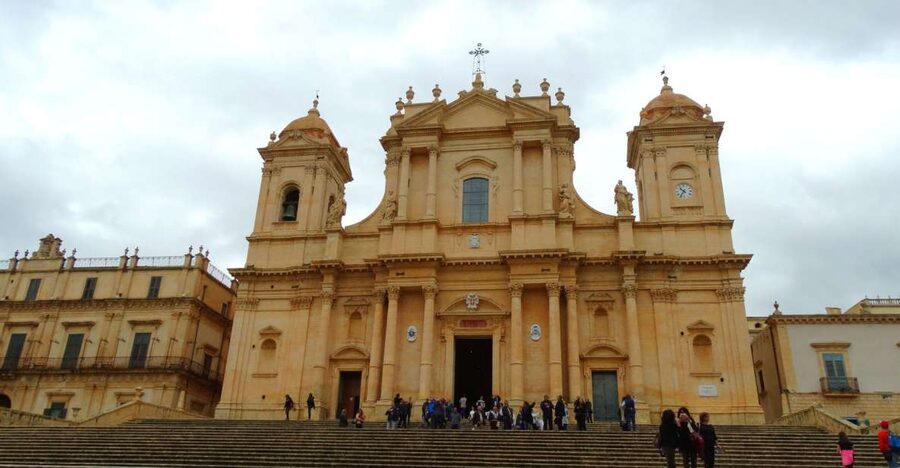
- Cathedral time at Piazza del Duomo, including the honey-colored look of San Nicolò and what happened to its structure over time
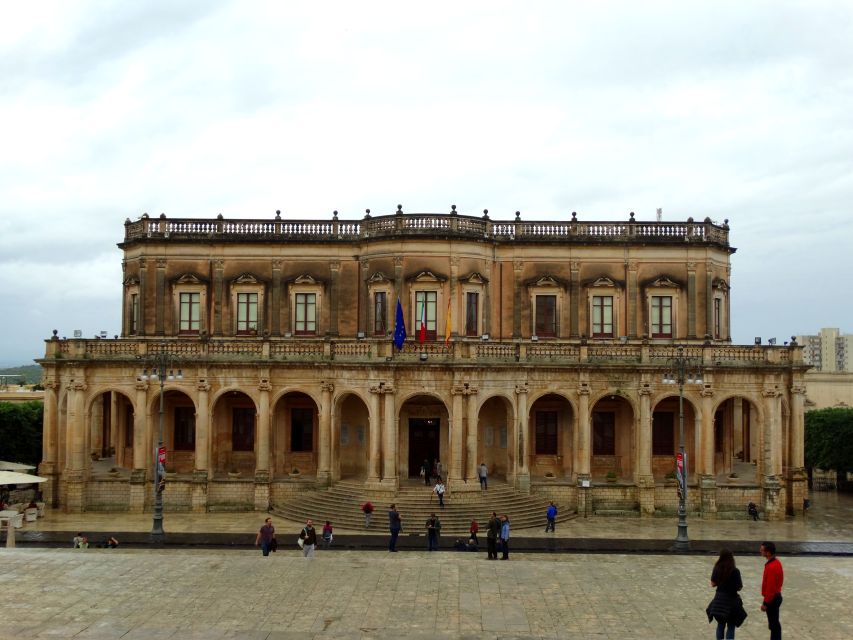
- Mirror effects at Palazzo Ducezio, plus a frescoed roof and a monumental staircase in front
- Infiorata street energy on Via Nicolaci, with Palazzo Nicolaci and its famous balcony sculpture work
- Small-city Baroque feel at Loggia del Mercato and the Fountain of Hercules, then a neoclassical theater finish
Noto’s Baroque story starts at Porta Reale or Ferdinandea
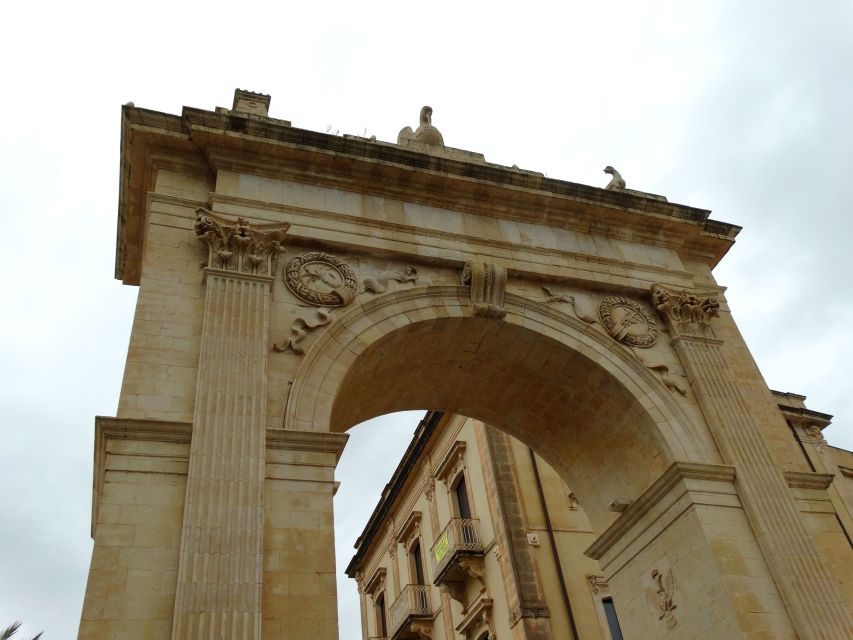
The tour begins right at the historic center gate, either Porta Reale or Porta Ferdinandea. You meet under the gate area, and the licensed guide carries a visible badge. It is a practical start, because you are already positioned in the old-city core, with the walk naturally unfolding from there.
From the start, you are working in the setting that made Noto the capital of Sicilian Baroque. You get the sense of a city built to be seen from street level, with stairs, statues, and decorative facades that feel meant for slow wandering. And because this is a guided format, you are not just looking at pretty stone, you are learning what to notice.
One small tip: plan to arrive a few minutes early. In this part of Noto, you want to start clean and unhurried so you can settle into the route rather than spending the first minutes scanning for your guide.
More walking tours in Noto:
- Palermo: NO Mafia Walking Tour
★ 4.8 · 2,431 reviews - Palermo Original Street Food Walking Tour by Streaty
★ 5.0 · 2,105 reviews - Palermo: Street Food and History Walking Tour
★ 4.9 · 1,294 reviews
Church of S. Francesco, plus that staircase-and-fresco moment
Right at the start area, the tour connects you with the Church of St. Francis of Assisi and the nearby Convent of the Holy Savior. Then you move into the more dramatic architectural beat: a staircase that leads to an interior described as one of the most beautiful interiors in Noto, with frescoes and decorations.
This is one of those spots where guidance pays off. Baroque interiors can look “busy” if you are not sure what to focus on. With a guide, you tend to notice the themes, the layering, and how the decorations work together instead of just flashing as color.
If you are visiting during hot weather, this is also where pacing matters. Even in a short tour, there are moments where you will pause and look longer, and a good guide will avoid turning your visit into a sprint. Think of this part as your warm-up for the rest of the city, teaching your eyes how to read what comes next.
Santa Chiara and the stucco-and-apostles details
After the initial church stop, you continue along the main street, then head to the Church of Santa Chiara, next to a former Benedictine monastery. The tour highlights the inside as a place where the Baroque style is especially recognizable.
The details you will want to keep your eyes on are specific: columns embellished with stuccoes, statues of the apostles, and putti. That list matters because it is the kind of feature set that rewards a second look once you know what you are searching for.
A practical approach helps here. When you reach the church, give yourself a quick minute to scan the layout, then re-aim your attention at the stucco columns and the apostle statuary. This is the difference between “I saw a church” and “I understood what made this church Baroque.”
Also, if you want photos, plan them in two rounds. One quick “from the entrance” frame, then a second set after you spot the key decorative points your guide is pointing out.
Palazzo Ducezio, the Town Hall with frescoed roof and mirror tricks
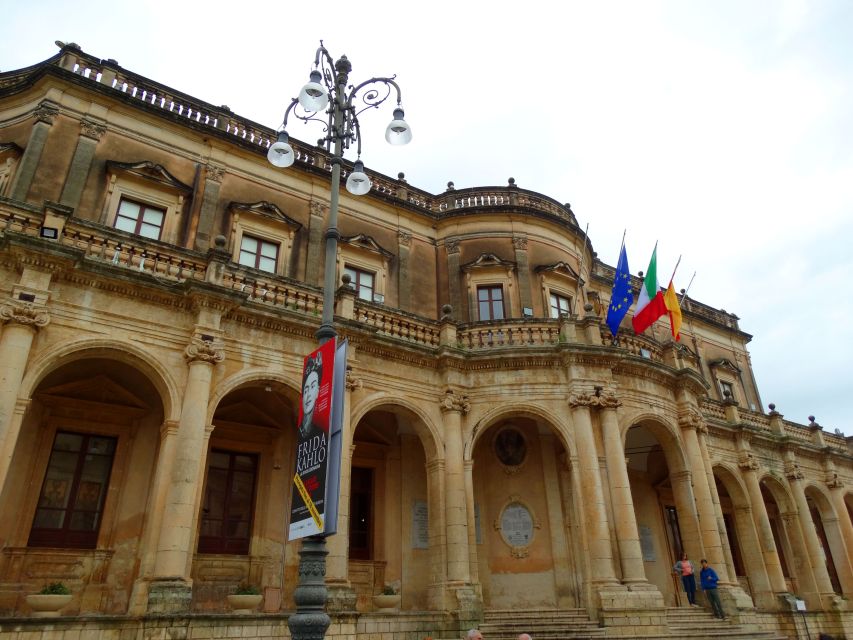
Next comes Palazzo Ducezio, the Town Hall, which the tour describes as built between the 18th and 19th centuries. You are not just passing by a building here. You are learning why it is central to Noto’s civic pride and how Baroque style shows up in government architecture, not only churches.
The highlights are very specific. The roof is frescoed, and the rooms use mirrors to create visual illusions that make spaces feel larger. That detail is fun because it is not purely aesthetic. It is about controlling perception, using reflective surfaces as part of the experience.
Right in front of the palace, you also see the monumental staircase that leads toward the Cathedral of S. Nicolò. This matters for your mental map of the city. Baroque design often works like a stage set, and this staircase acts like a lead-in, a physical cue for where the main spectacle is.
If you are the kind of person who enjoys architecture, this is a “slow down” stop. Even if you are not an architecture nerd, you will understand the story fast once you notice the fresco roof and the mirror effect your guide explains.
Other Noto options side by side
- From Taormina: Siracusa & Noto Small-Group Tour
★ 4.6 · 44 reviews
Piazza del Duomo and the Cathedral of S. Nicolò’s honey color
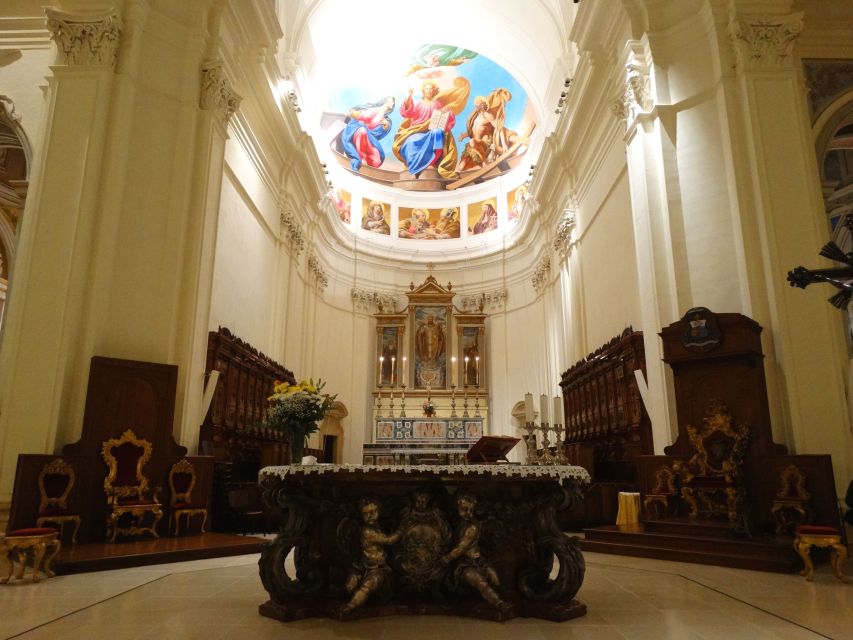
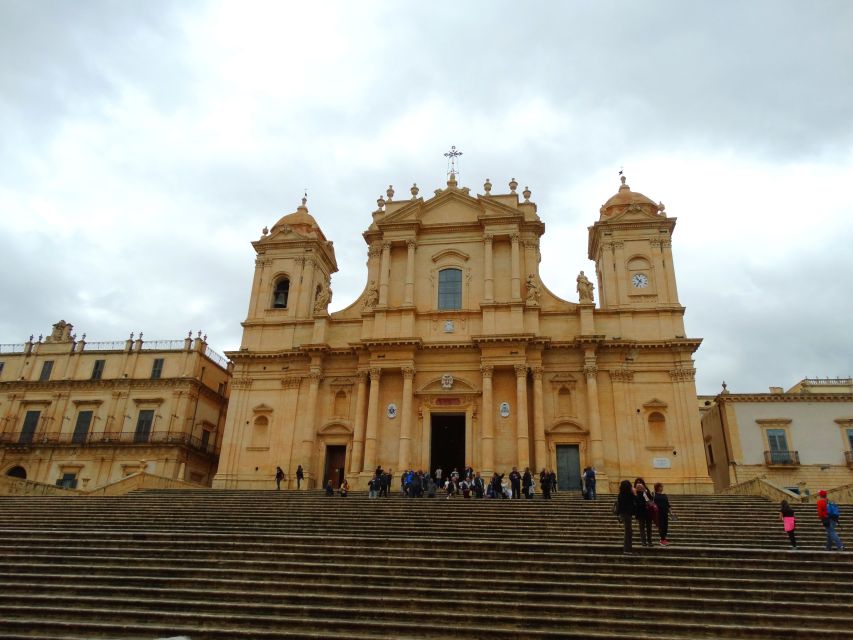
At Piazza del Duomo, the tour shifts into Noto’s signature visual: the Cathedral of S. Nicolò. It is described as the symbol of Noto, known for its honey color, especially at sunset.
Even if your timing is not perfect for sunset, you still benefit from seeing the cathedral with a guide, because you get context about why it looks the way it does and why it matters. The tour also notes the cathedral was built in the eighteenth century and collapsed three times over time, then was rebuilt, though many frescoes were lost. That is a key piece of understanding. It adds weight to what you see today, and it explains why certain things are missing or different.
You will also notice the facade has two bell towers, one with a bell and the other with a clock. Those two tower elements give the front elevation balance, and they are easy to remember when you are later comparing Noto to other Sicilian Baroque towns.
Inside, the focus is still Baroque, but with a bit of realism. You are seeing a building shaped by both artistic ambition and repeated setbacks. That blend is part of why the cathedral feels so human, not just decorative.
Via Nicolaci and Palazzo Nicolaci, where Infiorata becomes street theater
From Piazza del Duomo, you continue to Via Nicolaci, the street where the Infiorata is set up. Infiorata is described as a carpet of flowers laid on the road, and it attracts many tourists.
Even outside of Infiorata season, the idea is still powerful. You are walking a corridor that can turn into a floor-length artwork, so the street design feels like it was made for crowd movement and spectacle. A guide helps you see that the Baroque here is not only in stone buildings, it is also in how the public uses the space.
One of the biggest photo moments is the exterior of Palazzo Nicolaci. You get the balconies decorated in the lower part with statues, masks, animals, and various carved figures in limestone, in a classic Baroque style. The key is to look at the carving work like a collection rather than one huge scene. Once you separate it mentally into figures and motifs, you start seeing patterns.
If you like architecture details, make this stop your “linger” moment. Stand slightly back, then step closer to catch the lower balcony carvings. This is where your eyes can finally slow down and enjoy the craftsmanship instead of absorbing the whole facade at once.
Loggia del Mercato, and how Noto uses public spaces
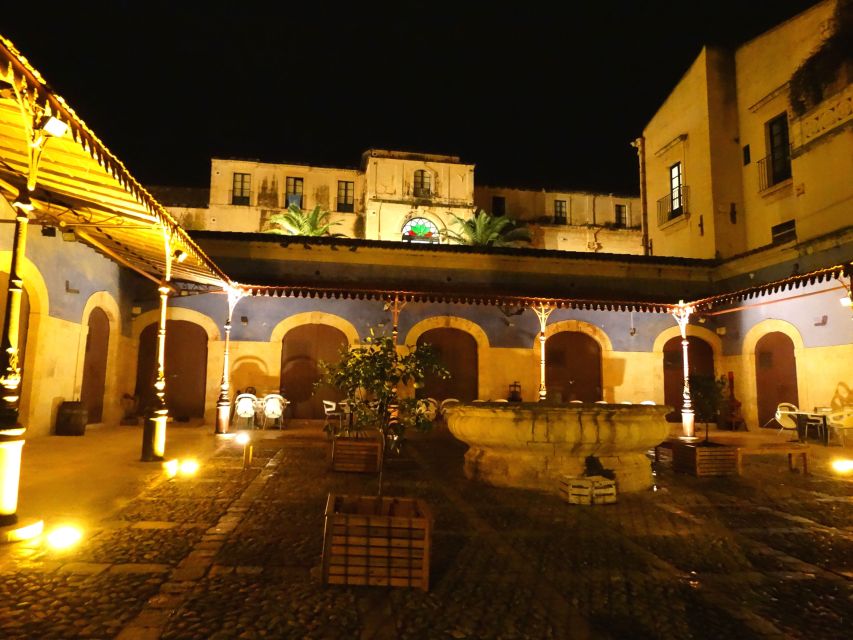
After the palace street, you move through the historic center and stop at the Loggia del Mercato. The tour explains it was once the seat of the Noto market, and today it is used for cultural events.
The wrought iron loggia element matters here, because it shows Baroque style leaking into everyday civic life. Markets are not glamorous on paper, but they shaped the city. And when you see the structure still used for events, you get a sense of continuity rather than a city that has turned into a set.
This is also where walking tours become more enjoyable for regular people. You are not only seeing “important” buildings. You are seeing how the city’s public life still fits into historic architecture.
If the day is hot, treat this area as a natural pause. Logs and arcades often let you adjust how much sun you take, even if your exact shade depends on the moment and angle.
Church of St. Chiara, plus the theater-and-fountain finish
The tour includes the Church of St. Chiara and also highlights the Baroque characteristics you can see in its interior, especially columns with stuccoes, apostles, and putti. This stop works as a final reinforcement of the Baroque vocabulary you started learning earlier at St. Francis and the cathedral.
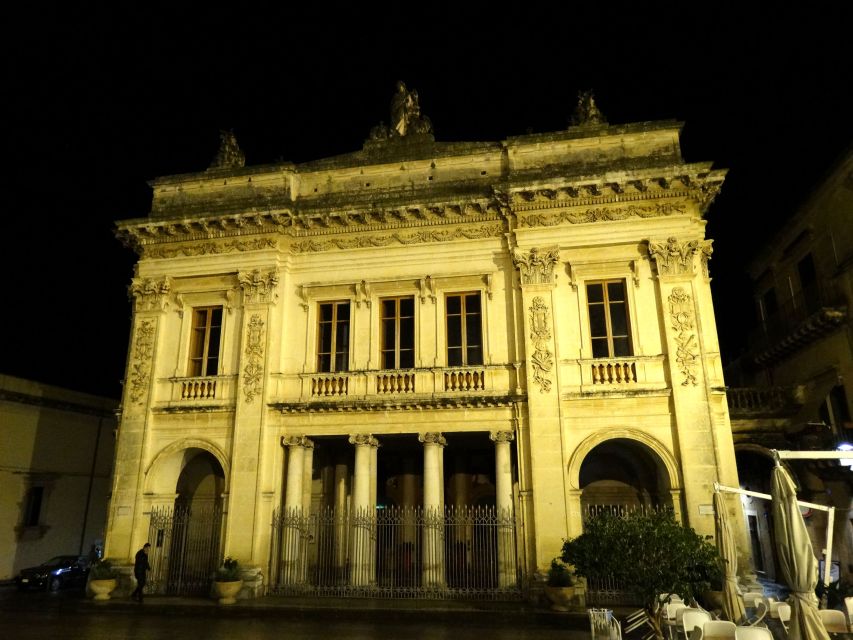
Then you shift to a neoclassical note at the end of the walk: the Tina di Lorenzo Theater. The tour describes it as neoclassical style, which is a nice contrast after you have been in the Baroque zone for most of the route. It helps you avoid the feeling that everything in Noto is the same visual language.
Finally, you end with two key outdoor elements: the marble Fountain of Hercules, built in the 1700s. It is a clean closing image because you have been inside ornate interiors and up at dramatic facades, and now you get a sculptural object in open space.
This “outdoor finish” is not just aesthetic. It is practical. You are finishing your 2-hour window with an easy last look and a smooth wrap back to your meeting point at Porta Reale or Porta Ferdinandea.
How much is this worth for $346.65 per group up to 25?
The price is $346.65 per group, up to 25 people, for a 2-hour private guided walking tour. That pricing model can be a strong value if you are traveling with multiple people, because it is not priced per person.
The real question is whether 2 hours feels like enough. With this specific route, you are hitting a lot of iconic stops, including interior visits at key churches and the Cathedral of S. Nicolò. If you want a guided overview that helps you understand what you are seeing, the timing works.
If you are the type who needs a long, slow read of every facade and every interior, you might feel rushed. In that case, think of this tour as the starter course. You can use what you learn here to guide your independent time later that day.
For language, you get both Italian and English, and the tour is led by a licensed guide. That matters for value because Baroque architecture is all about details. A guide helps you notice the right things, like mirror illusions in Palazzo Ducezio or the bell-tower design at the cathedral.
Who this tour fits best
This Noto Baroque walk is a good fit if you want a compact, high-impact introduction to Sicilian Baroque in one UNESCO-listed city. It is especially well suited to groups who like architecture and art, and to anyone who would otherwise miss the meaning behind the decorations.
It is also a strong option if you want a private format. A private group generally means you can ask questions, adjust your pace, and spend a little more time where you care most.
The only group that might struggle is anyone who finds stairs and church visits hard. The tour includes going up stairs for interior viewing and also covers multiple churches, so plan around that.
Should you book this Noto Sicilian Baroque Architecture guided tour?
If your goal is to see the best of Noto Baroque style without getting lost in a sea of stone, I think booking makes sense. The route hits major landmarks like Palazzo Ducezio and the Cathedral of S. Nicolò, then balances them with close-up detail streets like Via Nicolaci and the Infiorata setting. You also get the kind of guide-led attention that turns decorations into readable stories.
Book it if you want efficient sightseeing with a guide who can handle pacing and comfort, including shade breaks on warm days, a point highlighted in guide performance that includes Elia. Skip it only if you already plan to spend a long afternoon in a single church or museum and you prefer fully self-paced wandering with no structured stops.
In a nutshell, this is the sort of 2-hour plan that leaves you with clear mental images of Noto’s Baroque character, not just a list of sights.
FAQ
Where is the meeting point for the Noto walking tour?
You meet with the tour guide under the gate Porta Reale or Ferdinandea. The guide has a license badge around the neck.
How long is the tour?
The tour lasts 2 hours. Starting times depend on availability.
Is this a private group tour?
Yes. It is listed as a private group, and the group size is up to 25 people.
What languages are available for the tour?
The live guide offers Italian and English.
What key sights does the tour include?
It includes stops connected to Church of S. Francesco, Palazzo Ducezio, Loggia del Mercato, Piazza del Duomo, the Cathedral of S. Nicolò, Via Nicolaci and Palazzo Nicolaci, the Church of St. Chiara, the Tina di Lorenzo Theater, and the marble Fountain of Hercules.
Does the tour include interior visits or only outdoor viewing?
The tour description indicates you will visit interiors, including the Church of S. Francesco area and the Cathedral of S. Nicolò, plus the Church of St. Chiara interior.
What should I bring or wear?
Wear comfortable shoes and comfortable clothes.
What is included in the price?
The tour includes a licensed tour guide.
Is free cancellation available, and can I pay later?
Free cancellation is available up to 24 hours in advance for a full refund. You can also reserve now and pay later.
Just reviewed in Noto
- From Taormina: Siracusa & Noto Small-Group Tour★ 4.6 · 44 reviews
- Noto: Farm to Fork in Sicily – Cooking Class in a Farm★ 5.0 · 15 reviews
- Wine Tasting and Typical Tastings in the Val di Noto★ 4.4 · 20 reviews
- Private Tour of Noto with a local guide★ 4.4 · 13 reviews
Walking Tours, compared.
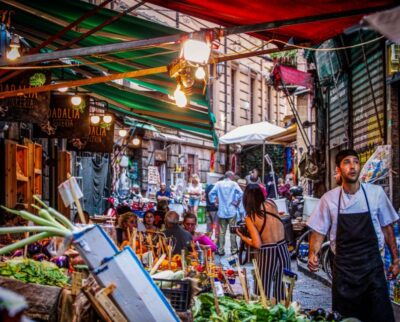
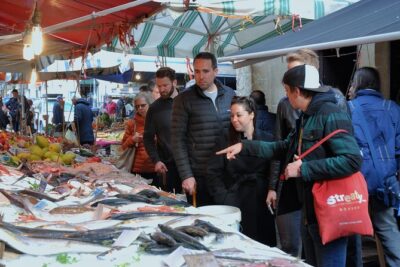
Palermo Original Street Food Walking Tour by Streaty
Read our review →
Palermo No Mafia walking tour: discover the Anti-mafia culture in Sicily
Read our review →
Street Food Walking Tour with Local Guide & Tasting
Read our review →Browse the lists this tour appears in