
Reviewed in full · SEGESTA TOURS
Full Day Exclusive Excursion to Segesta, Erice & Trapani Salt Flats from Palermo
This day trip is interesting because it strings together three different sides of western Sicily in one smooth route: ancient ruins, medieval mountain views, and salt flats that helped shape trade for centuries. I like that it is exclusive to your group, so you can move at a pace that fits you. I also like the way the day mixes big-ticket sights with food stops and real commentary along the drive. The one drawback to plan for is that you will be doing some uphill walking and cobbled paths in Erice, so wear solid shoes and keep your expectations flexible for weather and timing.
If you get a guide like Umberto or Cristian, you are likely to get more than facts. They tend to connect the architecture, the landscape, and even the local food habits, and that makes the day feel like it has a thread. I especially enjoy that the experience is built around Segesta’s hilltop temple and Erice’s viewpoint town, where small changes in light can totally change what you see. The consideration here is simple: entrances and some guidance elements cost extra, and the salt flats can be seasonal, so it helps to budget time with a Plan B mindset.
Key points you should care about
- Exclusive, private feel: it is only your group, with round-trip transport from Palermo.
- Big views, two different heights: Segesta’s temple hilltop and Erice at 760 meters.
- Sicilian tasting opportunities: wines, sweets, and local snacks show up during the day.
- Salt history that makes sense: from Phoenician and Norman notes to Spanish-era peak trade.
- Windmills and salt-pan realism: you are not just looking at photos, you are seeing how the landscape works.
- Guides matter: many days are led or narrated by English speakers like Umberto or Cristian.
Why this West Sicily loop actually feels efficient
A lot of Palermo-area excursions cram in sights and leave you with sore legs and half-seen details. This one is different because it is organized as a clear westward arc. You start with a major Greek temple site up on a hill, then you climb to the medieval town of Erice for views over Trapani, and you end with the salt flats around Trapani and Paceco.
That flow matters. You are not doubling back across Sicily’s messy road network, and you are seeing the coastline and hills from angles that make more sense as the day progresses. The private format also helps. Instead of being herded, you can usually take a little more time where you care and shorten stops where you do not.
You will be picked up in Palermo, with departure at 8:30 a.m. That early start is not just for efficiency. It also helps with light and crowds at Segesta and gives you more usable hours in Erice before late-day closures can creep in.
More Segesta visits from Palermo:
- Segesta, Erice and Salt Pans Full-Day Excursion from Palermo
★ 4.2 · 1,791 reviews - Segesta Erice and Salt Pans Full Day Excursion
★ 4.0 · 106 reviews - From Palermo: Segesta Archaeological Park Transfer
★ 4.7 · 52 reviews
Segesta’s hilltop temple: a masterpiece that feels oddly dramatic
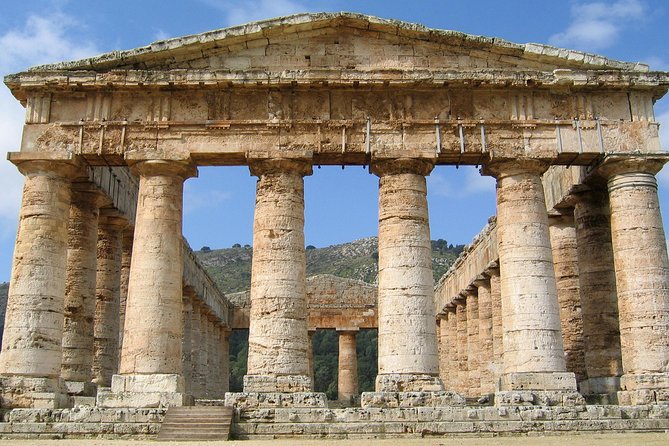
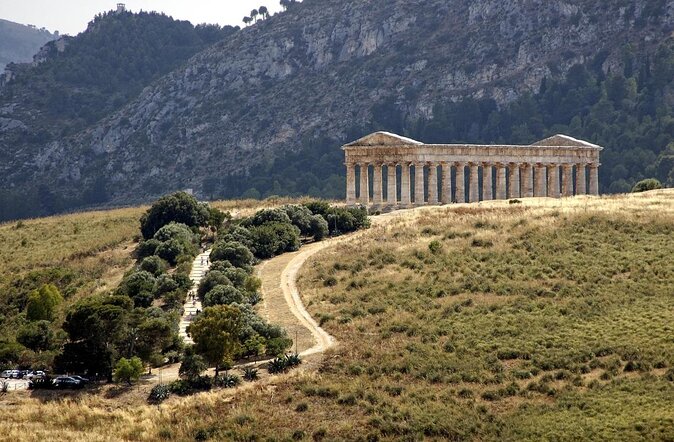
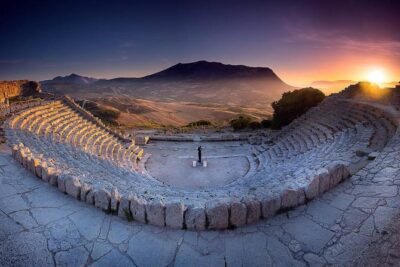
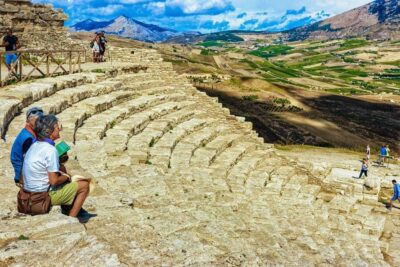
Segesta is one of those places where you feel the landscape doing the work. The temple sits west of the city on a hilltop, and the approach makes you look out before you even look in. This is the site people call the Great Temple, built in the last thirty years of the fifth century BC.
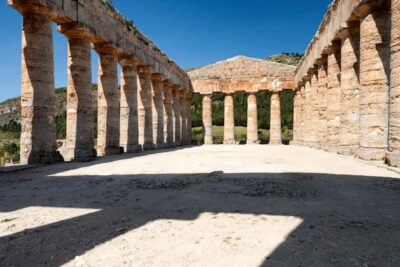
What I like about Segesta is the temple’s complete colonnade feel. It is a hexastyle peripteral temple, meaning six columns on the shorter side and fourteen on the long side, for 36 columns in total. Some details are classic Greek in proportion, while other elements are “peculiar,” so the temple is not just a pretty postcard. It is a real puzzle, the kind that makes you pay attention as your guide explains what you are looking at.
Practical note: the Segesta ticket is not included, and the cost is €18.50 per person. If you are traveling with a group, check the total early so there are no surprises at the ticket desk. I also recommend you treat the temple visit as focused time. In many cases, you will want to spend your hour inside the temple area and not rush past viewpoints.
If weather is foggy, you may miss some of the valley distance. Still, the temple can feel haunting in low light. One of the best “value” moments at Segesta is when you step back and let your eyes adjust to the height and spacing of the columns.
Erice at 760 meters: medieval lanes, Venus, and almond-powered energy
Erice is the kind of town that makes you slow down, because the place is built for walking. You reach the medieval summit at 760 meters, and once you are there you can feel why people have long treated it as a destination, not just a stop.
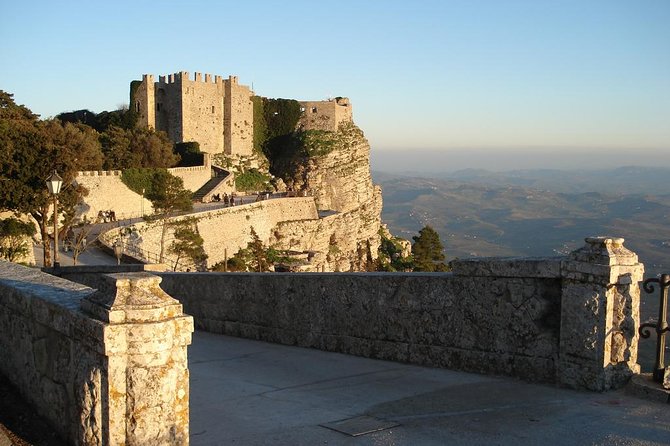
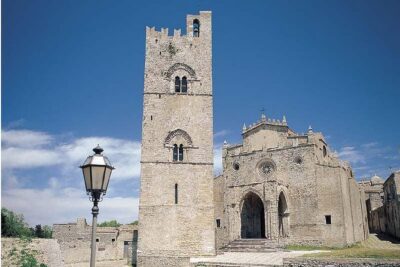
A big highlight here is the Castello di Venere area. You walk through parts of town tied to the temple dedicated to Venus, plus the castle, towers, and the cathedral. The town is surrounded by cyclopean walls, and the stone paths plus plants and flowers give it that enchanted “how is this real?” vibe, even if you are not usually a fairy-tale person.
Now the part that I think makes Erice more fun for everyday travelers: the food culture is visible as you walk. Almond sweets are famous worldwide, and you will have opportunities to taste local specialties during the day. Expect chances to sample Sicilian treats, and if your guide offers suggestions, take them. In Erice, a “right now” sweet can be as helpful as a map.
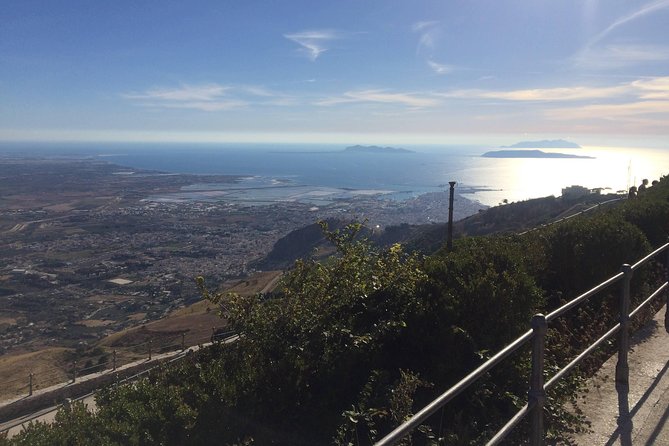
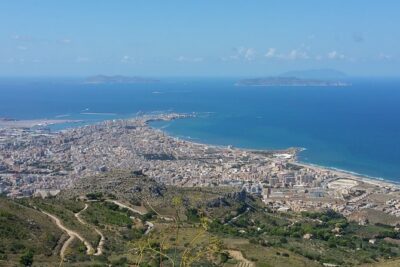
Then there is the panorama. From Erice, you look down toward Trapani’s characteristic sickle shape. On a clear day, you can also see the Mount Cofano reserve area, plus Custonaci sitting below it. If fog rolls in, the view becomes less about distance and more about mood. Either way, it is one of the best photo-to-real-life moments in the western Palermo orbit.
Practical note: Erice walking involves uneven ground and stairs. Even though the tour calls for moderate physical fitness, you do not need to be an athlete. You just need shoes that handle cobblestones and a willingness to take it one step at a time.
How the salt museum turns white gold into a story you can see
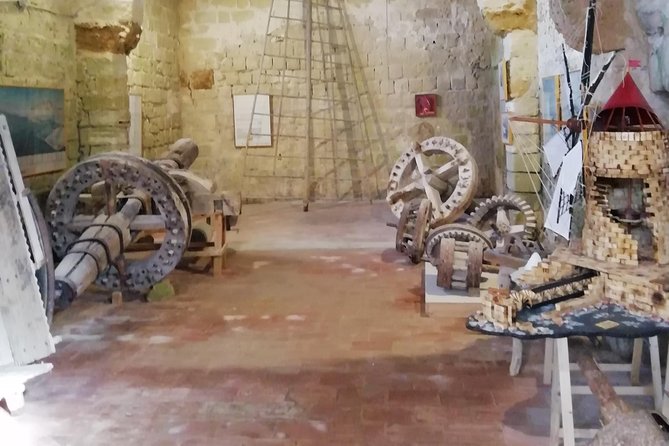
After Erice, you move into a totally different rhythm: salt production. The Museo del Sale experience helps you understand what you are about to see, and it does it with a timeline that stretches back farther than most people expect.
Here is what makes the salt story click. Salt pans are mentioned as far back as Phoenician and documented periods, and later sources describe salt pans during Norman domination. Under Frederick of Swabia, salt production became a state monopoly. Later, the Aragonese shifted property rules again, and then during the Spanish crown period, Trapani’s salt production reached a peak that turned the port into a major European trade center for salt.
One detail that I think helps you understand why Trapani matters: salt was exported beyond mainland Sicily, including to the islands of Stagnone. Then, after the unification period in the 1800s, the salt pans in Trapani stayed outside nationalization and kept exporting, even while other salt systems declined. The story moves into the 20th century too, with decline connected to industrial competition, wartime disruption, and changing tastes for rock salt.
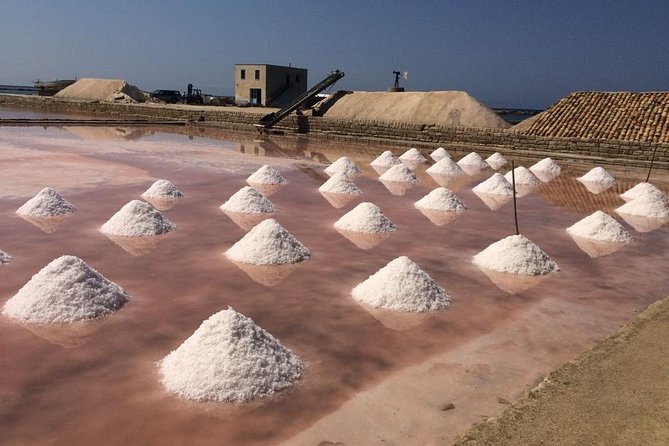
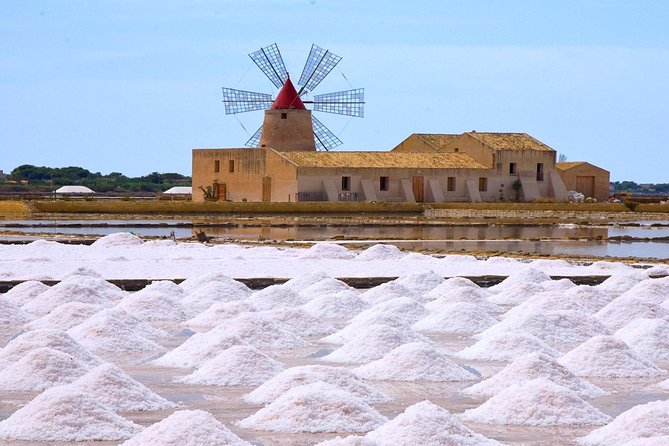
When you reach the salt-area sites, this context makes the landscape feel intentional. Windmills, mounds, and the geometric layout of salt pans stop being random scenery. They become part of a working system, shaped by history and labor.
Practical note: the salt museum entry is listed as free in the included stops. That means you are spending your money on the day overall, not getting hit by multiple paid admissions once you are out on the road.
More salt pan tours on the west coast:
- From Palermo: Day Trip to Erice, Segesta and Salt Pans
★ 3.7 · 27 reviews - The best of the West Segesta, Erice, Trapani Saline, Full-Day Tour from Palermo
★ 4.5 · 18 reviews - Segesta, Erice and Saline di Nubia from Palermo
★ 4.5 · 16 reviews - Best Excursion in western Sicily to Erice, Trapani Salt Flats from Palermo
★ 5.0 · 12 reviews
Riserva Naturale Saline di Trapani e Paceco: windmills, salt pans, and real timing
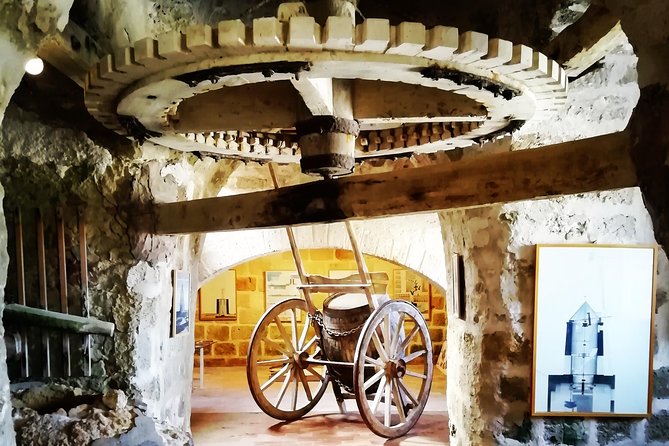
The Riserva Naturale Saline di Trapani e Paceco is where the “museum story” becomes visible. This is the salt flat landscape around Trapani and Paceco, and it is tied to the windmill culture you see in old photos and in local design.
What I like about this part is the chance to look at salt pans in a way that feels more grounded than a quick walking tour. The area includes access to a salt museum inside an old wind mill, which helps you picture how production worked before modern industrial methods took over.
One consideration you should keep in mind is seasonality. In at least one case, the salt pans were described as seasonal, with limited appeal outside peak harvest timing. That does not mean the site is always disappointing, but it does mean you should ask yourself what you want most: the historical explanation, the landscape itself, or active salt harvesting.
If your day winds up near a siesta-like slowdown in Trapani, it can also affect how much town exploration you get. So if you love walking streets, build in the idea that you may need to focus on viewpoints and the salt area rather than expecting a long roam through the old center.
The good news: salt flats still look like salt flats, even when they are not in peak production. The geometry, the windmill shapes, and the stark colors do a lot of the work for you.
Food, wine, and small stops that make the day feel local
This is not a “look but do not touch” tour. You should plan on tasting moments. The highlights call out Sicilian wines, sweets, and traditional foods, and the day is set up to let you graze at the right times.
In Erice, almond sweets are a natural focus. In addition to any guided tastings, you may be pointed toward specific pastry stops. For example, one guide like Umberto is known for steering people toward canollis and Genovese cookies, and he tends to connect them back to place and people, not just sell you sugar.
There is also a classic Sicilian lunch rhythm that can feel very satisfying after you have climbed and walked. In one case, a lunch by the sea was mentioned as a highlight, which makes sense. After Erice, you will probably crave something hearty.
And if you want something more unusual, one guide story included a stop for a local spleen sandwich. Even if you do not order it, it is a good reminder that the day can go beyond standard tourist menus.
Practical note: food and drinks are not included, so carry some cash or a card you are comfortable using. If you are the type who hates surprise spending, decide what you want for lunch before you get there, then treat tastings as bonuses.
Price and logistics: what your money is buying
The price is $660.13 per group (up to 3) for a 7 to 8 hour day. It includes hotel pickup and drop-off around Palermo, and transport by a licensed air-conditioned minivan or car, plus round-trip service.
Here is the value logic I use when deciding on a tour like this. You are paying for three things that are hard to DIY in one clean day: (1) transport that handles long road stretches, (2) a guided narrative that connects ruins, medieval life, and salt history, and (3) the ability to keep your day flowing without spending extra mental energy planning every turn.
You are not paying for all entrances. The Segesta temple ticket is €18.50 per person and is not included. Also, the listing notes that a licensed guide is not included, but in practice you may still get commentary from your English-speaking driver, as many days do. Either way, you should budget for the Segesta admission and any additional guidance or entry that may be required.
If you want a simple planning number, count on one paid entrance for Segesta, then set aside spending for lunch and drinks. Once you do that, the per-group price starts to make more sense, especially if you avoid paying for multiple separate transfers and self-drive parking stress.
One more small tip: this tour tends to book ahead. On average, it is booked about 96 days in advance, so if your dates are fixed, do not wait for a last-minute decision.
Who this trip fits best
This tour is a good match if you want a one-day structure that hits three major western Sicily themes. It also works well if you like to learn while you walk, because the narrative at each stop is a real part of the experience.
You will probably be happiest if you:
- Enjoy ancient sites but prefer them in a broader day context, not as an isolated stop.
- Want Erice for the walking town feel and the panoramic payoff.
- Like history that connects to what you can actually see, like salt production and windmill culture.
- Prefer private pacing, meaning fewer compromises about where to spend time.
You might rethink it if you:
- Have very limited mobility for stairs and uneven paths.
- Are visiting outside periods when the salt area looks most active, and you mainly care about seeing harvesting in action.
- Hate paying extra at the ticket desk, because Segesta has a separate admission fee.
Should you book this exclusive Segesta, Erice, and Trapani salt day?
If you are spending time in Palermo and you want the west coast highlights without turning your day into a logistics puzzle, I think this is a strong choice. The biggest reason is the way the day is built around contrast, ancient temple geometry, medieval high-town walking, and salt flat history that explains the landscape.
Book it if you can handle a moderate walking day and you are comfortable budgeting for the Segesta entry plus your own lunch. Skip it or reconsider if you want only one type of experience, because this day asks you to switch gears a few times.
If you do book, do two things to get more out of it: wear shoes you trust on stone and stairs, and go in ready to follow your guide’s pace, especially in Erice where a few minutes can mean a better view. With that mindset, you will leave with more than photos. You will have a clearer picture of why this part of Sicily mattered, and how it still shows itself on the ground.
FAQ
How long is the full-day excursion?
It runs about 7 to 8 hours.
What time is pickup in Palermo?
Pickup starts at 8:30 a.m.
Is hotel pickup and drop-off included?
Yes. Pickup and drop-off are offered to hotels, B&Bs, holiday homes, ports, and accommodation in Palermo.
Is this tour private?
Yes. It is an exclusive private tour, only for your group.
What language is the tour in?
The experience is offered in English. A professional English-speaking driver is included.
Are entrance fees included?
No. The Segesta temple ticket is not included, while stops related to the salt museum and the nature reserve are listed as free entries.
Is food included?
No. Food and drinks are not included.
What should I do if I have limited physical mobility?
The tour asks for a moderate physical fitness level. You should be prepared for walking in Erice.
Can I cancel for a full refund?
Yes, you can cancel up to 24 hours in advance for a full refund.
Just reviewed in Palermo
- Sicilian Winery Tour with Wine Tasting from Palermo★ 5.0 · 12 reviews
- Palermo: Medieval castles of Caccamo & Cefalù. Small Group Tour★ 5.0 · 24 reviews
- Traditional Sicilian Recipes in Palermo★ 5.0 · 4 reviews
- Palermo on a plate: Traditional Food & Wine tour (by Streaty)★ 5.0 · 119 reviews
- Valley of the Temples★ 5.0 · 43 reviews
- Private Transfer from/to Trapani★ 5.0 · 3 reviews
- Private Transfer from/to Castellammare del Golfo★ 5.0 · 24 reviews
- Transfer From Palermo to Catania with a Stop in Agrigento Valley of Temples★ 5.0 · 35 reviews
Segesta Tours, compared.
Segesta, Erice and Salt Pans Full-Day Excursion from Palermo
Read our review →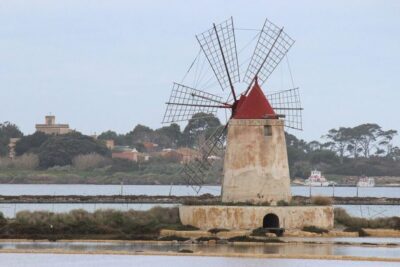
Segesta: Archeological Park Entry Ticket and App Audioguide
Read our review →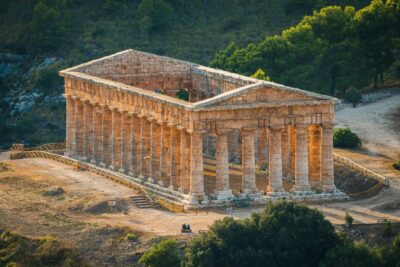
The best of the West Segesta, Erice, Trapani Saline, Full-Day Tour from Palermo
Read our review →Browse the lists this tour appears in