
Reviewed in full · TRAPANI SALT PANS TOURS
Guided tour of the salt pans of Trapani and the Salt Museum
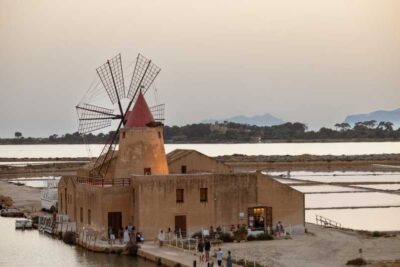
The Trapani salt pans in Sicily are interesting because they are still working. You get a guided walk through the WWF reserve around the Riserva Naturale Saline di Trapani e Paceco, then you move indoors to the Museo del Sale housed in an old baglio. I like how the guide shows the salt making process step by step, and I also love the mix of science, birds, and sea views. One thing to consider: this is out in Paceco, not right in central Trapani, so plan how you will get there.
You have about 1 hour 15 minutes total, and it is set up so most people can join in. If you want the best photos, do it when the light is softer, because you will be looking at white salt, blue sea reflections, and the pink tanks.
Key highlights at a glance
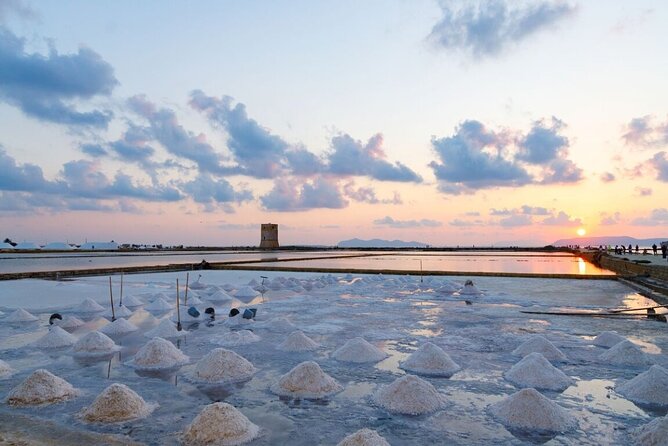
- A walk along the perimeter of the salt pans, ending where water reflects the sky
- WWF reserve nature time, with protected plants and birds in the same view
- Hands-on salt production, including seeing salt formation in the tanks
- A museum in an ancient baglio, focused on salt work and the family behind it
- A look at classic tech, including the Archimedes screw mentioned as a standout
- Great value for the money, with tickets included and a very high satisfaction score
Salt pans plus a museum, how the story actually connects
This tour is short, but it feels complete. It starts outdoors, where you can see salt forming in real tanks, and it continues indoors, where the tools, the families, and the long grind of salt work make sense. If you like places where nature and human labor overlap, you’ll get it right away at the Riserva Naturale Saline di Trapani e Paceco.
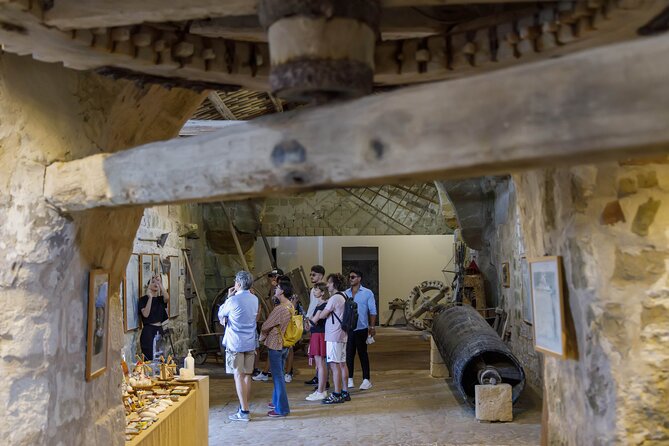
The pace is friendly for a one hour and a bit experience. The outdoor part is long enough to actually notice the details: white salt, blue sea, gray clay, and pink tanks. Then you shift to the Museo del Sale, where the guide puts the salt industry in historical context, including an ancient mill dating to the 1400s.
The strongest part here is how the two stops talk to each other. Outside, you see what sea water becomes. Inside, you learn why people did this work for generations, and how the operation was organized day after day.
More salt pan tours on the west coast:
- SALT TOUR-all inclusive: salt tour: Trapani, Paceco, Nubia
★ 5.0 · 589 reviews - Trapani: Salt Pans Sunset Tour and Flamingo Way
★ 4.4 · 252 reviews - Segesta, Erice and Salt Pans Full-Day Excursion from Palermo
★ 4.2 · 1,791 reviews
Stop 1: Riserva Naturale Saline di Trapani e Paceco, the walk and the salt colors
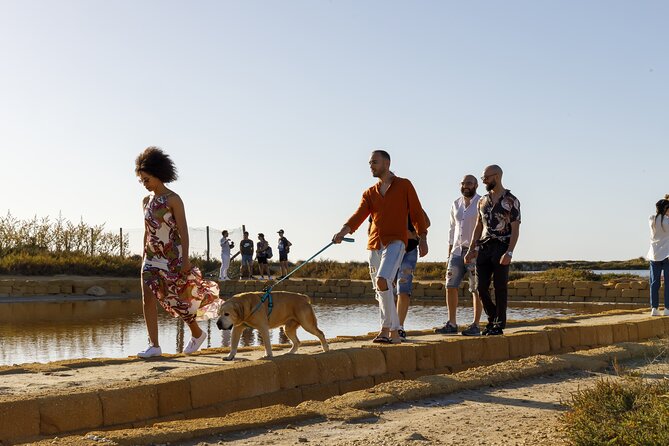
The first stop is a guided walk inside the WWF protected area of the salt pans. You follow a route that runs along the perimeter of the salt pan, then it reaches the banks where the water acts like a mirror for the sky. That mirror moment is not just pretty. It helps you understand how the whole system relies on water, sun, and slow change.
This is also where the tour feels most alive. The reserve setting matters because you are not walking through a fenced-off industrial area. You are moving through an active salt landscape where protected plants and birds share the same space.
What I love about this outdoor section is the way the guide connects colors and textures to the process. The salt is white, the surrounding clay can look gray, and the tanks can show a pink tone. You also get a clear path through the workflow, so you do not feel like you are just strolling around pretty geometry.
There’s hands-on time too. You can collect salt with your hands, which is the fastest way to turn a concept into something real. When you touch it, the talk about sea water turning into salt stops being abstract.
Possible consideration: you are walking in an outdoor reserve, so you are dependent on weather. The tour is described as requiring good weather, and if conditions are poor you will be offered a different date or a full refund.
How sea water becomes salt, in plain steps you can remember
If you’re like me, you might assume salt making is boring. It isn’t here, because you get to see the logic of the process as you move from area to area. The guide walks you step by step through how sea water transforms into salt people buy in stores.
You also get that rare mix of nature watching plus production watching. You might notice birds or protected plant zones as the guide explains what is happening in the tanks. That makes the salt pans feel more like an ecosystem than a factory.
Think of it as a lesson in time. Salt does not happen instantly. It is slow work driven by evaporation and careful management. The walk structure helps you feel that timeline, because you are moving through the system instead of just hearing it.
From the review details, you can even expect discussion of the machinery side of the operation, including an Archimedes screw. That is one of those classic inventions that feels surprising in a place you would only expect to be about sun and water.
Stop 2: Museo del Sale and the 1400s mill, where the family story takes over
After the walk, you move to the Museo del Sale. This is not a throwaway room with a few photos. The museum is inside an ancient baglio, and it connects directly to salt work done for a long time.
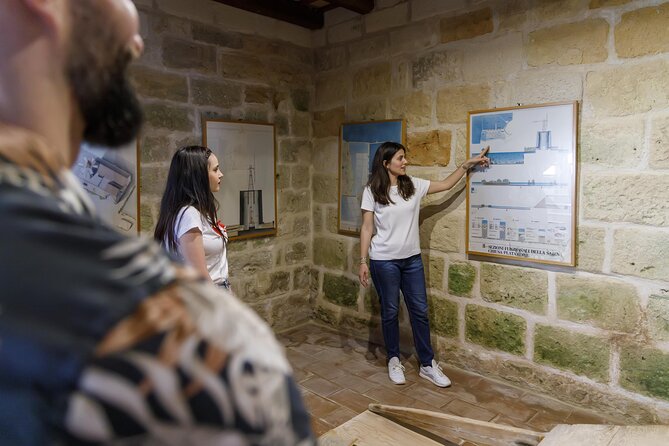
A key detail is the focus on the people, not just the product. The guided part centers on the history of the family who ran the salt operation for generations. That is what makes it more than a science lesson. You understand that the salt pans were also livelihoods and routines.
The museum also ties into older infrastructure. It references an ancient mill from the 1400s, which gives real weight to the long-term nature of this work. You can see how production tools were used, and the space works as a bridge between “what you saw outside” and “why those tools and processes mattered.”
From review highlights, one standout moment is how the museum portion includes both explanation and a small tasting. It’s a simple touch, but it helps your brain file everything under real-world experience.
One more thing I appreciate: the museum is included in an official European Union guide, which suggests this is not a random roadside stop. The setting, the structure, and the interpretation aim to preserve and explain the salt tradition.
Possible consideration: the museum can have multiple guides or more people than the outdoor walk. If you really need quiet to follow explanations, bring patience, and lean toward the front or closer to the guide when you can.
Other Sicily options side by side
- Visit to the Museum and show of Sicilian puppets in Syracuse
★ 4.5 · 3 reviews - Guided tour of the Trapani Salt Pans and Salt Museum
★ 4.7 · 423 reviews - Syracuse: Museum Guided Tour with Sicilian Puppet show
★ 4.1 · 27 reviews
What you will likely get in about 1 hour 15 minutes
The schedule is compact on purpose. You spend about 50 minutes at the salt pans walk, then about 25 minutes in the museum.
That time split is smart. The salt pans part needs enough minutes for you to actually notice changes in color and water behavior, and to hear the production steps. The museum then gives you the “so that’s why” layer.
Also, the tour is offered in English, and it is described as suitable for most travelers. It is private, meaning only your group participates. That matters because private tours often feel less rushed and easier to ask questions in, especially when you are curious about the process.
Price and value, what $21.77 buys you here
At $21.77 per person, this tour is priced like a value outing, and the reason is practical: ticket admission is included for both parts, and you get two different settings in one short package.
You are not just paying for entry. You are paying for guided interpretation that ties nature to production to history. That connection is the whole point of salt pans like these. Left on your own, you might appreciate the views, but you would miss the process.
Add in the small tasting, and the value gets even easier to justify. It turns the museum and the salt story into something you can react to, not only look at.
One more value angle is the satisfaction score. This experience is rated 4.8 with 188 reviews, and 98% recommend it. That is the kind of pattern you want when a tour is highly specific, like salt making.
When to go, light matters more than you think
The salt pans are visual on any day, but the timing can change your experience. If you can choose, consider late afternoon or sunset hours, because the salt and water reflections look best when the light is lower.
The tour description includes the “water mirrors the sky” moment, so you want conditions where reflections are strong. Reviews also point out that sunset can make the whole place feel like a spectacle, with a very pretty setting for both photos and the tasting moment.
Also, the tour requires good weather. If you are traveling in a season where rain or wind is common, build in flexibility. The tour offers a different date or a full refund if canceled due to poor weather, so it is a plan that you can manage.
Getting to Via Salina Chiusa 1 in Paceco, plan this early

The meeting point is Via Salina Chiusa, 1, 91027 Paceco (TP), Italy, and the ticket is redeemed at VIA CHIUSA – NUBIA, 91027 Paceco (TP), Italy. The tour ends back at the meeting point.
Here is the practical truth: this is outside central Trapani. If you are staying in Trapani city, expect a short drive to reach Paceco. Some people end up using taxis or adding transportation costs on top of the tour price.
If you do not have a car, plan your transport before booking. The tour includes a private group experience, but it does not replace the need to reach the meeting point.
Who this tour is perfect for, and who should think twice
This is a great choice for you if:
- You like tours that explain how something works, not just what it looks like
- You want a mix of nature (protected reserve, birds) and human work (salt production)
- You enjoy hands-on moments like collecting salt
- You care about local history connected to a real production process
It might be less ideal if:
- You hate outdoor walking when the weather is uncertain
- You are counting on public transport to get you there, because the meeting point is in Paceco
- You need a super quiet museum experience, since the museum portion can involve more than one guide voice
Should you book this Trapani salt pans and Salt Museum tour?
If you are trying to figure out whether this is worth your time in Sicily, I’d book it. The combination is the key: the outdoor salt walk explains the process, and the Museo del Sale gives you the historical and family context. You come away understanding how sea water becomes salt, and why this work shaped generations.
The price is reasonable for what you get, especially since admission tickets are included and the tour is short enough to fit into a busy day. Just do two things before you go: check the weather, and make sure you have a real plan for getting to Paceco and back.
If you want to learn a very specific part of Sicilian life, while also getting beautiful water reflections and a memorable museum setting, this is a strong pick.
FAQ
How long is the Trapani salt pans and Salt Museum tour?
It lasts about 1 hour 15 minutes total, with roughly 50 minutes for the salt pans walk and about 25 minutes for the museum.
How much does it cost?
The price is listed as $21.77 per person.
Is the tour offered in English?
Yes, the tour is offered in English.
Where does the tour start?
The meeting point is Via Salina Chiusa, 1, 91027 Paceco TP, Italy. The activity ends back at the meeting point.
Are admission tickets included?
Yes. Admission tickets are included for both the salt pans part and the Salt Museum.
Do I need good weather?
Yes, this experience requires good weather. If it is canceled due to poor weather, you will be offered a different date or a full refund.
Is it a private tour?
Yes. It is private, and only your group will participate.
Is there a tasting?
The tour includes a small tasting along with the museum and salt pans experience.
Are service animals allowed?
Yes, service animals are allowed.
Just reviewed in Sicily
- Pillirina, Ortigia, Sea caves: Boat Tour and Snorkeling★ 4.4 · 7 reviews
- Etna Southern Slope Guided Easy Trek★ 4.8 · 36 reviews
- Lampedusa: Dolphin watching with aperitif at sunset★ 3.2 · 9 reviews
- Hot spring and Temple★ 5.0 · 3 reviews
- From Trapani: Egadi Islands Day Tour by Boat★ 4.7 · 23 reviews
- From Taormina or Messina Port: Body Rafting + Lunch★ 4.7 · 3 reviews
- Enoteca dell’Etna: Iemu Spizzicannu Tasting★ 5.0 · 9 reviews
- Capo d’Orlando: Mini-cruises to Vulcano, Panarea, Stromboli★ 2.2 · 6 reviews
Trapani Salt Pans Tours, compared.
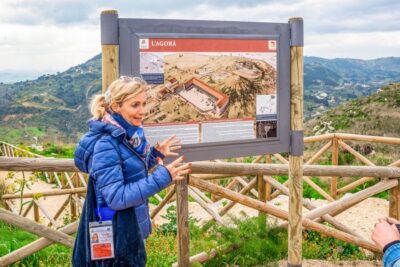
Segesta, Erice and Salt Pans Full-Day Excursion from Palermo
Read our review →
SALT TOUR-all inclusive: salt tour: Trapani, Paceco, Nubia
Read our review →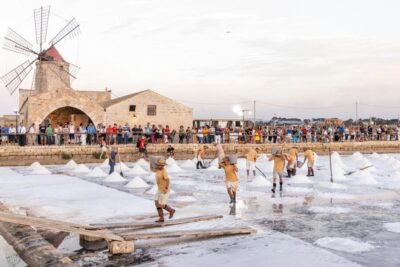
Guided tour of the Trapani Salt Pans and Salt Museum
Read our review →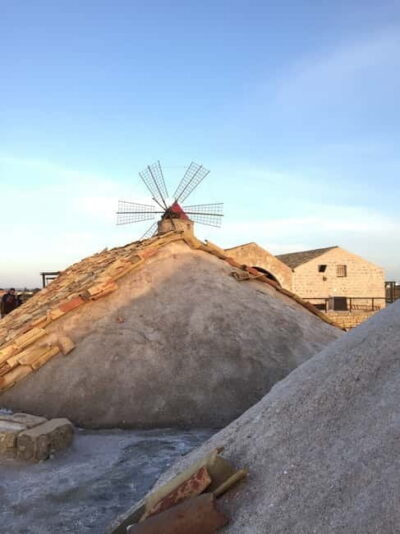

Browse the lists this tour appears in