
Reviewed in full · WALKING TOURS IN PALERMO
Palermo: Art and Architecture Walking Tour
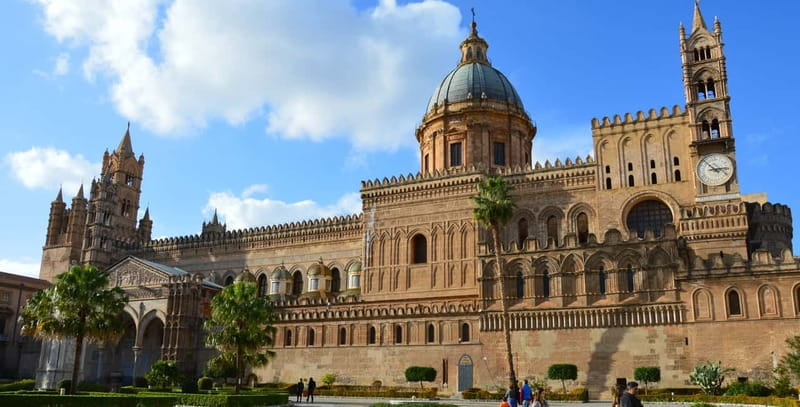
Palermo is the kind of city where you can read centuries of power and faith on the same block, and this small-group walking tour turns that into an easy, stress-free route with skip-the-line access. I love the way it pairs the Capella Palatina with Palermo Cathedral, so you see how Arab-Norman design and later styles overlap in real space.
I also like the focus on the street-level icons beyond the big churches, like Teatro Massimo and the Quattro Canti corner scene, plus the St. Rosalie legend that explains why Palermo celebrates the way it does. One consideration: monument entrance fees are not included, so you will need to pay those directly to your guide before you go in, and you should skip shorts and oversize bags.
Key highlights you should care about
- Skip-the-line entry style so you spend more time looking up and around, less time shuffling.
- Capella Palatina meets Cathedral to understand how different eras stacked their design choices in Palermo.
- Fontana Pretoria for a fountain that is instantly photo-friendly and surprisingly story-driven.
- Quattro Canti for the baroque-era street-corner geometry that makes Palermo feel theatrical.
- Teatro Massimo time in the orbit of two major theaters, Politeama and Massimo.
- St. Rosalie storytelling to connect the monuments to Palermo’s living religious culture.
Palermo architecture, reduced to a walk you can actually finish
Palermo can feel like a maze if you are trying to do everything on your own. This tour helps you because it concentrates on a handful of monuments that explain the city’s big themes: who ruled, what people believed, and how those ideas showed up in buildings.
You get a licensed live guide, and the route is designed for a private group style, with the tour time listed as about 3 hours. That matters because cathedral-and-theater days can balloon fast. Here, the pacing is built around short photo moments, guided visits, and moving on before the light and your energy both disappear.
Also, the small group format is not just comfort. It is how you avoid the classic problem in major Italian sights: you spend your time waiting, then you rush your photos. With this setup, you are usually ready to look, listen, and ask questions.
More Walking Tours in Palermo
- Palermo: NO Mafia Walking Tour
★ 4.8 · 2,431 reviews - Palermo Original Street Food Walking Tour by Streaty
★ 5.0 · 2,105 reviews - Palermo: Street Food and History Walking Tour
★ 4.9 · 1,294 reviews
Your start point: Teatro Politeama Garibaldi or Villa Bonanno
The tour begins at one of two meeting points, depending on the option you book: Teatro Politeama Garibaldi or Villa Bonanno. Starting near the theater district is a smart move because Palermo’s center is walkable, and you get context early.
You will want to show up ready to walk. The tour expects you to move through the historic core on foot, and inside the monuments you should plan for bag rules. Shorts are not allowed, and large bags, oversize luggage, and backpacks are not permitted inside the sites. Comfortable shoes are non-negotiable here, because the streets are uneven enough to punish anyone in soft flip-flops.
Palermo’s historic center, explained in a way that clicks
One of the most valuable parts is that you are not just collecting sights, you are getting the timeline in plain language. The tour frames Palermo from its early roots under the Phoenicians, moving through later phases like the Roman Republic and the Byzantine Empire, then forward to more modern Palermo. You are also guided through what the Arab-Norman era changed in the city’s look, especially in religious architecture.
That broad sweep matters because Palermo’s buildings can seem random if you only know the postcard version. When you hear the story of why certain design choices show up together, the cathedral facade stops looking like a messy collage and starts looking like a decision map.
You’ll also spend time simply walking the streets in the historic center and the Politeama sestiere district. That is where the city shows its personality. You will notice how theaters, church fronts, and street-corner design all work as a system, not separate attractions.
Fontana Pretoria: a fountain you will not forget after one photo
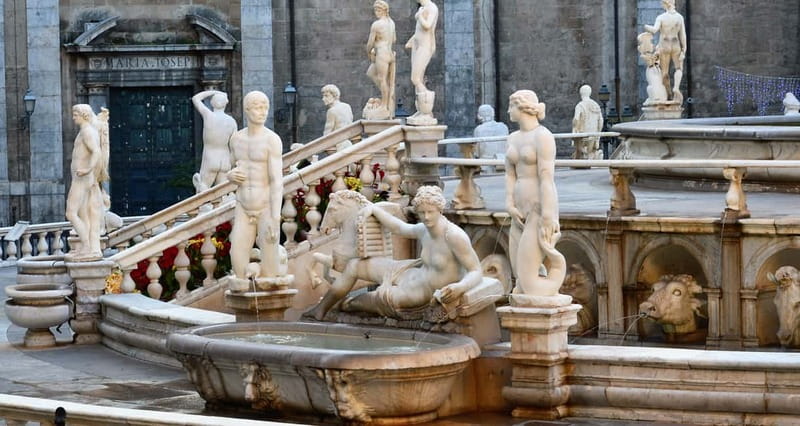
Next up is Fontana Pretoria, with a photo stop and a guided visit. This stop is short on paper, around 15 minutes of guided time, but it is exactly the kind of place where a good guide helps you “read” what you see.
A fountain might sound like a quick diversion, but in Palermo the details are what make it memorable. You look closer and suddenly you understand why locals treat it like more than decoration. Expect the guide to point out figures, composition choices, and the cultural angle that connects the fountain to the city’s taste for spectacle.
Practical tip: this is the moment to do your quick photo sweep, then slow down. If you only snap and keep walking, you miss the story layer that makes Fontana Pretoria worth the stop.
A different sort of day out around Palermo:
- Palermo: Hop-on Hop-off Bus Tour 24-hour Ticket
★ 3.9 · 2,410 reviews - Segesta, Erice and Salt Pans Full-Day Excursion from Palermo
★ 4.2 · 1,791 reviews - Palermo: Teatro Massimo Opera House Guided Tour
★ 4.5 · 1,573 reviews - From Palermo: Monreale and Cefalù Half-Day Trip
★ 4.2 · 1,354 reviews
Capella Palatina and Palermo Cathedral: the architectural style mash-up, explained
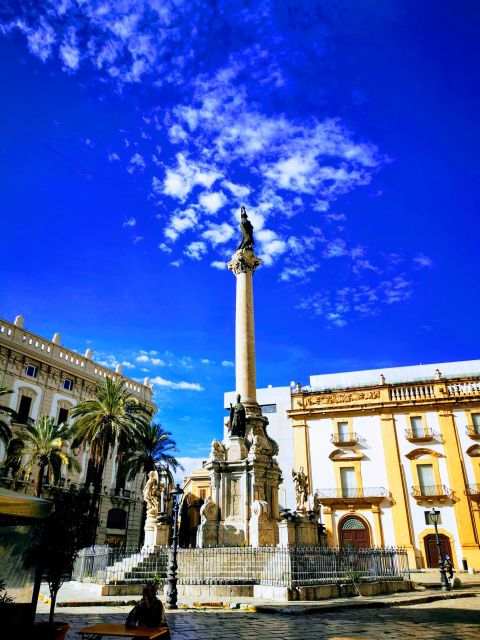
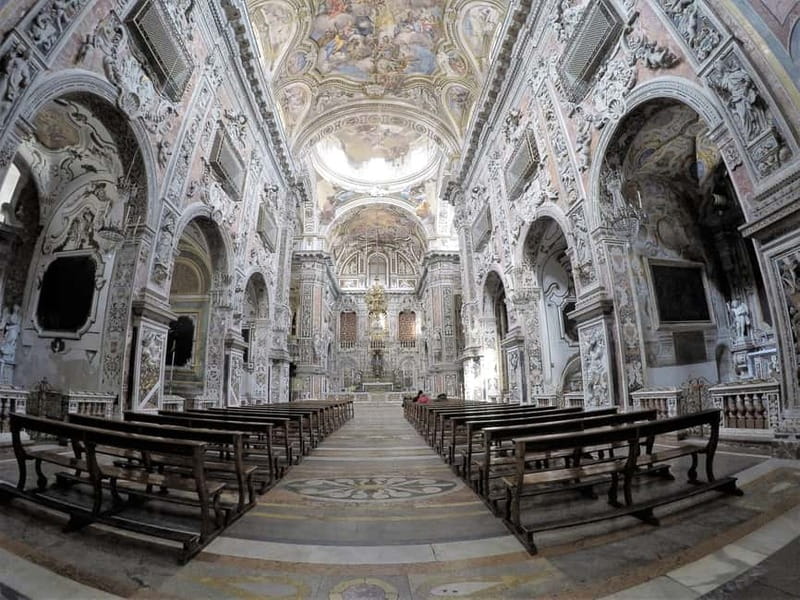
If there is a centerpiece on this route, it is the pairing of the Capella Palatina and Palermo Cathedral. The tour is structured so you get both, not just one. And that makes a big difference, because these spaces represent different expressions of power and belief.
Capella Palatina and the Arab-Norman link
The Capella Palatina is a 12th-century stop tied to the Palazzo Reale area and the Arab-Norman era. You will also hear about religious rites connected to the sites. Even if you are not a “church architecture” person, this is where you learn what to look for: how designers borrow and blend styles, and how that blending became part of Palermo’s identity.
Palermo Cathedral: a facade that tells time
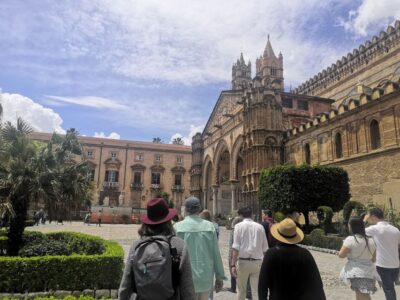
Then you move to Palermo Cathedral, with a guided visit of about one hour plus a photo stop. The cathedral facade is known for its mix of architectural styles, from Gothic through early Renaissance and Baroque. The value here is that the guide helps you place the layers.
Instead of seeing a complicated wall and shrugging, you start spotting changes as you walk. You learn to connect each layer to what was happening historically, and you understand why Palermo developed an architectural habit of adding new statements on top of old ones.
This is also where the St. Rosalie thread can come in. Palermo’s patron saint is not just a trivia fact. The legends and traditions tied to her help explain why the city’s religious life feels so public and so attached to its monuments.
One practical note: entrance tickets are not included, so plan for an extra cost that you pay directly to your guide before entering. If you have to economize on your trip budget, this is the one “fine print” item that changes the math.
Quattro Canti: the baroque street corner that makes Palermo feel staged
The Quattro Canti stop is built for walking-slow and looking up. You get a photo stop and about 30 minutes of guided time, which is plenty to appreciate what makes this corner famous.
Why it works: Quattro Canti is not just an intersection. It is an architectural statement where buildings face each other like frames, with design elements that reference different eras and identities tied to the city. When you understand the idea, the place becomes easy to recognize in the rest of the old center.
If you love photo stops that teach you something, this one is strong. You can take quick shots, but if you linger you will understand why people consider it one of the key “must see” points in Palermo.
Teatro Politeama and Teatro Massimo: opera-level grandeur without the stress
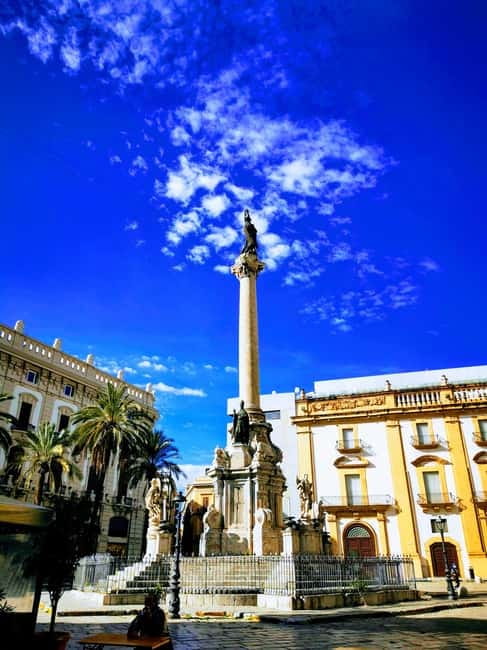
The final major monument area is the theater district, including Teatro Massimo. You also pass or reference Teatro Politeama, since the tour is organized around this region.
Why Teatro Massimo deserves time
Teatro Massimo gets a photo stop and guided time of about 29 minutes. The description notes it as one of the largest opera houses in Europe, and standing in its orbit gives you that scale in your body, not just on a screen.
This stop is valuable even if you are not buying tickets to a performance. The architecture, the urban setting, and the way Palermo treats theater as a public landmark all tell you something about local culture and pride.
Getting the most out of the theater stop
If the weather is cooperating, lean into it. If it is raining, check in with your guide and follow their timing. In sessions like these, the guide approach is often what saves you. I like tours where the guide thinks on the spot, like adjusting pacing when conditions are poor and helping an older family group keep moving comfortably.
Is the $317.20 per group price good value?
This tour is listed at $317.20 per group up to 5. That pricing structure can be a deal if you travel with a small crew. Instead of paying per person like a mass group tour, you are paying for your group size, which often turns into a better cost per head for couples and small families.
What you should factor in is that entrance tickets to monuments are not included. That means your real cost depends on which ticket types apply on your date. Also, on certain days, monument entrances are free on the 1st Sunday of each month, though a €3 per person reservation fee for booking and headsets still applies. If you time your visit thoughtfully, the added value can improve.
Another value point: headsets are included for groups larger than 15 participants, which can reduce the common problem of whispering over street noise. Even on a smaller private group, a guide with a clear microphone setup helps keep everyone engaged.
If you want a short list of “what you get” for the money, it is the licensed guide, skip-the-line entry style, and guided time at the top sites that explain Palermo’s style layers. If you are the type who likes to understand what you are looking at, the price usually feels fair.
Who this tour suits best
I think this is a strong match if you:
- want an organized walk through Palermo’s architecture without wrestling maps for hours
- care about context, not just photos
- prefer small-group attention and a smoother entry routine
- are traveling with mixed ages and want a guide who can pace the group and help manage comfort needs at stops
It might be less ideal if you:
- plan to do your own self-guided cathedral circuit and you enjoy reading signage at your own pace only
- hate paying separate entrance fees and prefer strictly all-in ticket bundles
- need to carry a backpack or large bag into monuments, since the tour rules restrict that
Should you book Palermo Art and Architecture with MySicilyGuide?
Book it if you want a guided route that connects the big icons, without the usual long-line frustration. You are getting the Capella Palatina plus Palermo Cathedral framework, then finishing with Fontana Pretoria, Quattro Canti, and the Teatro Massimo district. That gives you a coherent Palermo story in a short window.
Hold off if your priority is purely spontaneous street wandering with zero timed structure. Also, double-check how you feel about extra monument entrance fees paid directly to your guide. If you want that cost predictable up front, you may feel better choosing a different format.
If your dates line up with free entrance windows and you travel with up to five people, this can also be a good value. For many visitors, the real win is not the number of stops. It is the way the guide helps you see why these buildings belong together.
FAQ
How long is the Palermo Art and Architecture walking tour?
The tour duration is listed as about 3 hours. Starting times vary, so check availability for the exact slot.
What is included in the price?
The tour includes a licensed guide. If the group is larger than 15 participants, headsets are provided to help you hear the guide clearly.
Are entrance tickets to monuments included?
No. Entrance tickets are not included. You pay entrance fees directly to your guide prior to departure. Entrance to monuments is free on the 1st Sunday of each month, but a €3 per person reservation fee still applies for booking and headsets.
Where do I meet the guide?
You meet at one of two options depending on your booking: Teatro Politeama Garibaldi or Villa Bonanno. The tour ends back at the meeting point, and it finishes at Teatro Politeama Garibaldi.
Is this tour wheelchair accessible?
Yes. The tour is wheelchair accessible.
What languages is the guide available in?
The guide is available in Russian, English, French, Italian, Spanish, and German.
What should I bring, and what is not allowed?
Bring comfortable shoes, sunglasses, a sun hat, and sunscreen. Shorts, oversize luggage, and backpacks are not allowed.
Just reviewed in Palermo
- a PRIVATE ride of Favorita Park and Mondello★ 5.0 · 5 reviews
- Relax in Mondello and Sanctuary in Monte Pellegrino★ 4.4 · 70 reviews
- Palermo to Siracusa: stop al Valley of Temples & Roman Villa★ 5.0 · 5 reviews
- Private tour: Segesta, Salt Pans & Erice★ 3.8 · 4 reviews
- Private Monreale Cathedral and Cloister, Ceramic Lab tour★ 5.0 · 5 reviews
- PHOTOSHOOT IN PALERMO★ 5.0 · 15 reviews
- Private Photographer Shooting + Sightseeing & Tasting Tour★ 4.8 · 4 reviews
- Palermo: Vintage Fiat 500 Sightseeing Tour★ 5.0 · 132 reviews
Walking Tours in Palermo, compared.
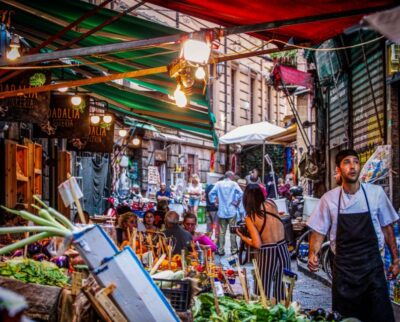
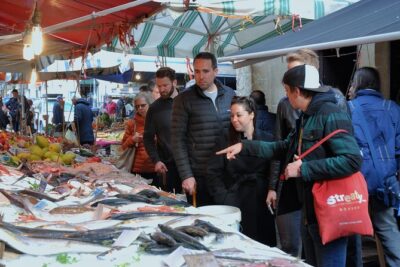
Palermo Original Street Food Walking Tour by Streaty
Read our review →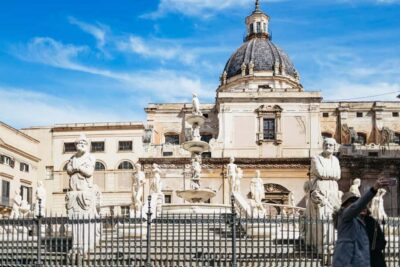
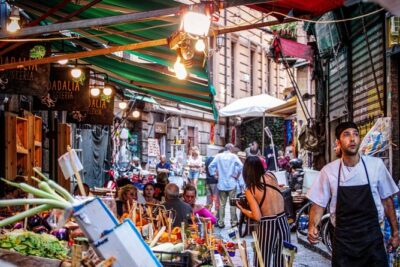
Palermo No Mafia walking tour: discover the Anti-mafia culture in Sicily
Read our review →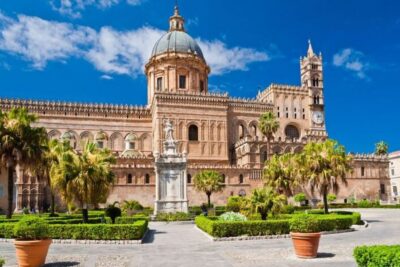
Street Food Walking Tour with Local Guide & Tasting
Read our review →
UNESCO World Heritage Sites Guided Walking Tour
Read our review →Browse the lists this tour appears in