
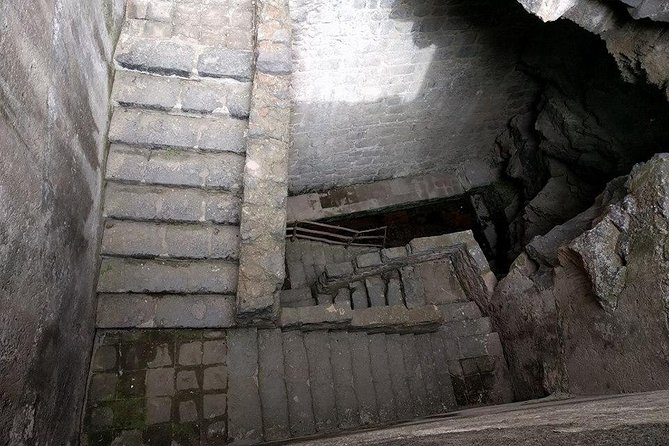
Reviewed in full · SICILY
Underground Catania
Underground Catania is interesting because you walk under the streets of an Etna city and see how the ground itself shaped daily life. I love the archaeology-led storytelling and the way you get access to spots that are hard to find on your own. One drawback to plan for: it is not a long, sit-down lecture, so if you want tons of free time between stops, you may find the pace a bit brisk.
What makes this outing work well is that it connects several layers of Catania, Roman, Norman, Baroque, and beyond, without losing the thread. You’ll also get relief from heat, since a big chunk happens underground. For many people, that means it feels like a smart half-day choice, not a chore.
Key Things I’d Watch For Before You Go
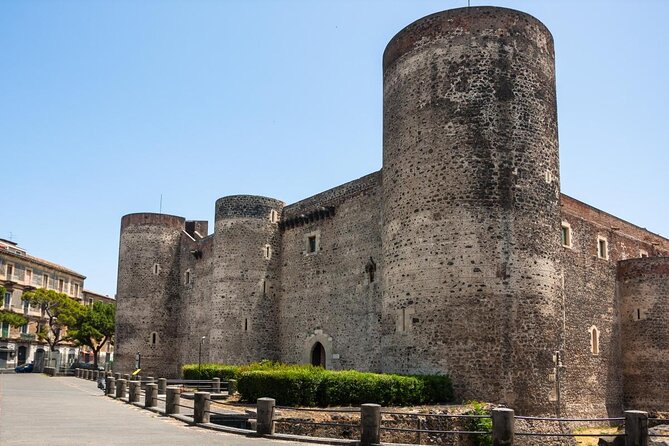
- Max 8 travelers keeps the experience easy to manage and helps your guide handle questions
- English tour with a true archaeology focus, plus examples and context you can carry around the city afterward
- Ticketed underground sites on most stops, so you are not hunting for separate entry fees
- Duomo-area meeting point means you start in the historic heart and end near Piazza Stesicoro
- Lava caves and river traces connect geography, disasters, and faith in a way that feels tangible
- A small-group setup that feels personalized, even if it is not a one-on-one experience
Why Catania Works Best Underground, From Terme to Lava Tubes
If your idea of Catania is mostly black-stone buildings and big church facades, this tour changes the camera angle. You see what sits below the city: Roman thermal spaces, water routes, and lava-flow cavities that later generations reused for cisterns, tombs, and worship.
The best part is how the underground stops are not random. They form a timeline you can walk through. Roman-era engineering shows up under the Duomo area. Centuries of rebuilding and devotion appear in the cathedral and in the story tied to St. Agatha. And the volcanic reality of Catania becomes visible when you are standing in actual lava-built spaces.
My other favorite detail is that the tour is designed for a short window, about 2 to 3 hours. That matters in Sicily. The surface can get hot and chaotic. Underground, the temperature and sound change, and you have a calmer rhythm.
Also running in Sicily:
- Etna Morning Trip
★ 4.5 · 1,241 reviews - Syracuse: Boat Trip of Ortigia Island and Sea Caves
★ 4.7 · 937 reviews - Tour of the island of Ortigia and exploration of sea caves with baths.
★ 5.0 · 668 reviews
Tour Size, Timing, and the Exact Start Near the Duomo
This experience is offered by Etna ‘Ngeniousa and runs about 2 to 3 hours. The group is capped at 8 travelers, and the tour is conducted in English. You also get a mobile ticket and confirmation at booking.
You’ll meet at Piazza del Duomo, 7, 95131 Catania. The tour ends at Piazza Stesicoro, 95100 Catania. That start and end location pairing is practical: you begin where many visitors want to be anyway, then you finish in a lively area for a late lunch or evening stroll.
Also worth knowing: this one is described as private for your group, but with a maximum of 8 travelers. In real life, that usually means small-group energy, not a lone guide trailing just you. It still tends to feel personal because you are not packed in.
Finally, this is a good fit for many people. Service animals are allowed, and it is near public transportation. Still, you are moving through underground passages, so comfortable walking shoes and patience for stairs or uneven surfaces are a smart move.
Stop 1: Terme Achilliane Under the Cathedral Area
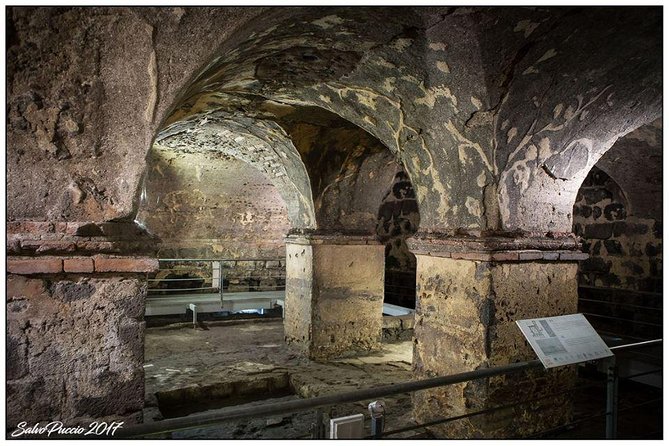
Your first major underground moment is Terme Achilliane. This is a broad thermal complex dating to the 3rd and 4th centuries AD. The key practical detail is that the preserved, accessible section is located just below the cathedral area near Piazza Duomo.
Even if you have seen Roman ruins before, you’ll likely appreciate this stop more than you expect. Thermal sites were not just about baths. They were social hubs, engineering showcases, and part of how cities displayed wealth and civic pride. Standing in a surviving slice of that system helps you understand why Catania’s later urban layers kept forming around the same core.
You get about 20 minutes here, and admission is included. That included ticket piece matters for value and ease. You are not doing the awkward moment of trying to find offices, lines, or last-second payment while your group is waiting.
One thing to consider: the underground setting tends to feel cooler than the surface, which is great in warm months, but it also means the air can be damp. If you run cold easily, consider bringing something light.
Stop 2: Basilica Cattedrale di Sant’Agata, Norman to Baroque in One Walk
Next comes the emotional center of Catania: Basilica Cattedrale di Sant’Agata. The tour frames it as sacred and political at the same time, tied to figures like Liotru and Sant’Agata, and built through layers of power and faith.
You learn how the cathedral story stretches from an older Norman-era structure, often described as an ecclesia munita, to the current Baroque Cathedral. That’s where the “history of destruction and reconstruction” theme becomes more than a phrase. Catania repeatedly had to rebuild, and each rebuilding left a new visible style and new meaning.
This stop is only about 20 minutes, and the tour notes admission is free. That makes it a good break point if you need to regroup. It also helps the overall flow, since you are going from underground moisture to the bright stone and carved details above.
If you like places with strong symbolism, this is a strong choice. St. Agatha’s story is part of Catania’s identity, and seeing the cathedral with that context turns it from a photo stop into a story stop.
A different sort of day out around Sicily:
- Pub Crawl Palermo
★ 5.0 · 595 reviews - SALT TOUR-all inclusive: salt tour: Trapani, Paceco, Nubia
★ 5.0 · 589 reviews - Mt. Etna nature and flavors half day Tour from Catania
★ 5.0 · 545 reviews - Boat tour Giardini Naxos Taormina Isola Bella Blue Grotto
★ 4.5 · 541 reviews
Stop 3: A Putia dell’Ostello and the Underground Amenano River
Stop 3 is where Catania starts to feel like a living map. You visit A Putia dell’Ostello, connected to the Amenano, a mysterious underground river that runs under the historic center.
Here’s the part I think you’ll remember: the river originally flowed to the surface and fed the Lake of Nicito. Over time, eruptions, earthquakes, and wars changed both the city’s planning and how the natural world looks. Instead of imagining disaster effects, you’re shown a real remaining branch of the water system in a cave.
The tour includes a suggestive sliding cave where that branch of the river still flows. You spend about 10 minutes here, and admission is included.
That short time can be a plus. It keeps the pace moving after two longer stops. But it also means you should show up mentally ready to take in visuals fast. If you want extra time for photos, keep your camera setup simple, and listen first, then shoot.
Safety-wise, since you are in a cave environment, go at the pace the guide sets. It is not about speed, it is about footing and awareness.
Stop 4: Chiesa di San Gaetano alle Grotte, Lava Flow Cave and St. Agatha Tradition
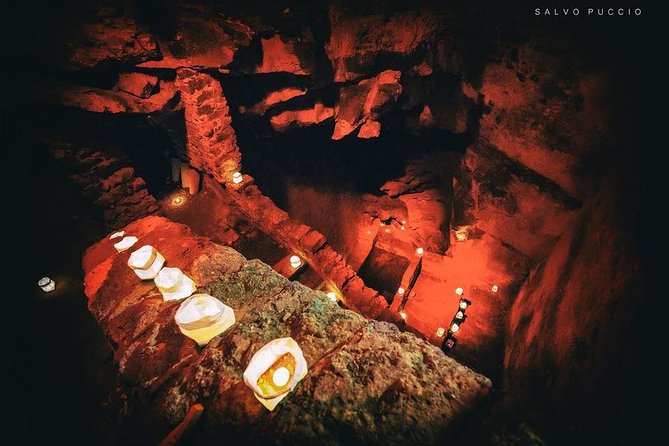
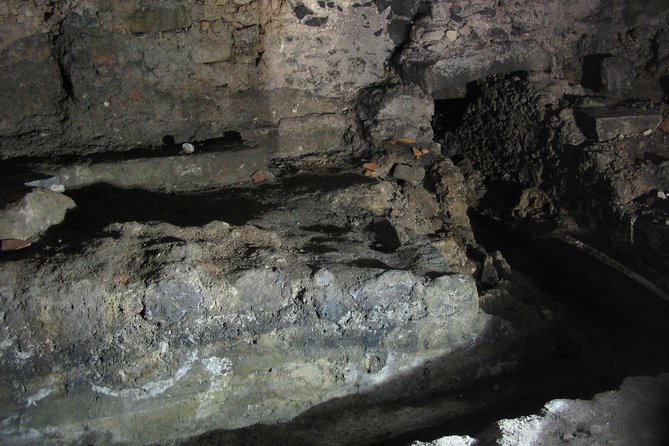
The last stop is one of Catania’s most dramatic blends of geology and faith: Chiesa di San Gaetano alle Grotte. You are stepping into an ancient lava flow cave. This place has been reused in multiple eras, which is the whole point of the underground theme.
The tour explains that it was reused in Greek times as a cistern, and then later the Romans used it as a catacomb space. Then comes the faith layer. According to tradition, it was the site of the first deposition of Saint Agatha, with a small church built as early as 262.
Today, the crypt helps you see how people literally carved meaning into rock. The remains of ancient frescoes and decorations are preserved, carved directly into the living stone.
You get about 20 minutes here, and admission is included.
This stop hits hardest if you like connections between place and story. You’re not just learning a date. You are seeing how a volcanic cave became useful storage, then a burial setting, then a sacred site. That layered reuse is one of the most practical ways to understand why cities keep surviving: they keep reusing what already exists.
What the Guides Add, From Oreste to Matilde and Maria
The standout theme in the experience is the people leading it. Several named guides come up again and again, including Oreste, Maria, and Matilde Russo (also seen as Matilde in tour notes). The effect is the same: they do not just point. They explain.
I like this style because it connects details back to why you should care. When a guide mentions the volcanic and earthquake forces that shaped Catania, it is not just scary history. It becomes a reason you can understand the city’s different “levels” of construction and reuse.
You’ll also notice how some guides adjust pacing. On a tour like this, you need someone who can slow down if you have questions or want more time at a particular carved surface. Some sessions also benefit from flexibility when conditions change, like rain, without cutting the underground portion short.
If you can, come with a few questions ready. Ask how the lava spaces were reused across time, or why water systems like the Amenano matter in a city built under volcanic pressure. When your guide responds with specifics, you will feel like you are getting the extra value that makes a guided tour worth the cost.
What You Really Get for About $96.79
At around $96.79 per person, this is not the cheapest way to see Catania. So let’s talk value in real terms.
First, you are paying for two things that are hard to replicate:
1) Access to underground spaces that are not easy to find or arrange on your own.
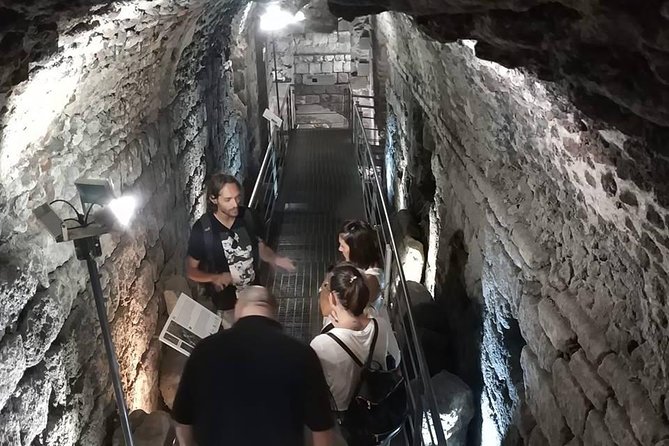
2) Expert interpretation that helps you understand what you are seeing, from Roman thermal function to later Christian tradition.
Second, multiple stops include admission. Terme Achilliane, A Putia dell’Ostello, and Chiesa di San Gaetano alle Grotte list admission as included. The cathedral stop has free admission. That reduces the hidden costs that often show up on tours where every stop has a separate ticket.
Third, the group size cap at 8 travelers gives you a better shot at asking questions and getting a real conversation, not just a headset lecture.
My practical take: if you like history and you want a “Catania only you can get here” experience, the price starts to make sense fast. If you only want a casual walk past a few monuments, you might prefer cheaper surface tours.
Also, it is smart to book early. This activity is commonly booked about 48 days in advance on average. That usually means popular time slots go first.
A Sensible Route Through Heat, Water, and Faith
One more thing I like about this structure is the variety. You get baths and civic Roman life under the Duomo area. You get a cathedral that explains reconstruction through centuries. Then you get water in an underground river system. Finally, you end with a sacred space carved into lava.
It is a neat pattern because each stop answers a different question:
- Where did Roman engineering fit in?
- How did the city rebuild after disruption?
- What happened to water when the landscape changed?
- How did faith use existing underground space?
Also, underground stops can be an escape from the surface heat. Even if you do not mind sweating, you’ll likely appreciate the change in atmosphere. Many people also enjoy it because it keeps the schedule compact. You can still have energy left for Sicilian dinner plans afterward.
Who Should Book Underground Catania With Etna ‘Ngeniousa’
This tour makes the most sense if you match at least a couple of these points:
- You are the type who reads small details on monuments, then wants the backstory.
- You like geology and how volcanic activity shapes cities.
- You want a short, high-impact outing with a small group.
- You are planning around heat and want an experience that spends real time underground.
- You want an English guide with an archaeology focus, not just a general city walk.
It is also a strong fit for people who have already seen the main surface sights and want a different angle on Catania. If you are squeezing the island into a tight schedule, this kind of “underground overview” can add a lot without eating your whole day.
If you hate confined spaces or feel uncomfortable in caves, you might find parts of the experience challenging. The itinerary includes cave environments and a sliding cave segment, so judge your comfort level first.
Should You Book Underground Catania?
I’d book it if you want Catania to feel physical, not just scenic. The tour is built around Roman thermal spaces, the Amenano underground river connection, and lava-built church spaces tied to St. Agatha. That is a mix you will struggle to assemble yourself in a short visit.
I’d skip it or reconsider if you want lots of downtime, or if you prefer only surface sights with plenty of space to wander freely. This one is structured, and it moves.
If you do book, aim to arrive on time for the Piazza del Duomo meeting so you can start the sequence without stress. Then wear shoes you trust for uneven underground ground.
FAQ
Is the Underground Catania tour in English?
Yes. The tour is offered in English.
How long does the tour take?
It runs about 2 to 3 hours.
Where does the tour start and end?
It starts at Piazza del Duomo, 7, 95131 Catania and ends at Piazza Stesicoro, 95100 Catania.
How many people are in each tour?
This experience has a maximum of 8 travelers.
What is the price per person?
The price is $96.79 per person.
Are admission tickets included?
Admission is included for Terme Achilliane, A Putia dell’Ostello, and Chiesa di San Gaetano alle Grotte. Admission to Basilica Cattedrale di Sant’Agata is free.
Do I get a mobile ticket?
Yes. The tour includes a mobile ticket.
When will I get confirmation?
Confirmation is received at the time of booking.
Is service allowed?
Yes. Service animals are allowed.
Is there free cancellation?
Cancellation is free up to 24 hours in advance for a full refund.
Is it accessible for most travelers?
The tour notes that most travelers can participate, and it is near public transportation.
Just reviewed in Sicily
- Pillirina, Ortigia, Sea caves: Boat Tour and Snorkeling★ 4.4 · 7 reviews
- Etna Southern Slope Guided Easy Trek★ 4.8 · 36 reviews
- Lampedusa: Dolphin watching with aperitif at sunset★ 3.2 · 9 reviews
- Hot spring and Temple★ 5.0 · 3 reviews
- From Trapani: Egadi Islands Day Tour by Boat★ 4.7 · 23 reviews
- From Taormina or Messina Port: Body Rafting + Lunch★ 4.7 · 3 reviews
- Enoteca dell’Etna: Iemu Spizzicannu Tasting★ 5.0 · 9 reviews
- Capo d’Orlando: Mini-cruises to Vulcano, Panarea, Stromboli★ 2.2 · 6 reviews