
Reviewed in full · ANTI-MAFIA TOURS
Palermo: NO Mafia Walking Tour
Palermo’s Mafia story is usually sold like entertainment. This tour keeps it grounded, using the streets and landmarks of the historic center to show how pressure worked, and how ordinary people pushed back, guided by Addiopizzo Travel. When guides like Linda and Valeria speak with that clear, local sense of urgency, you start to understand why this isn’t just history class.
I love two things about it. First, you get major Palermo sights like Teatro Massimo and Palermo Cathedral, but the narration ties them to real civic life, not just pretty facades. Second, you learn how the anti-Mafia movement works in practice, including the campaign that uses orange stickers to flag shop owners who refused extortion.
One possible drawback: this tour tackles serious, violent, and political topics, so it may feel heavy if you want only light sightseeing. If that is your mood, you might prefer a different Palermo walk and save this for a day you can handle the weight.
Key things that make this tour worth your time
- Teatro Massimo plus the everyday center, so you see Palermo beyond the postcard angle
- Piazza Della Memoria, a memorial that reframes the story around prosecutors and judges
- Orange stickers on the Cassaro, showing how people refused the extortion racket
- pago chi non paga, the ethical consumer idea turned into visible street-level action
- Small group pace, with time for questions in multiple languages
- Built-in cause support, since your ticket includes a contribution to Addiopizzo
Why the No Mafia Tour feels different in Palermo
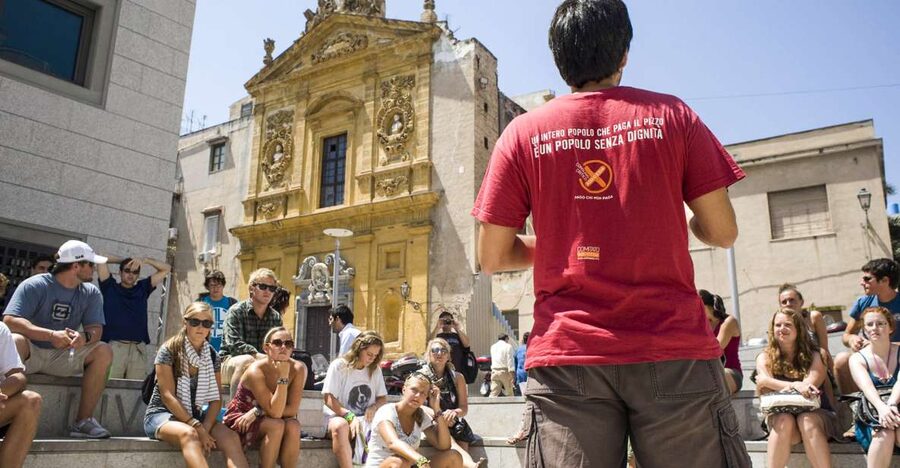
Palermo is the kind of city where you can walk past a grand theater and, a few streets later, see a reminder of political violence. That mix is exactly why a Mafia-themed tour can be useful, if it stays factual and humane. This one does.
Instead of leaning on movie myths, the guide frames Cosa Nostra as a system tied to local economics, power, and intimidation. You learn how the Mafia influenced everyday choices, sometimes without needing dramatic gunfire in the street. Then the story flips toward resistance, led not only by famous names, but also by civic groups and people willing to say no.
The tone matters. In the strongest versions of this tour, guides speak with passion but also with clarity, which is exactly what you want for a subject that is emotionally loaded. If your guide is someone like Giuseppe, Salvatore, or Ermes, you’ll feel how personal the subject is, because it is personal in Sicily.
More Walking Tours in Palermo
- Palermo Original Street Food Walking Tour by Streaty
★ 5.0 · 2,105 reviews - Palermo: Street Food and History Walking Tour
★ 4.9 · 1,294 reviews - Palermo No Mafia walking tour: discover the Anti-mafia culture in Sicily
★ 5.0 · 1,011 reviews
The 3-hour route: what you’ll see and why each stop matters
This is a walking tour through Palermo’s historic center, paced for about 3 hours. The meeting point can vary depending on the option booked, but you’ll start with a guide briefing and then move through the city on foot. The walk is the point, because the narration works best when you experience the spaces themselves.
Teatro Massimo: seeing the city’s stage before the real story
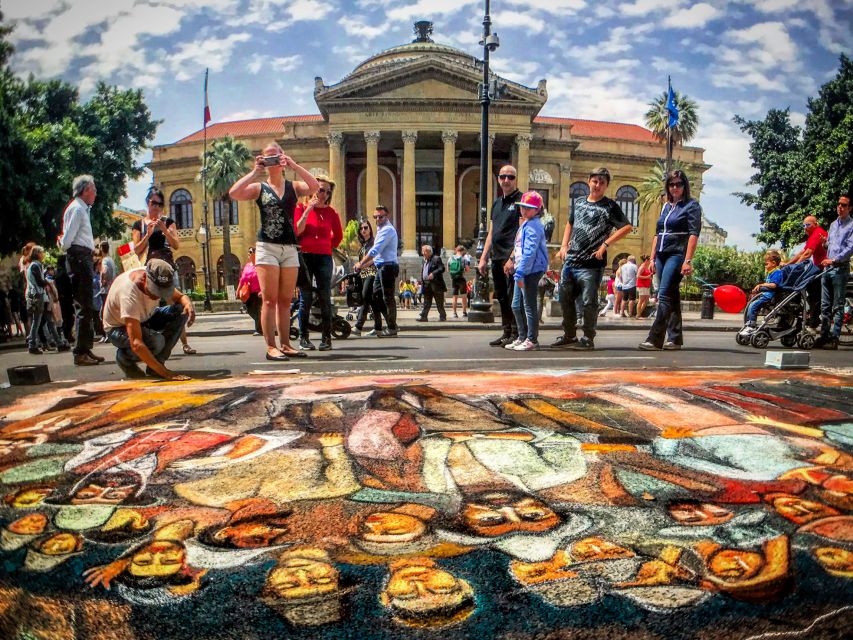
A lot of Palermo tours pass Teatro Massimo as a photo stop. Here, it’s part of the argument. You stand near one of the city’s iconic cultural landmarks and the guide connects what people admired about Palermo with what they feared about the Mafia’s presence in civic life.
Even if you already know the basic background, this framing helps you notice something: culture, politics, and commerce were never separate in Palermo. The Mafia’s influence affected how institutions functioned and how people made decisions. That’s why the theater matters, even though it is not a “Mafia site” in the usual sense.
Il Capo and the market world: daily life at street level
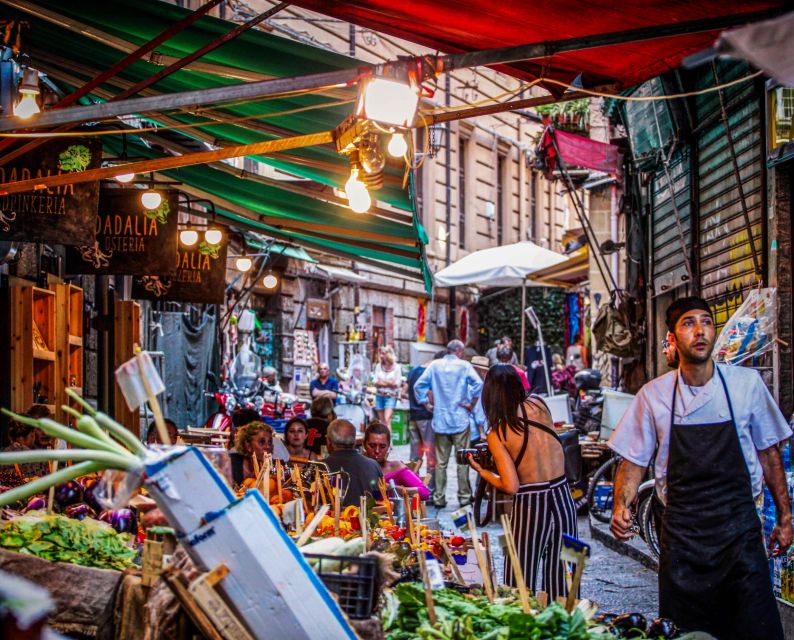
Next, you head toward the open-air market area of Il Capo. Markets are not just places to buy food. They are social hubs. They show how trust works in real time and how local economies can be pressured.
You’ll get a tour that treats the market as a clue to the bigger picture. When extortion and intimidation are part of a society, it shows up in commerce first. The guide uses the energy of Il Capo and the pattern of shop life to explain how Mafia control can feel normal to some residents, and how difficult it is to break that cycle.
More anti-mafia history walks in Palermo:
- Palermo: Anti-Mafia Heroes Evening Walking Tour
★ 4.6 · 172 reviews - Corleone: Guided Tour of the C.I.D.M.A – Anti-Mafia Movement
★ 4.6 · 37 reviews - Palermo: Anti-mafia Bike Tour
★ 4.9 · 28 reviews - Anti-Mafia Heroes (Cool Hours) Morning Walking Tour
★ 5.0 · 3 reviews
Piazza Della Memoria: remembering prosecutors and judges
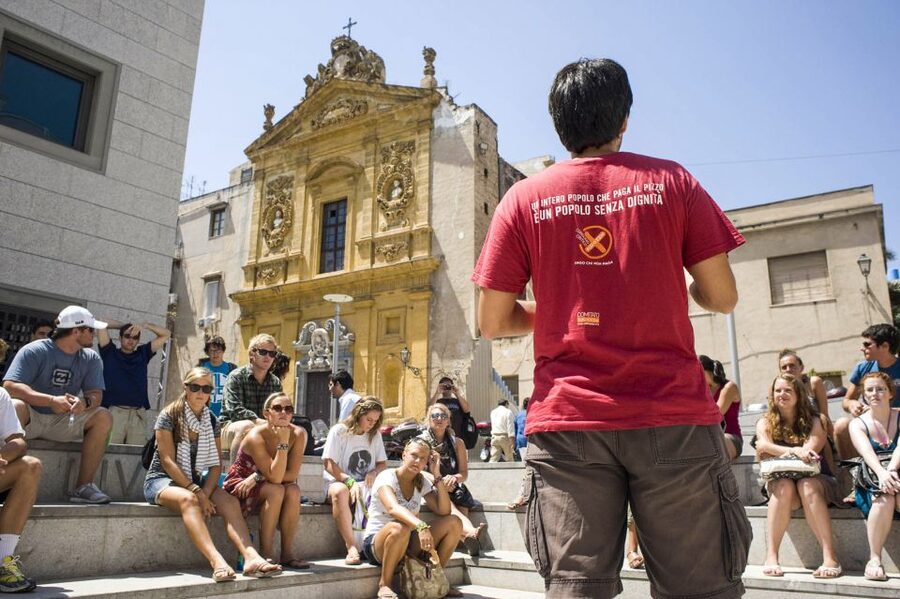
One of the most important stops is Piazza Della Memoria, a memorial dedicated to prosecutors and judges killed by the Mafia. This is where the tour stops feeling like a city lecture and becomes a human remembrance.
The guide’s job here is delicate: explain the stakes without sensationalism. You learn why prosecutors and judges were targeted, and why this is a civic story, not just a criminal one. If you want the anti-Mafia movement to make sense, this stop is the turning point.
The Cassaro with orange stickers: the anti-extortion signal you can see
As you walk along the Cassaro, you’ll notice shops and businesses with orange stickers on their windows. These stickers represent owners who refused to pay extortion and subscribed to the ethical consumer campaign titled pago chi non paga.
This is one of the most practical parts of the tour, because it shows resistance as something you can observe with your own eyes. You don’t have to imagine it. You can literally walk past it.
You also get a helpful explanation of what ethical consumer campaigns do. They are not magic. They give people a way to support those who resist, and they create public visibility around refusal. That public visibility matters because Mafia power often relies on silence and fear.
Piazza Beati Paoli and the Cathedral area: story layers in stone
The route then moves through other historic points, including Piazza Beati Paoli, Palermo Cathedral, and city hall. These stops can sound like a checklist, but the guide uses them like chapter headings.
Here’s what I like about this approach: you stop treating landmarks as neutral scenery. The narration connects institutions and public spaces to the civic struggles Palermo faced. Even if you only remember a few facts, you’ll leave with a clearer sense of how local government and public life fit into the anti-Mafia narrative.
Also, the guides are good at keeping you oriented. One review noted the tour is narrative-driven rather than location-driven, which matches what you’ll feel on the ground. You are walking, but the real engine is the story.
Price and value: paying for a cause, not just a script
At $40 per person for a 3-hour guided walk, the price lands in the “serious subject, real guide time” category. What makes it feel like good value is that your ticket includes a contribution to Addiopizzo, not just the guide’s wage.
You also avoid surprise costs. Museum and monument entrance fees are not included, which means your budget stays predictable. This matters on a city trip, because Palermo already has plenty of optional spends.
In plain terms: you’re paying to get context you can’t easily pick up from guidebooks. And you’re helping fund a charity that supports the anti-Mafia effort, which gives the experience a moral weight beyond tourism.
What your guide actually does (and why it shapes everything)
The tour is live and offered in Spanish, French, English, and Italian, with small-group options. Language is a huge factor here because the material needs nuance. When a guide is clear and organized, you get a story you can follow all the way through the 3 hours.
In the best versions, guides also take questions without turning the tour into a debate club. People like Holly, Nancy, and others in different languages noted the guides kept the group spellbound and answered questions with depth. That is exactly what you want for this topic, because it touches politics, economics, and community life.
You might meet guides like Linda, Valeria, Giuseppe, Salvatore, Attilio, Claudio, or Marinella, and the common thread is passion. Not loud passion. The calm kind that comes from living in a place where the subject never fully becomes distant.
Practical tips so the tour stays enjoyable
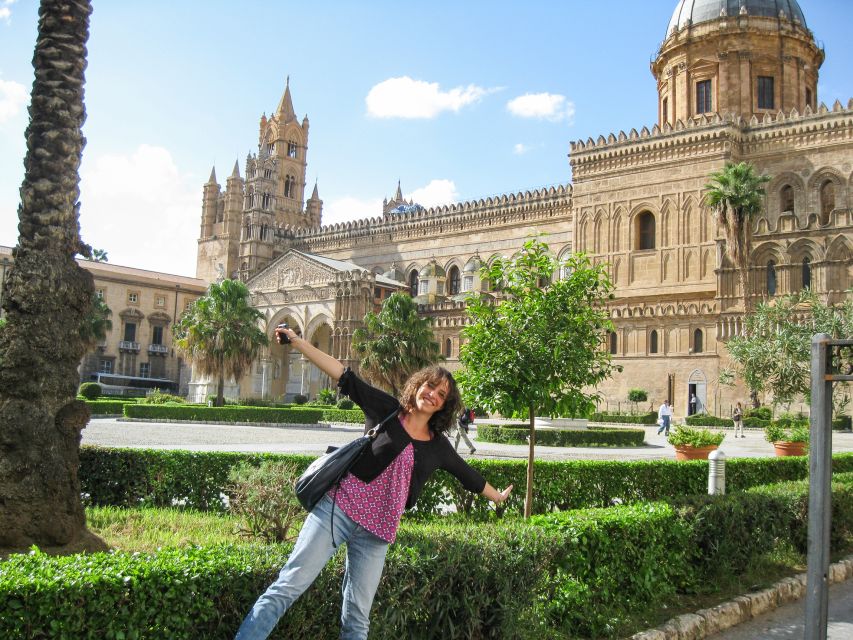
This is a walking tour, so your comfort is your responsibility. Bring comfortable shoes. The route runs through the historic center, which means you’ll deal with uneven pavement and the normal city pacing of Palermo.
Also, plan your day so you can process the information. This is not a quick history blur. Expect real moments where the guide talks about intimidation, harm, and the work it takes for grassroots change. One reason many people loved it is that it doesn’t glamorize anything. It keeps the focus on consequences and citizens fighting back.
If you have a teenager, this can still work. One review specifically said it held a teen’s attention, which is a good sign that the guide can explain serious things in a way that doesn’t lose younger minds.
Who should book this tour, and who might skip it
Book it if you want Palermo to make sense. You’ll like it if you are the kind of traveler who asks, Why is this city the way it is? You also should book it if you care about civic action and want to understand how resistance can be organized at street level.
Skip it if your main goal is effortless sightseeing with minimal emotion. The subject matter is serious, and the tour leans into that reality.
If you’re short on time in Palermo, this is a strong “first-day” style activity because it gives you context for what you’ll see afterward, including how locals talk about power, fear, and community change.
Should you book the Palermo No Mafia Walking Tour?
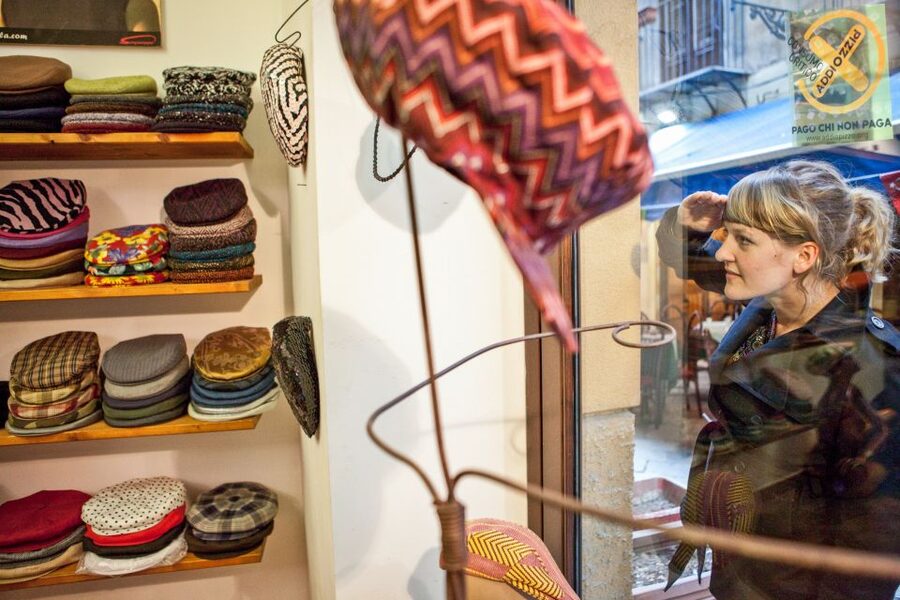
Yes, if you are coming to Palermo for meaning, not just scenery. The best reason to book is the combination of iconic landmarks and civic resistance details, especially the orange stickers and the pago chi non paga concept. Those are things you can’t easily invent on your own.
Another good reason is value. You’re paying for a professional, multi-language guided experience that also includes a contribution to Addiopizzo. That turns your ticket into part of the anti-Mafia story, not just an observer pass.
My final advice: do it on a day when you can handle heavier content. Then, let the city hit you afterward. You’ll walk Palermo with new eyes, and you’ll understand why the anti-Mafia movement is not a side plot. It is part of how Palermo refuses to be defined by fear.
FAQ
How long is the Palermo No Mafia walking tour?
It lasts 3 hours.
What is the cost per person?
The price listed is $40 per person.
What is included in the ticket price?
The ticket includes a guide, a walking tour, and a contribution to the Addiopizzo charitable organization.
Are museum or monument entrances included?
No. Entrance to museums and monuments is not included.
What meeting point should I use?
The meeting point may vary depending on the option booked.
What languages are available for the tour?
The guide language options are Spanish, French, English, and Italian.
Is the group size small?
Yes. The tour offers a small group option.
What should I bring?
Wear comfortable shoes since it is a walking tour.
What is the cancellation policy?
You can cancel up to 24 hours in advance for a full refund.
Just reviewed in Palermo
- Relax in Mondello and Sanctuary in Monte Pellegrino★ 4.4 · 70 reviews
- a PRIVATE ride of Favorita Park and Mondello★ 5.0 · 5 reviews
- Palermo to Siracusa: stop al Valley of Temples & Roman Villa★ 5.0 · 5 reviews
- Private tour: Segesta, Salt Pans & Erice★ 3.8 · 4 reviews
- Private Monreale Cathedral and Cloister, Ceramic Lab tour★ 5.0 · 5 reviews
- PHOTOSHOOT IN PALERMO★ 5.0 · 15 reviews
- Private Photographer Shooting + Sightseeing & Tasting Tour★ 4.8 · 4 reviews
- Palermo: Vintage Fiat 500 Sightseeing Tour★ 5.0 · 132 reviews
Anti-Mafia Tours, compared.
Palermo No Mafia walking tour: discover the Anti-mafia culture in Sicily
Read our review →
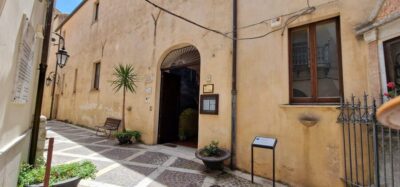
Corleone: Guided Tour of the C.I.D.M.A – Anti-Mafia Movement
Read our review →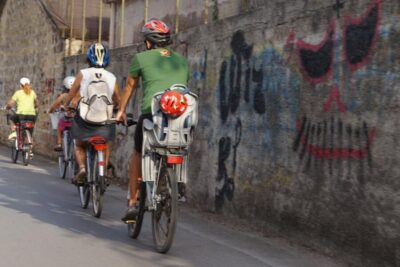
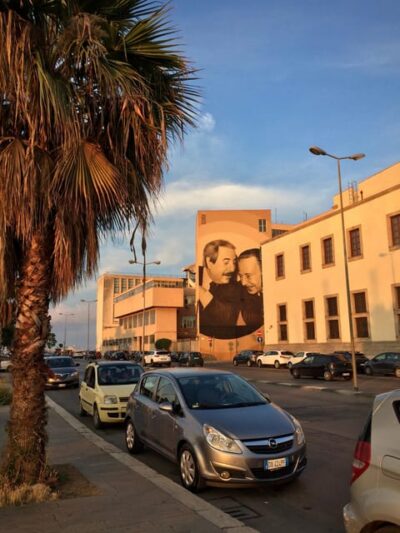
Anti-Mafia Heroes (Cool Hours) Morning Walking Tour
Read our review →Browse the lists this tour appears in