
Reviewed in full · WALKING TOURS IN SYRACUSE
Syracuse: Ortigia Classic Walking Tour
Syracuse’s Ortigia island is where Greece and Christianity keep bumping into each other, corner after corner. This walking tour is a smart way to stitch the story together in just 2 hours, starting at the Temple of Apollo.
I really like that it begins with one of the key ancient anchors of Syracuse, so you get the why behind the streets right away. You’ll also appreciate the guide setup, since the tour runs in small groups (max 25, usually around 10) and headsets are provided for clearer listening.
The main thing to plan for is crowding. Ortigia’s streets are narrow, and when there are lots of other tours, it can feel busy. Also, the meeting point can vary by option, so give yourself extra time to find the group.
Key highlights worth your time
- Temple of Apollo start that quickly frames Syracuse’s Greek origins
- Free headsets that help you hear the guide in tight streets
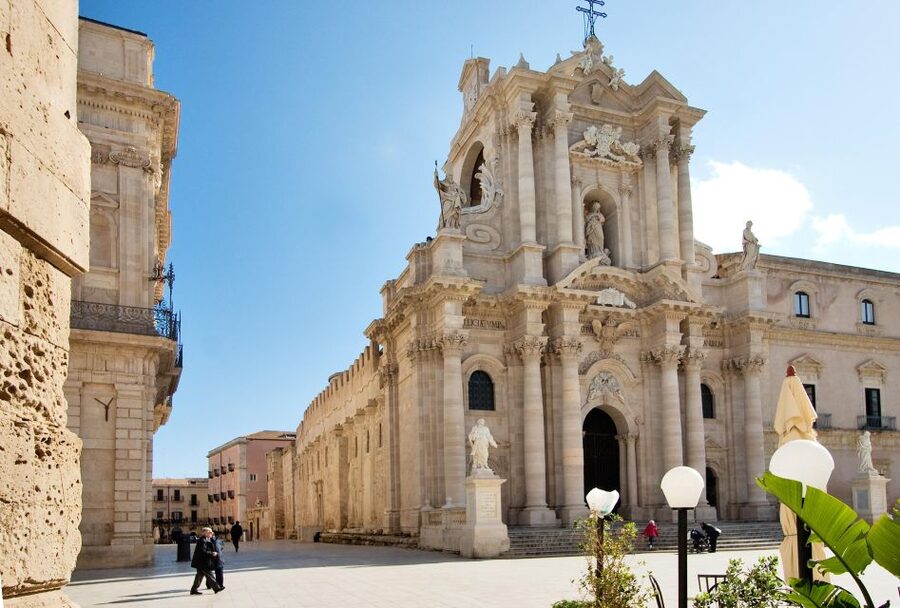
- Piazza Duomo and the cathedral built over an ancient Greek temple
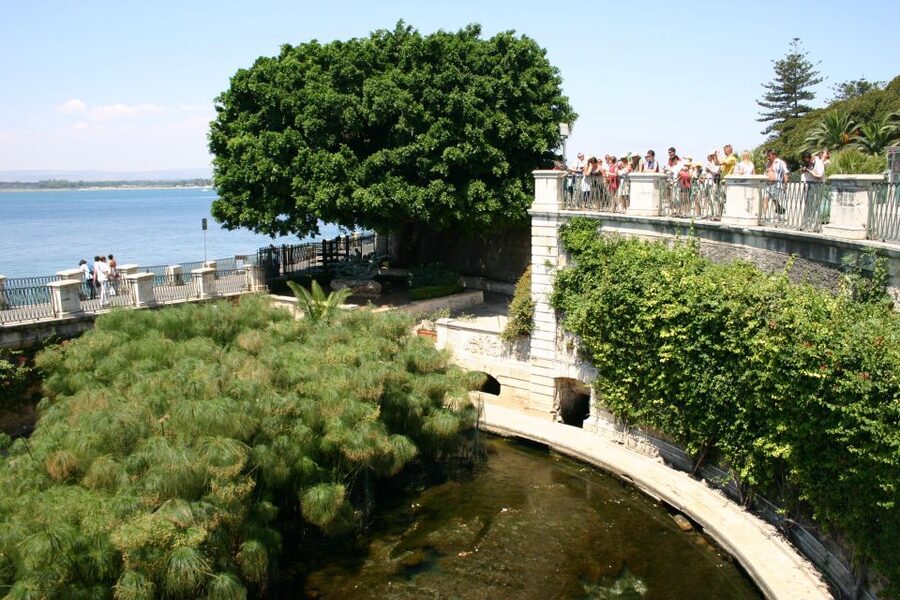
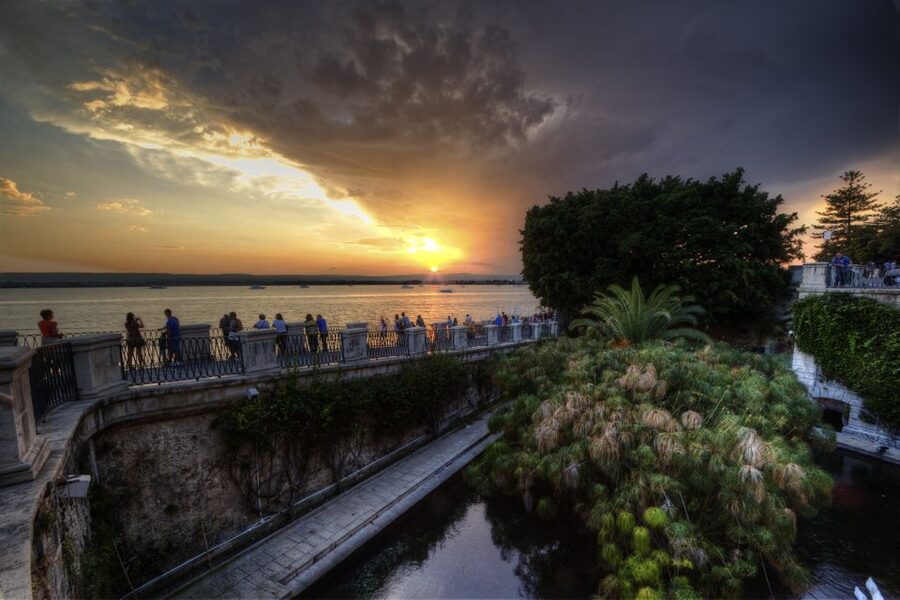
- Aretusa Spring and its famous papyrus plants, plus a breather by the water
- Giudecca district walk for a look at the former Jewish neighborhood
- Helpful pacing and photo time, so you are not sprinting through history
Walking Ortigia’s story in 2 hours (and why this route works)
Ortigia is compact, but it is not simple. Greek columns, medieval churches, seafood smells, wedding photos near the cathedral, and seafront views all overlap in a way that makes self-guided exploring feel like guessing. This tour gives you a path that connects the major landmarks in a logical flow, without turning the trip into a long marathon.
At 2 hours, you also avoid a common Ortigia problem: burnout. You will cover plenty of ground, yet you still get breathing moments to look around, take photos, and glance at side streets when something catches your eye. The small group size matters here. With fewer people, you can actually hear explanations, and you are not always stuck waiting at corners.
Value-wise, the price is $22 per person, which is a reasonable deal for a guided walk that includes live narration and free headsets when groups run larger. The only paid add-on is optional, the cathedral entrance (listed as €2).
More Walking Tours in Syracuse
- Syracuse: Street Food Walking Tour in Ortigia with Tastings
★ 4.9 · 293 reviews - Syracuse: Ortigia and Neapolis Guided Walking Tour
★ 4.7 · 205 reviews - Syracuse: Ortigia Private Walking Tour
★ 4.8 · 181 reviews
Temple of Apollo and Archimedes Square: your fast-start history lesson
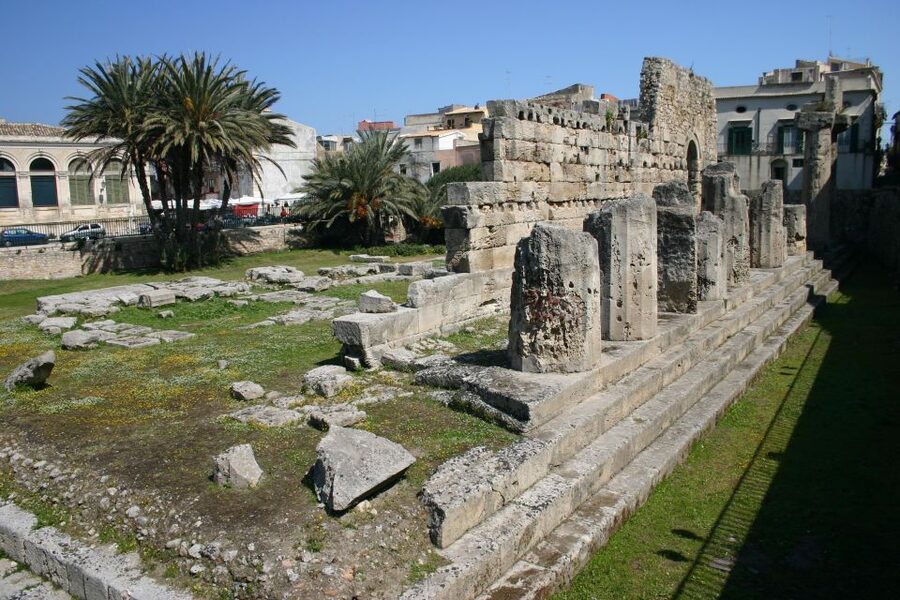
The tour kicks off at the Apollo Temple at the entrance of Ortigia. This Doric-style temple is described as the first large stone temple built by ancient Greeks in the western colonies. That sounds like trivia, but it matters because it sets the tone for everything you see later. Instead of treating buildings like random landmarks, you start noticing how power, worship, and city life evolved over time.
From there, you move toward Piazza Archimede, a lively square where the guide connects the layers of Syracuse’s past. You get the feeling that you are standing on a place that has been re-used and re-shaped for centuries. The payoff is mental, not just visual. By the time you reach the cathedral area, the city’s contradictions make more sense.
Practical tip: wear shoes with real grip. The streets can be uneven, and you will do more standing than you expect, especially when the guide pauses for key points.
Piazza Duomo and the cathedral built over a Greek temple
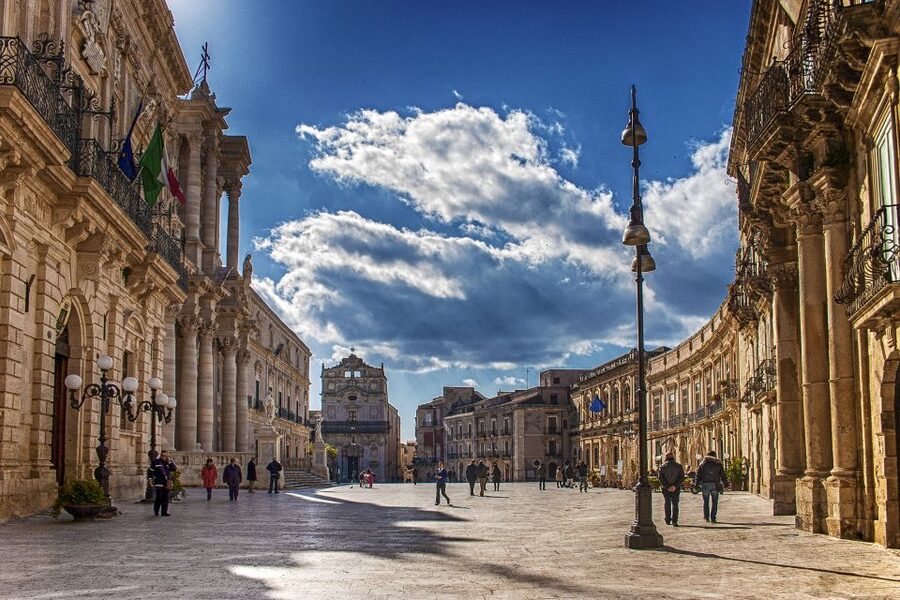
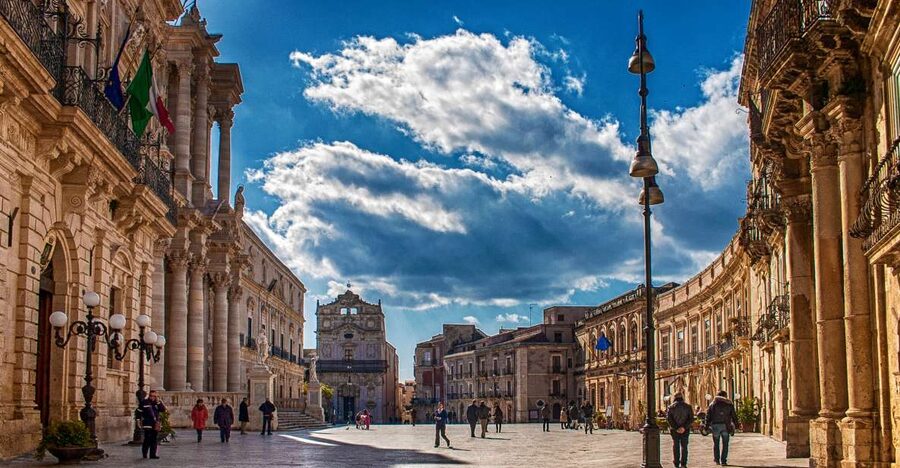
Next comes the big visual moment, the cathedral square, Piazza Duomo. Here you see an ensemble of palazzi and ornate churches, and the guide ties it to Syracuse’s shift from ancient Greek foundations to Christian worship.
The headline detail is that the cathedral is frequently chosen as a wedding venue, which you will notice immediately if you time your visit near a ceremony. Even if you are not there for a wedding, it is a useful clue: this building is still part of everyday life, not just a museum stop.
There is also an optional interior visit. When access allows, the guide can offer time inside the church with your group. The cathedral entrance ticket is €2 and not included, but the fact it is optional keeps the overall experience flexible. If the interior visit is not available, you will have a short break option instead, which helps keep the pacing comfortable.
One caution: plan around crowd flow. Cathedral squares attract wedding traffic and photo stops, so your group moves best when you follow your guide’s timing and resist the urge to wander off too early.
Diana Fountain and the rhythm of Ortigia’s narrow streets
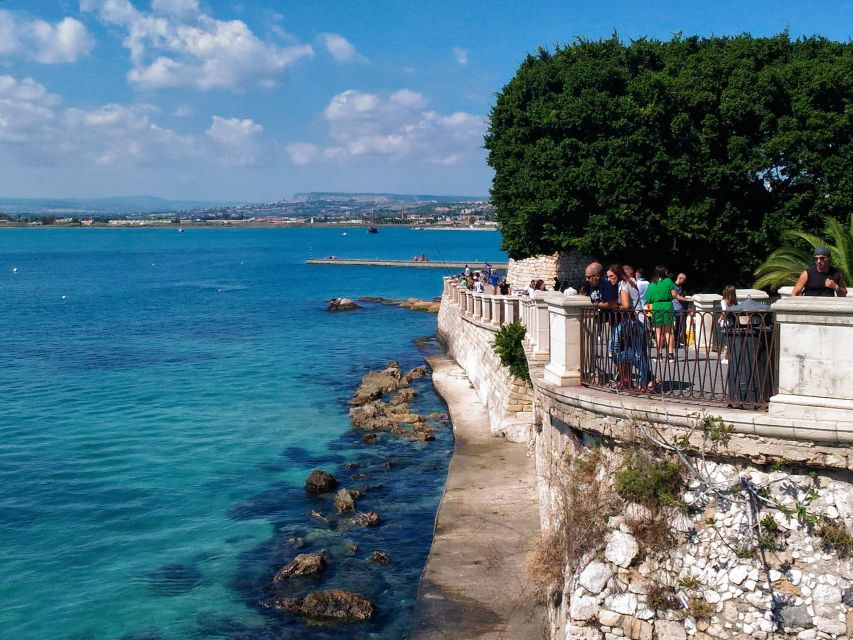
Between the main monuments, you spend time walking through Ortigia’s narrow lanes, the kind where the city feels close and personal. This is where the tour earns its keep, because the guide explains what you are looking at before it becomes just another façade.
You also visit Diana Fountain, a centerpiece you will likely see referenced in photos, but it is more satisfying in person. The guide’s framing makes it feel less like decoration and more like a piece in the city’s social fabric. And because you are walking, you see how the fountain sits within the surrounding squares and church fronts, rather than as a stand-alone shot.
This part of the route also lets you practice a simple travel habit: stop, look up, then move. Ortigia rewards vertical attention, and a walking guide is ideal here, because you do not have to decide what matters on your own in real time.
A different sort of day out around Syracuse:
- Syracuse: Boat Tour with Captain Mirko, Snorkeling & Caves
★ 4.7 · 746 reviews - Siracusa: Ortigia Boat Tour with Marine Grotto
★ 4.7 · 617 reviews - Siracusa: Ortigia & Sea Caves Speedboat Tour with Swim Stop
★ 4.9 · 499 reviews - Syracuse: Neapolis Archaeological Park Small Group Tour
★ 4.7 · 350 reviews
Aretusa Spring, papyrus plants, and the seafront payoff
The myth and the postcard meet at Aretusa Spring. You get guidance on the legendary side of the spring, and the guide points out its papyrus plants, a detail that makes the scene feel specific and alive rather than generic nature.
Expect a payoff here: after squares, churches, and stone temples, the Aretusa stop gives you a different kind of beauty. You are near the water, you can slow down, and you get that Syracuse feeling of air, light, and salt.
Afterward, the tour includes a leisurely stroll along the seafront promenade. This is a practical choice. It breaks up the heavier architectural stops and gives you time to process what you just learned. It is also a chance to step away from the densest street bottlenecks.
Castello Maniace viewpoints on the way to Giudecca
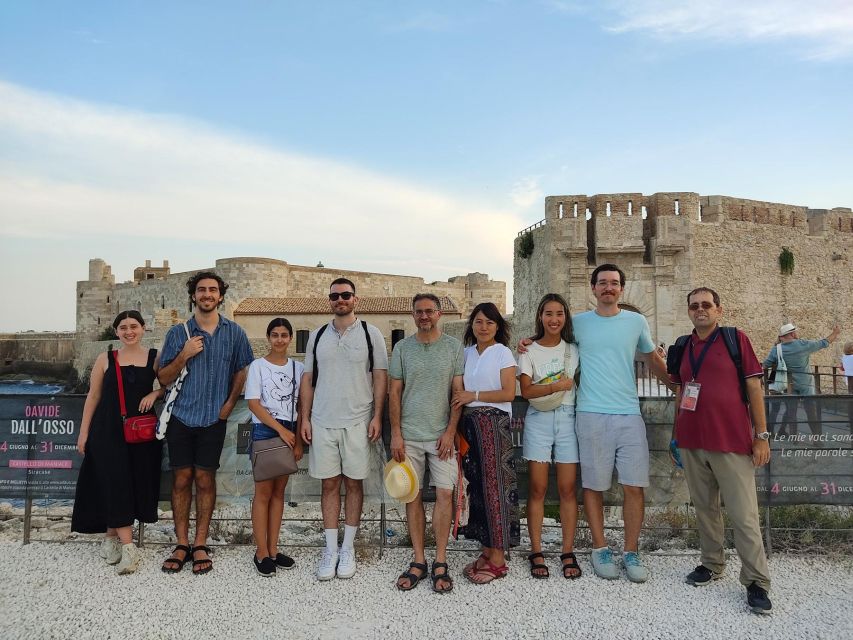
Along the route, you get scenic views on the way to Castello Maniace. You may not spend a long time there as a formal stop, but the inclusion matters. It offers a visual anchor for the coastline side of Ortigia, so you understand where the city turns toward the sea.
From there, the walk continues through Via della Giudecca, where you can see glimpses of the old Jewish district. This is one of those stops that makes you look at the city differently. It reminds you that Syracuse was not only shaped by Greek and Christian eras, but also by communities with their own rhythm, institutions, and neighborhoods.
If you like walking tours that teach you how cities evolve, this is a key moment. You will come away with a better sense of how different groups lived in close quarters over time.
Church of Saint John Baptist and the guide’s cultural context
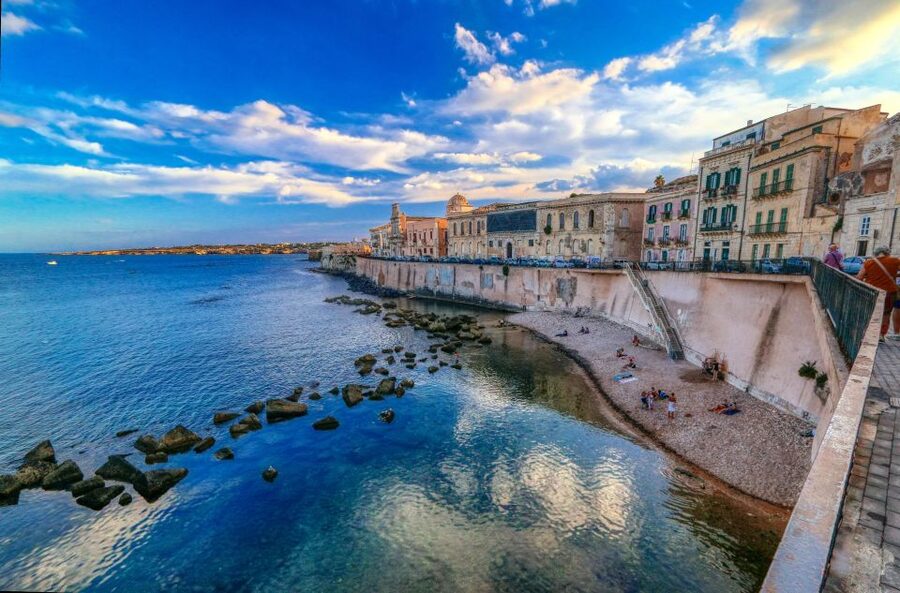
The tour includes a guided stop at the Church of Saint John Baptist. For me, religious sites on walking tours are only truly worth it when the guide connects architecture to people, and that is what this tour aims to do.
You will also hear cultural context around religious celebrations, including the revered St. Lucy’s feast and its grand procession. Even if your main time at specific churches is brief, the guide’s explanations help you understand what you might see happening in town during feast season.
This is where a strong guide makes a difference. The experience here benefits from a clear speaking style and the use of audio equipment (headsets). That combination helps you stay oriented, instead of guessing what matters while you are standing in a place built for worship and ceremony.
Pacing, photo breaks, and why your timing matters
A walking tour lives or dies on pacing. This one is built to keep you moving, but not so fast that you miss details. The format also provides moments to explore and take pictures on your own, which helps you turn the tour into something you can actually remember.
One more small thing that matters: the headsets. Since they are provided for clearer listening in larger groups, you can keep your eyes on the streets and monuments. That reduces the awkward moment of trying to listen from the back while everyone squeezes in front.
Crowd reality: Ortigia can get packed, and the narrow street layout means it takes a bit of patience. If you show up a touch early and stay close to your guide, the experience feels smooth. If you lag behind, you will lose both stories and timing.
Price and value: what you pay for, and what is optional
At $22 per person for about 2 hours, you are paying for a guided route, live narration, and included audio equipment (with headsets provided for larger groups). For many visitors, that is the simplest value equation in Ortigia: pay for a guide so you get the connections between ancient ruins, church spaces, and modern street life.
What you do not pay for is the cathedral entrance interior, listed as optional with a €2 ticket. That option is useful because it gives you control. If interior access is available, it is a bonus. If not, you do not feel like you wasted the cost of a paid entry.
If you are the type who likes to understand what you are looking at before you wander off, this is a strong value. If you mostly want photos and quick stops, you might prefer a self-guided plan. But even then, the story glue makes the landmarks easier to place.
Who this tour suits best
This walk is a great fit if you want an organized orientation to Ortigia without spending half a day zigzagging. It also suits you if you are curious about how Syracuse shifted from Greek origins to Christian sites, while still having time for seafront views.
It works well for couples, solo travelers, and groups of friends who want the convenience of a set route. It can also be a good choice if you plan to eat afterward, because the tour ends near Piazza Archimede area (with drop-offs listed near Fountain of Diana and Piazza Archimede).
Wheelchair accessibility is noted, which is important for planning in older city centers. Comfortable shoes are still a must, because “accessible” does not mean “smooth.”
Practical tips to enjoy it more (and avoid common Ortigia annoyances)
First, bring comfortable shoes. Second, expect it to run rain or shine. Or at least plan for the kind of weather that makes you walk slower, not the kind that cancels plans.
Because the meeting point can vary by option, check the exact start location you booked. The tour notes two starting options at Largo XXV Luglio. Arriving a little early reduces stress, especially in a tight historic core where multiple tours can gather near the same streets.
Finally, lean on the guide. The tour includes an invitation to ask for suggestions about other monuments, nearby towns, restaurants, or activities. That is one of the quiet benefits of guided time, you get local direction right when you need it.
Should you book the Syracuse Ortigia Classic Walking Tour?
Yes, if you want a structured introduction to Ortigia that ties Greek roots, major church spaces, and the Aretusa Spring area into one walk. The small group size, the use of headsets, and the guide’s ability to answer questions make this feel like more than just a route you follow.
Consider skipping it only if you want a totally self-paced stroll with zero group pressure. Also, if you dislike crowds in narrow streets, you should pick a time when you expect fewer tour groups.
For most people, this is a smart way to get your bearings fast, understand what you are seeing, and still leave with time to wander.
FAQ
How long is the Syracuse Ortigia Classic Walking Tour?
The tour lasts about 2 hours.
What time does the tour start?
Starting times vary. You should check availability to see the exact start times for your date.
Where does the tour start and end?
It starts at the Apollo Temple area at the entrance of Ortigia. It ends back near the meeting area, with drop-offs listed around Fountain of Diana and Piazza Archimede.
Is the tour available in English and Italian?
Yes. The live tour guide offers English or Italian.
Is this walking tour wheelchair accessible?
Yes, the tour is listed as wheelchair accessible.
What is included in the price?
You get a live guided tour, and headsets are provided for free to help you hear clearly (especially in larger groups).
Do I have to pay for the cathedral?
The cathedral interior visit is optional, and the cathedral entrance ticket (€2) is not included.
What should I bring?
Bring comfortable shoes.
What happens if it rains?
The tour runs rain or shine.
Just reviewed in Syracuse
- Tour in barca privata da Avola a Marzamemi con snorkeling★ 5.0 · 4 reviews
- Syracuse:Boat tour Ortigia,Pillirina and seacaves★ 4.7 · 38 reviews
- Island of Ortigia: Sunset Boat Tour with Aperitif★ 2.6 · 4 reviews
- Ortigia guided night tour, Syracuse★ 4.8 · 4 reviews
- Sortino: Olive Oil tasting with Sicilian Products and Wine★ 5.0 · 5 reviews
- Museo delle Illusioni – Siracusa –★ 4.3 · 22 reviews
- Tour in barca da Avola a Marzamemi/Portopalo di CapoPassero★ 4.8 · 6 reviews
- Tour in barca da Avola a Marzamemi/Portopalo di CapoPassero★ 4.7 · 10 reviews
Walking Tours in Syracuse, compared.

Street Food Walking Tour in Ortigia with Tastings
Read our review →
Syracuse Private Walking Tour with Traditional Lunch and Wine
Read our review →Browse the lists this tour appears in