
Reviewed in full · MUSEUMS
Tecnoparco Archimede Museum Exhibition Ticket
Tecnoparco Archimede is interesting because it turns Archimedes from a name in a schoolbook into a builder you can look at, measure against your own hands, and understand. You walk through the logic of his inventions, then see the machinery he helped Syracuse use against the Romans.
I especially like the 1:1 scale replicas and the way the guide connects each device to a real job it could do. I also like the structure of the visit, with six clear thematic areas plus a dedicated focus on war machines.
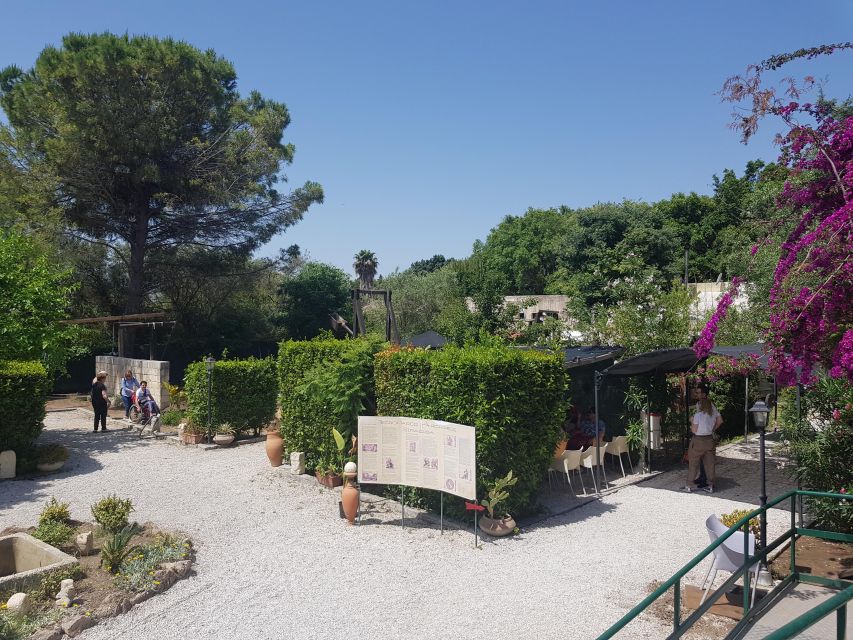
One thing to plan for is comfort: it can get hot in Sicily, so I’d build in time to pause and find shade where you can.
Key points to know before you go
- 1:1 natural-scale replicas so the machines feel real, not like small props
- A guided tour in Italian and English led by a scientific guide, plus multilingual audio guides
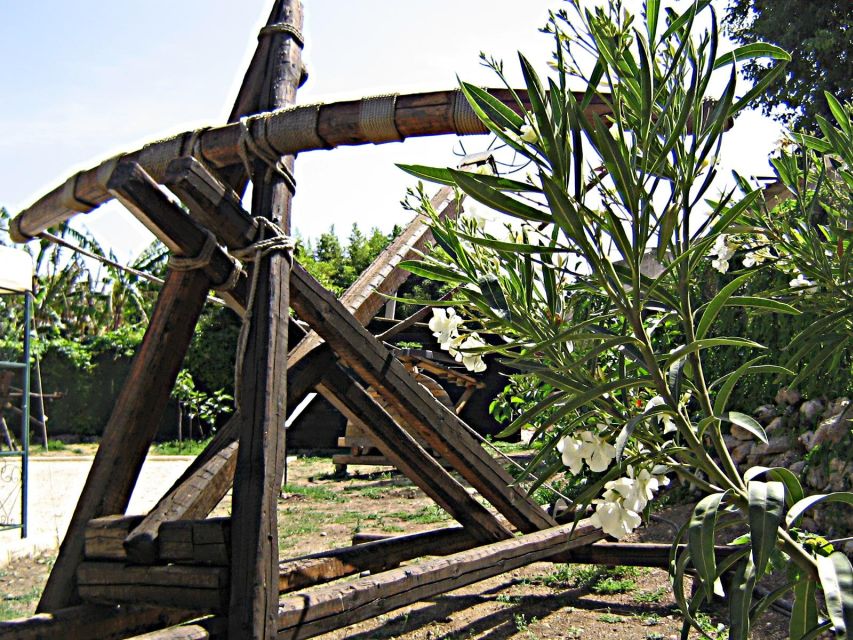
- Six thematic zones that move from levers and lifting to hydrostatics, burning mirrors, and water clocks
- War machines and defense of Syracuse shown alongside the inventions, so the story stays practical
- Guides who explain with energy (some past guides like Erika and Martina have been praised for enthusiasm and preparation)
- Kid-friendly interaction with good explanations, especially for older children
Why Tecnoparco Archimede feels like an engineering lab, not a museum
I like history when it explains how people solved problems. This place does that, fast. You are not just looking at drawings of ideas. You’re looking at the machines themselves, built as replicas and scale reproductions tied to Archimedes’ era.
The big draw is the mix of themes. You start with basic mechanical advantage concepts like levers and pulleys. Then the exhibition ramps up to siege engineering with catapults, rams, and other war machines. After that, you shift into “how does it work” territory with cranes, screws, and hydrostatics. Finally, you finish with Archimedes’ most famous invention, the burning mirror, and the practical timekeeping and water devices in the water clocks area.
If you like seeing principles shown clearly, you’ll probably enjoy this. If you came only for a quick snapshot of famous names, it may feel like you’re spending your attention span on details. The good news is the guided tour helps you connect the dots.
Other Syracuse options side by side
- Syracuse: Museum Guided Tour with Sicilian Puppet show
★ 4.1 · 27 reviews - Guided tour of the Trapani Salt Pans and Salt Museum
★ 4.7 · 423 reviews - Guided tour of the salt pans of Trapani and the Salt Museum
★ 5.0 · 188 reviews
Ticket value in Sicily: what $9 buys you for a full day of built ideas
At about $9 per person, this is one of those “wait, that’s it?” prices. The value is not the cost. It’s what you get for that cost: a guided experience in both English and Italian, plus audio guides in several languages.
You also get access to a permanent exhibition with replicas and scale models from the 3rd century BC, focused on Archimedean contributions. That matters because you are not paying just for a single highlight photo. You’re paying for a structured walk through different categories of invention.
Also, a full-day format changes your pace. You can linger at the machine explanations that grab you, then move on without feeling rushed into the next stop. If your group includes kids, this flexibility helps a lot, especially when the guide can adjust explanations on the fly.
Plan one more thing: food is not included. Wear shoes you’re comfortable walking in, and consider bringing a water bottle. The museum is wheelchair accessible, which is a big plus for families and mixed mobility groups.
Guided tour flow: English and Italian science talk, plus audio for extra support
Your visit includes a guided tour in Italian and English with a scientific guide. In practice, that means you can expect the guide to do the heavy lifting: connecting devices to their purpose and explaining how the system works.
On top of that, you also get multilingual audio guides (English, French, German, Russian, Spanish, Portuguese). That’s useful even if you’re fluent in English or Italian, because you can replay a section while you’re standing right in front of a machine. It’s also helpful for mixed-language groups.
You’ll feel the difference in how the guided tour is set up. You’re not left to wander alone through technical displays. The guide’s job is to translate the hardware into concepts you can actually follow.
The six thematic areas, what to look for in each one
The exhibition is organized into six thematic areas, and each one has a clear theme. Here’s how I’d approach them so you get more than just a visual pass.
A different sort of day out around Syracuse:
- Syracuse: Boat Tour with Captain Mirko, Snorkeling & Caves
★ 4.7 · 746 reviews - Siracusa: Ortigia Boat Tour with Marine Grotto
★ 4.7 · 617 reviews - Siracusa: Ortigia & Sea Caves Speedboat Tour with Swim Stop
★ 4.9 · 499 reviews - Syracuse: Neapolis Archaeological Park Small Group Tour
★ 4.7 · 350 reviews
1) Educational section: levers, pulleys, and winches
This is where the visit earns its keep for non-engineers. Levers, pulleys, and winches are the foundation for the later machines. If you treat this section like a warm-up, the rest of the exhibition makes more sense.
Look for the logic: how changing the arrangement changes the force. It’s the same idea behind most mechanical advantage systems, just shown with period-style hardware.
2) Teaching section: Archimedean war machines
This zone is about siege technology and the devices used in conflict. You’ll see the catapult, ram, crossbow, scorpion, onager, and ballista called out in the exhibition.
What I like here is that the focus stays connected to a bigger narrative. The guided tour includes how Archimedes contributed to defense strategies, including how Syracuse defended itself from Roman attack. That context turns a row of machines into a story about needs, constraints, and problem-solving under pressure.
3) Practical lifting section: cranes and manus ferrea
After war machines, this part feels like a release valve. It’s still technical, but it’s about moving and lifting.
You’ll find two types of cranes and manus ferrea here. Even if you don’t know the technical details, you can spot how lifting equipment is about controlled motion and mechanical advantage. This is also a zone that rewards curiosity. Ask the guide to explain what makes each type of crane function differently.
4) Hydrostatics and screws: Archimedes’ principle in action
Hydrostatics is where the exhibition shifts from “move objects” to “work with fluids.” You’ll see the Archimedes screw, experiments related to Archimedes’ principle, and devices like corobats.
The zone also includes presses and worm screws. I like this section because it connects to how real-world systems work: moving water, shaping force through screw mechanisms, and measuring effects.
If you’re the type who gets excited by the word principle, spend extra time here. The guide can help you connect what you see to the idea behind it, so it doesn’t turn into names on plaques.
5) Burning mirrors: two models of the famous invention
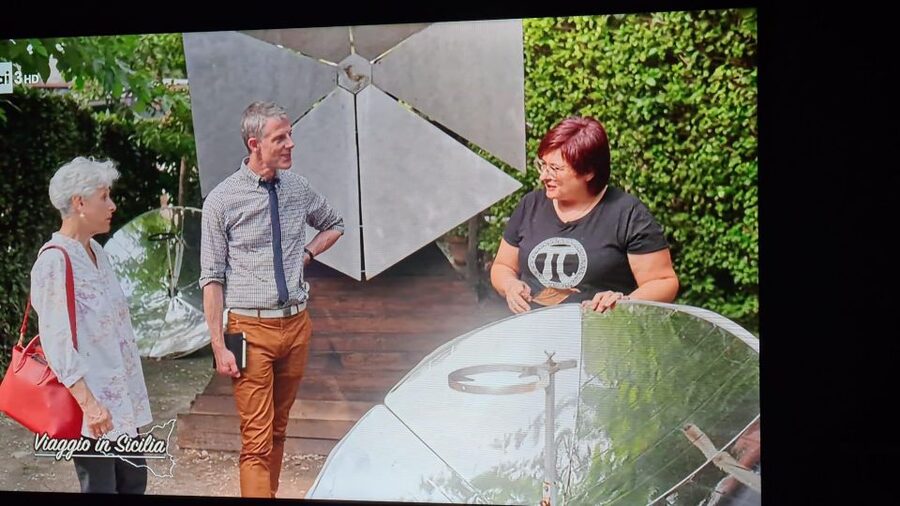
This is the “wow” section. The museum highlights Archimedes’ most famous invention: the burning mirror, and you can admire two different models.
Even if you’re skeptical about how it would have been used historically, you can still appreciate the concept. You’re looking at a real physical device meant to focus energy. That alone makes it worth a stop, because the exhibition doesn’t just point to a legend. It shows models you can examine.
The guide’s explanations are important here, because this is the type of topic where people may jump to assumptions. A structured explanation keeps it grounded.
6) Water clocks: timekeeping and water device applications
The final zone is all about water clocks, plus various applications of the Archimedes screw.
Timekeeping may not sound exciting until you see how it relies on a steady flow and controlled mechanics. If you’re the kind of person who likes everyday technology, this section often clicks. It’s the bridge between big ideas and regular life, even in a world dominated by war machines.
War machines and the defense of Syracuse: why that context matters
Many museum exhibits show inventions as isolated items. Here, the war machines are framed inside a defense story. The tour is designed to show how Archimedes helped Syracuse defend itself from Roman attack.
That context makes the machinery feel less random. When you understand the threat and the goal, a catapult or a ram is not just a contraption. It becomes part of a system meant to solve a tactical problem.
I also like that the war machines section sits beside everyday mechanics in the same visit. It reminds you that the same mind can work on both engineering basics and high-pressure defense. If you enjoy seeing how one person’s thinking can cross categories, this is a strong payoff.
The heat and pacing tip I’d actually follow in Sicily
One review highlight is practical: consider the heat and look for shade. I’d treat that as real advice, not a throwaway line.
Here’s how to apply it:
- Plan breaks if you’re visiting on a hot day.
- Use the shaded moments to review what the guide explained, then return to the next machine when you’re ready.
- If you have kids in your group, let the guide’s pace do the work. The explanations and interactions can keep them engaged without you having to constantly referee attention.
Also, the museum is a permanent exhibition, so you can move at your own rhythm. But since you’re joining a guided tour, staying close to the group helps you catch the key points.
Who should book this experience
This is a great match if you like:
- Engineering ideas shown with real physical machinery
- History that focuses on invention and problem-solving
- Families who want a visit that can work for both adults and kids
It’s especially good for groups who want a guided explanation. Even if you only catch parts of the technical details, the guide keeps pulling you back to the meaning of the devices.
If you prefer a museum that leans heavily on paintings, architecture, or long galleries, you might find this too mechanical. But if you enjoy hands-on science thinking, the structure is strong.
And yes, it’s worth it even if your historical knowledge is basic. The exhibition is organized so the visitor can follow step by step, from levers to hydrostatics to war machines.
How the replicas change what you notice
A key promise here is the presence of replicas in 1:1 natural scale. That changes the way you see everything.
In a typical museum, small models make you guess the scale. Here, you can judge size, spacing, and how a mechanism might move. It helps you understand why certain devices look the way they do.
One more detail I like: the visit includes rental of multilingual audio guides. That means you can take in the guide’s spoken explanation and then use the audio to reinforce terms while you’re standing in front of the machine.
If you like learning through repetition, that’s a hidden advantage.
Should you book Tecnoparco Archimede?
I’d book it if you want a Sicily stop that feels like real engineering, not just storytelling. For the price, you get a full day structure, guided science explanations in Italian and English, and a walk through six themed areas that cover basic mechanics, war machines, lifting systems, hydrostatics, burning mirrors, and water clocks.
I’d think twice if you’re only after outdoor scenery or a light, casual museum stroll. This is a machine-focused experience, and you’ll get more out of it if you like to watch, listen, and connect how things work.
If your group includes kids, this is one of the better options because the explanations are built for engagement. And if you’re sensitive to heat, plan your timing and seek shade when you need it.
Overall, for $9 you’re buying more than entry. You’re buying a guided, structured look at how one brilliant mind applied mechanics to both daily and defensive technology in the 3rd century BC.
FAQ
How long is the Tecnoparco Archimede museum exhibition ticket valid?
The ticket is valid for 1 day. You can check availability for starting times.
Is there a guided tour included?
Yes. The experience includes a guided tour in Italian and English with a scientific guide.
Are audio guides included?
Yes. Multilingual audio guides are included in English, French, German, Russian, Spanish, and Portuguese.
What will I see inside the museum?
You’ll explore replicas and scale models related to Archimedes, organized into six thematic areas plus war machines. The areas include levers, war machines, lifting machines, hydrostatics, burning mirrors, and water clocks.
Are the replicas full size?
Yes. The replicas are in 1:1 natural scale.
Does the tour focus on Archimedes’ defense strategies?
Yes. The experience includes a guided tour of Archimedes’ inventions and highlights how he defended Syracuse from the attack of the Romans.
Is food included in the ticket price?
No. Food and drinks are not included.
Do I need transportation to reach the museum?
Yes. Transportation to and from the museum is not included.
Is the museum wheelchair accessible?
Yes. The experience is wheelchair accessible.
What is the price and cancellation policy?
The price is $9 per person. There is free cancellation up to 24 hours in advance for a full refund.
Just reviewed in Syracuse
- Tour of Syracuse by Ape Calessino★ 3.0 · 3 reviews
- Boat tour of the island of Ortigia and the sea caves★ 4.2 · 4 reviews
- Tour in barca da Avola a Marzamemi/Portopalo di CapoPassero★ 4.7 · 19 reviews
- ORTIGIA tour by tuk tuk – ape calessino 1 hour★ 4.9 · 22 reviews
- Tour da Avola A Portopalo con sosta e visita a Marzamemi★ 4.9 · 5 reviews
- Syracuse: Sunset Aperitif Tour★ 4.4 · 4 reviews
- Syracuse: Traditional Cooking Class & Ancient Market Visit★ 4.9 · 72 reviews
- Syracuse:Snorkeling+Pillirina, Ortigia & sea caves boat tour★ 4.8 · 18 reviews
Museums, compared.
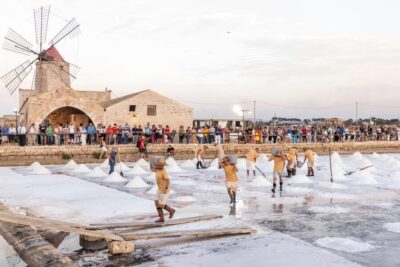
Guided tour of the Trapani Salt Pans and Salt Museum
Read our review →
Guided tour of the salt pans of Trapani and the Salt Museum
Read our review →

Corleone Museum of Mafia and Piana degli Albanesi Village
Read our review →
Messina Regional museum and historical city center
Read our review →
Visit to the Museum and show of Sicilian puppets in Syracuse
Read our review →Browse the lists this tour appears in