
Reviewed in full · SYRACUSE TOURS
Ortigia guided night tour, Syracuse
Ortigia after dark is one of those places where the city feels more like a story than a checklist. I love how the night lights make familiar stone look new, and I also like that this tour points you toward the main landmarks of Siracusa so you actually understand what you are seeing.
The main thing to consider is that this is a walking-style night tour with set stops, so you need comfortable shoes and you should be ready to keep moving for the full 2 hours. Also, at Piazza Duomo, you will not go inside the church.
You start right at a major landmark, Temple of Apollo, then you work your way through squares, palazzi, and the island’s dramatic sea end. Along the route, your guide explains how Ortigia changed through multiple colonisations, and you get a clear sense of why this small island has such a big reputation in Sicily.
Key highlights in plain terms
- A 2-hour guided night walk that helps you connect the dots across Ortigia
- Temple of Apollo at the start, setting the tone for everything that follows
- Piazza Duomo stop from the outside, with history and transformations explained
- Maniace Castle at night, where the atmosphere can feel truly magical
- Fonte Aretusa legend, tied to one of Ortigia’s most atmospheric corners
- Friendly, prepared guides who share history in a way that lands
Why Ortigia looks different after dark
Ortigia Island is compact, but it is never simple. Daytime gives you the architecture and the streets. Night gives you mood. As the lights come on, narrow alleys and open squares start behaving differently, and you start noticing details you would otherwise rush past.
This tour leans into that. You are not just moving from point A to point B. You are learning what to look for, why it matters, and what changed when different cultures took over and rebuilt parts of the island.
In my book, the best night tours do two things well: they keep the pace comfortable, and they give you context so you do not feel like you are only taking photos. This one aims for exactly that, and the result is a night walk that makes Ortigia’s highlights feel connected.
Other Syracuse options side by side
- Syracuse: Ortigia Sunset Cruise with Aperitif
★ 4.8 · 291 reviews - Island of Ortigia: Sunset Boat Tour with Aperitif
★ 2.6 · 4 reviews - Catania: Mount Etna Morning or Sunset Day Trip with Tasting
★ 4.8 · 4,028 reviews
Starting at the Temple of Apollo, then getting your bearings
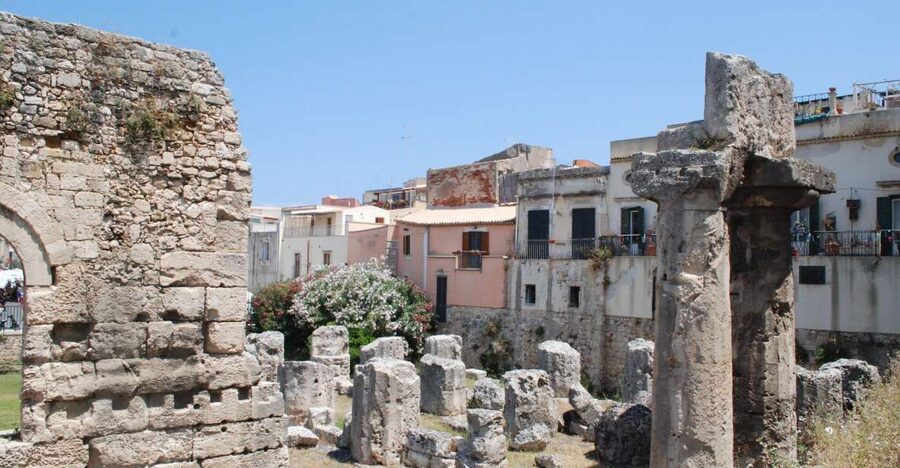
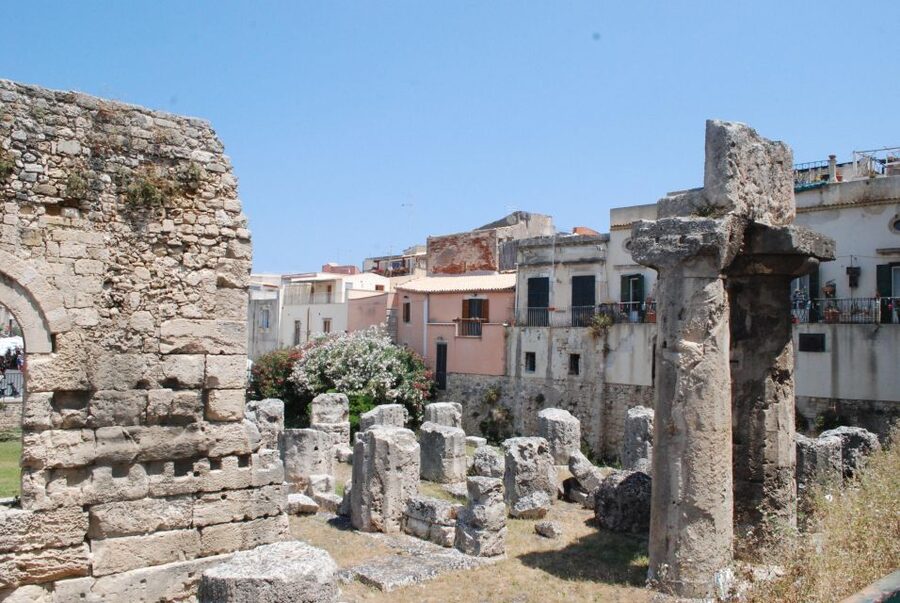
The tour kicks off at the Temple of Apollo, and that is a smart move. You get one of Ortigia’s oldest major monuments right away, so your eyes can anchor on something important before the group fans out across the island.
You spend about 15 minutes at this first stop, enough time to absorb what you are seeing and hear the basics your guide is tying to the island’s early story. The Temple of Apollo is described as one of the most important monuments in Ortigia, and it is also noted as the oldest Doric temple in the western world.
Practical tip: start mentally ready to look up and along edges. Doric temples reward slow observation, and night lighting can exaggerate shadows, which helps certain architectural lines stand out. If you are prone to rushing, you will do better if you intentionally pause where other people might keep walking.
Piazza Archimede and the Diana Fountain (1907)
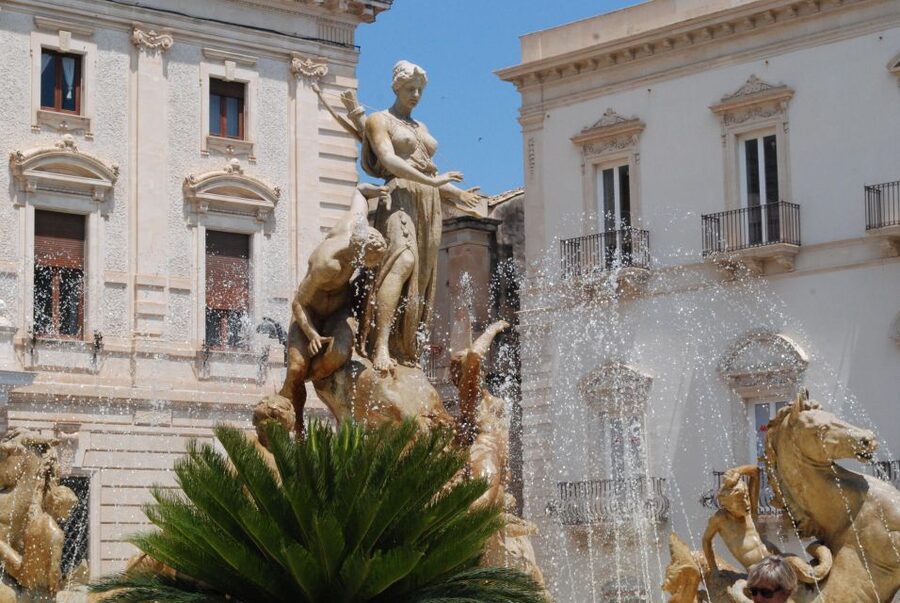
Next, you head to Piazza Archimede for a quick, focused stop, about 10 minutes. This is one of those squares where the lighting does the work for you. The open space gives you a breather, and the night atmosphere makes the central features look more sculptural.
The centerpiece here is the Diana Fountain, which dates from 1907. It is a short stop, but that brevity helps. You are not stuck in one spot too long, and you get to keep the momentum without feeling hurried.
What I like about adding a fountain to a monument-heavy route is that it changes your perspective. After temple stones and religious architecture, a fountain feels human scale. You get a place to rest your eyes, then you can move on to the next historic layer with a better sense of contrast.
Piazza Duomo: admire the cathedral from the outside
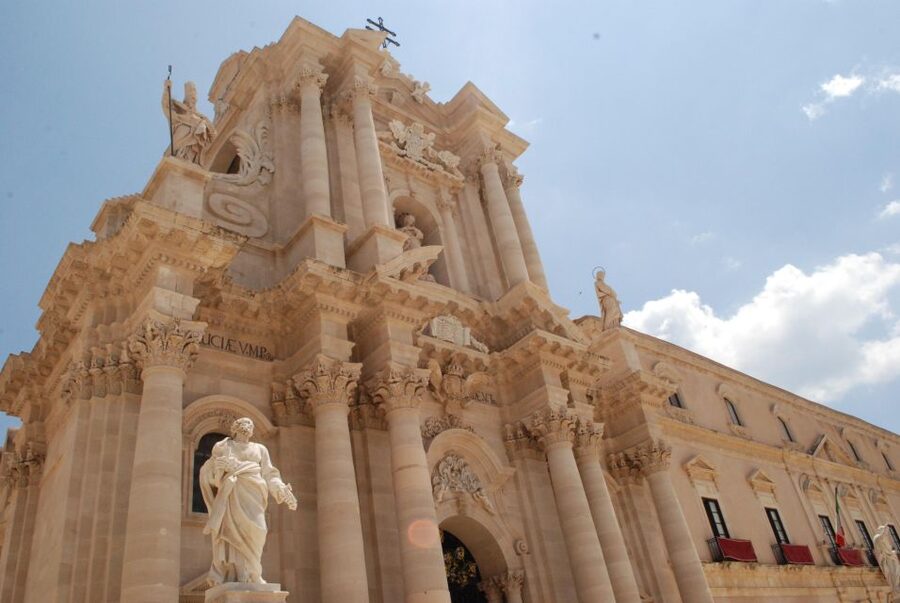
Piazza Duomo is your next major moment, and the stop lasts about 25 minutes. The cathedral sits there with weight, even when you are standing outside it. This is also where your guide pauses to explain the history of the church through various colonisations and transformations over the years.
One key consideration: it will not be possible to visit the church inside. That means your time at Piazza Duomo is about seeing the façade area, taking in the setting, and listening to the story behind what you are viewing.
This outside-only format can actually be a good thing at night. You are not dealing with interior crowds or fixed opening constraints. You are free to keep your attention on the exterior design choices and the way the square frames the building.
If you care about architecture, use your time here to watch how the square shapes sightlines. At night, street lamps and nearby façades change the look of surfaces, and that can make the different phases of building feel more obvious.
A different sort of day out around Syracuse:
- Syracuse: Boat Tour with Captain Mirko, Snorkeling & Caves
★ 4.7 · 746 reviews - Siracusa: Ortigia Boat Tour with Marine Grotto
★ 4.7 · 617 reviews - Siracusa: Ortigia & Sea Caves Speedboat Tour with Swim Stop
★ 4.9 · 499 reviews - Syracuse: Neapolis Archaeological Park Small Group Tour
★ 4.7 · 350 reviews
Palazzo Bellomo and noticing history in plain sight
After Piazza Duomo, you move to the Galleria regionale di Palazzo Bellomo di Siracusa, with about 10 minutes on this stop. In a short slot like this, you are not trying to see everything. You are learning how to read a palazzo as a landmark, not just as a backdrop.
Palazzo Bellomo is noted as a building rich in history, and the tour treats it as a visible marker of the island’s layered past. Even if you only get a quick look, it helps you connect why these grand structures matter: they show what power looked like in different eras, and they explain how Ortigia’s center functioned beyond monuments.
My advice: do not treat this like a “blink-and-you-miss-it” photo stop. Take 60 seconds to look at the overall mass and rhythm of windows and openings. Night lighting tends to highlight textures and edges, so you can catch more than you expect.
Via Castello Maniace and the Swabian Maniace Castle
Then comes one of the most atmospheric parts of the route: Via Castello Maniace, leading to Maniace Castle at the island tip. You will spend about 25 minutes here, and the description specifically calls out how magical the atmosphere can feel at night.
Maniace Castle is one of the most important monuments of the Swabian period. That matters because it is not just a pretty stop. Your guide’s narration helps you understand how the island’s control shifted over time, and how the architecture reflects those changes.
Practical tip: give yourself time to stand and look toward where the sea would shape the setting. Even without a long formal break, a castle at the water’s edge tends to pull you into the scene. At night, that pull can be stronger, since the horizon and surrounding darkness make the silhouette feel sharper.
If you are traveling with kids or someone who is less patient, this is a good moment because it feels like a payoff. You have multiple historic points already, and this one is dramatic in a way that is easy to understand without deep background.
Palazzo Montalto, then Fonte Aretusa’s legend
The next stop is Palazzo Montalto, described as a beautiful historical palace hidden among Ortigia’s alleys. You get about 10 minutes, which works well for a place like this. It is exactly the kind of building you might miss on your own because it does not announce itself as loudly as major squares.
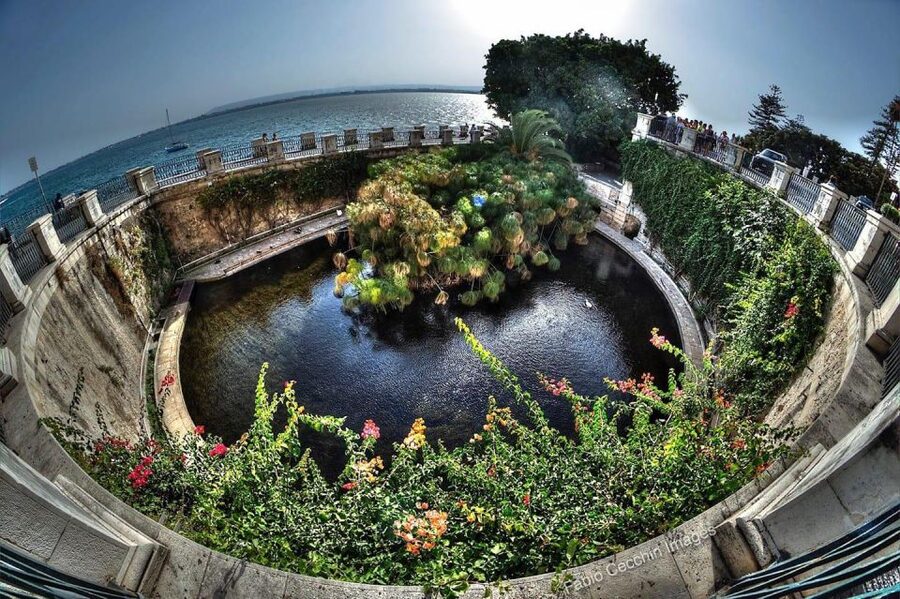
From there, you move to Fonte Aretusa, and this is one of the longer stops at about 25 minutes. Fonte Aretusa is presented as a beautiful spring with a legend, and your guide introduces the mystery behind it.
I like how the tour ends up here. A castle gives you power and stone. A palace gives you domestic or civic presence. A spring gives you something softer and myth-linked. It is a logical emotional shift, and it helps the night feel more complete.
If you want to capture the mood, plan to arrive without rushing to your phone. Spend your first minute just looking around. Night reflections and the way light pools around the area can change the feel fast, and the legend your guide shares tends to make you look slower.
Pace, timing, and what to plan for in a 2-hour tour
This tour is 2 hours long, with visits that add up to a structured loop. Here is the basic pacing rhythm you can expect: a quick start at the Temple of Apollo, short square stops, one longer cathedral square segment, a brief art-palanzo moment, a longer castle segment, then the spring finish.
That structure is part of the value. Ortigia can be easy to wander, but at night it is also easy to lose time, direction, or context. A guided loop helps you keep your orientation, so you can enjoy the lights without spending half the night deciding where to go next.
What you should personally prepare:
- Comfortable shoes, since this is a night walking tour through alleys and squares
- A jacket or layer that works for evening, because night temperature swings can matter in Sicily
- A quick check that your phone battery is ready, but try not to let photos run the show
Price and value: what $88 is really buying
At $88 per person for a 2-hour guided night tour, the cost is in the mid-to-higher range for a walking experience. The question is whether you feel you gain more than you could on your own.
In this case, you do gain something specific. You are not just seeing landmarks. You are hearing the history connected to the island and how it changed through multiple colonisations. That kind of narrative turns a list of sights into a coherent story, especially for places like Piazza Duomo where you cannot go inside.
Also, the time breakdown matters. You are getting visits at major points, including Temple of Apollo, Piazza Duomo, the castle area, and Fonte Aretusa, all within a tight 2-hour window. If you tried to assemble that route yourself, you would likely spend extra time figuring out the best order, and you might still miss the “why this matters” part.
One more value point: the tour includes a qualified guide, and reviews put a lot of emphasis on the guide being prepared and kind, with explanations that land. In practical terms, that means your night is less guesswork and more understanding.
Languages, group feel, and who this tour suits best
The tour runs with live guiding in Italian, English, and Russian. If you are traveling with friends who have different language comfort levels, this can be a plus because you can often match your group to a language option.
The experience is designed for people who want a guided understanding of Ortigia, not just a casual stroll. It works especially well if:
- You have limited time in Syracuse and want the key sights in one evening
- You enjoy history as an explanation tied to places you can actually see
- You prefer structured walking instead of wandering without a plan
- You want a night vibe with real context, not just photo stops
It may be less ideal if you are looking for a long, slow, free-form walk where you choose every turn. This one is a guided route with set stops and fixed time at each.
Should you book this Ortigia guided night tour?
I would book it if you want Ortigia’s highlights with the story stitched in, and you like the idea of seeing Temple of Apollo, Piazza Duomo, the Maniace Castle area, and Fonte Aretusa all in one guided loop. At $88 for 2 hours, the value makes sense if you care about history explanations and you want a night route that stays organized.
Skip it if you are the type who prefers to wander on your own with a flexible plan, or if you specifically want interior access to the cathedral, because this tour keeps you outside at Piazza Duomo.
If you are unsure, I suggest this simple test: ask yourself whether you want to understand what you are seeing tonight. If yes, this tour is a strong fit.
FAQ
How long is the Ortigia guided night tour in Syracuse?
The tour lasts 2 hours.
Where does the tour start?
It starts at the Temple of Apollo.
What major sights will I see during the 2-hour walk?
You will see the Temple of Apollo, Piazza Archimede (Diana Fountain), Piazza Duomo, Palazzo Bellomo, the area of Via Castello Maniace, Palazzo Montalto, and Fonte Aretusa.
Can I go inside the cathedral at Piazza Duomo?
No. The tour does not include visiting the church inside.
What is included in the price?
A qualified tour guide is included.
Are meals and drinks included?
No, meal and drinks are not included.
What languages is the live guide available in?
The tour is offered with live guides in Italian, English, and Russian.
Is the tour wheelchair accessible and is it cancellable?
The tour is wheelchair accessible. It also offers free cancellation up to 24 hours in advance for a full refund.
Just reviewed in Syracuse
- Tour in barca privata da Avola a Marzamemi con snorkeling★ 5.0 · 4 reviews
- Syracuse:Boat tour Ortigia,Pillirina and seacaves★ 4.7 · 38 reviews
- Island of Ortigia: Sunset Boat Tour with Aperitif★ 2.6 · 4 reviews
- Sortino: Olive Oil tasting with Sicilian Products and Wine★ 5.0 · 5 reviews
- Museo delle Illusioni – Siracusa –★ 4.3 · 22 reviews
- Tour in barca da Avola a Marzamemi/Portopalo di CapoPassero★ 4.8 · 6 reviews
- Tour in barca da Avola a Marzamemi/Portopalo di CapoPassero★ 4.7 · 10 reviews
- From Syracuse: Ragusa Ibla, Noto and Modica Private Day Trip★ 4.8 · 9 reviews
Syracuse Tours, compared.
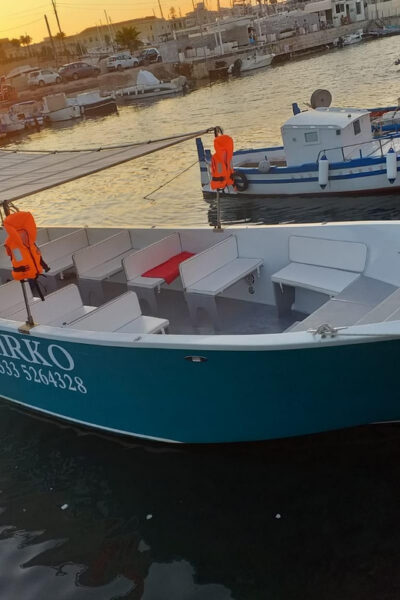
Boat Tour with Captain Mirko, Snorkeling & Caves
Read our review →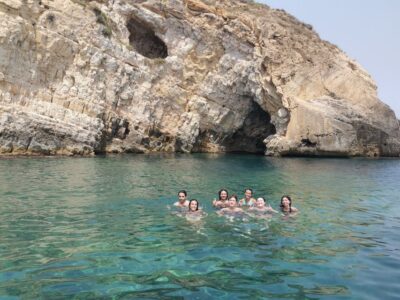
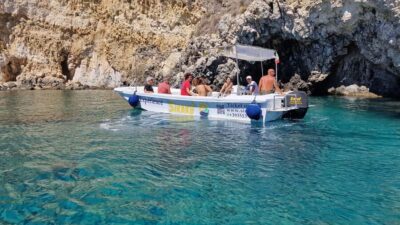
Ortigia & Sea Caves Speedboat Tour with Swim Stop
Read our review →
Ortigia Island and Sea Caves Boat Tour with Drinks
Read our review →

Street Food Walking Tour in Ortigia with Tastings
Read our review →Browse the lists this tour appears in