
Reviewed in full · SYRACUSE TOURS
Syracuse: Greek Theater and Neapolis Guided Private Tour
Syracuse’s Neapolis is the kind of place where ruins don’t feel like leftovers. They feel like a living story, told through myths, stone-cutting, and big public drama. I really like how this guided private route connects the city’s Greek and Roman layers instead of treating them like separate sites.
I also like that you get more than just famous names. You’ll hear why the Latomie mattered, why the Ear of Dionysius is famous for its acoustics, and what you’re looking at in the theater complex. One thing to consider: this is a 2-hour tour, so you’ll be moving at a steady pace through several key stops.
Key highlights at a glance
- Neapolis Archaeological Park in one focused, guided circuit
- Latomie stone quarries once used for heavy work and imprisonment, now shaded by greenery
- Ear of Dionysius explained for its shape and standout acoustics
- Greek Theater with terrace views plus the Nymphaeum fountain sightline
- Altar of Hieron II and its scale within the Greek world
- Roman Amphitheater to see how the city’s shows changed over time
Why the Neapolis circuit in Syracuse feels different
Syracuse is one of those Italian cities where the big sights are not all crammed into one street. They stretch across Neapolis, and that’s exactly why this tour format works. In just two hours, you get a clean path through the highlights, with a guide turning scattered stones into a coherent picture.
The best part is the way the tour links everyday force to public spectacle. You start with places tied to labor and punishment. Then you move into sound, theater, and monumental civic space. That arc makes the ruins feel purposeful, not random. If you like when history has a storyline, you’ll enjoy this.
Also, it’s a private group. That matters more here than in some cities. In open-air parks, questions and back-and-forth help. You can ask what something means, not just where it is. You do not have to speed-read the site on your own.
Other Syracuse options side by side
- Syracuse: Boat Tour with Captain Mirko, Snorkeling & Caves
★ 4.7 · 746 reviews - Siracusa: Ortigia Boat Tour with Marine Grotto
★ 4.7 · 617 reviews - Siracusa: Ortigia & Sea Caves Speedboat Tour with Swim Stop
★ 4.9 · 499 reviews
Price and group size: value that depends on how many you bring
This is priced at $283.21 per group, up to 15 people, for a 2-hour guided experience. With a private format, the value swings based on headcount.
- If your group is closer to the maximum, the per-person cost can drop dramatically.
- If it’s just a small group, you should think of this as paying for a guide plus convenience, not a bargain ticket.
Given the number of major monuments covered, I think it’s fair value when you want context. You’re not just taking photos. You’re learning what each place was for, from quarries to amphitheaters. A good guide can easily make the time feel more worthwhile than a self-guided wander.
The tour has a 4.6 average rating based on 8 reviews, which is a reassuring signal that people generally leave satisfied with the guide experience and site quality.
Entering Neapolis: where the guide sets the whole story
Your visit begins at the entrance of Neapolis in Syracuse. The meeting point can vary by option booked, and you’ll end back at the meeting point after the tour. Once you’re together, the guide gives a short briefing to explain the city origins and the logic of the area.
This briefing is not fluff. It helps you understand why the monuments are where they are. Neapolis was a major center in the ancient Mediterranean world, and the tour frames the Greek city as a place with identity and power, not just architecture.
From there, you’ll enter the archaeological park of Neapolis and start moving through sites in a sequence that makes sense. Instead of jumping between separate ruins, you follow one storyline: city building, sound and myth, and then public performance.
Latomie and the Ear of Dionysius: quarries turned into myth-making
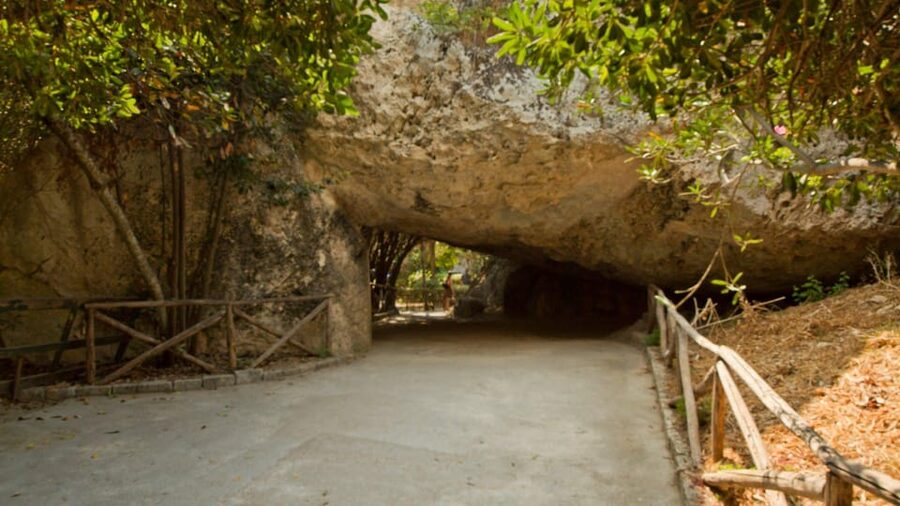
First comes the Latomie, the ancient stone quarries where building material was extracted for centuries. You’ll see how these spaces used to serve heavy work and imprisonment. That backstory changes how you read the rock faces. The stone walls stop being just scenery and start being evidence.
Then the Latomie shift again in tone. Today they’re green and softened by nature. That contrast is one of the reasons the area feels memorable. You’re looking at a place that once focused on suffering and labor, now wrapped in calm shade. It’s a strange mix, and it makes the stop feel more human than purely monumental.
Next is the Ear of Dionysius. You’ll learn why it’s famous for its typical shape and its particular acoustics. The guide connects the location to the tyrant Dionysius and the legend tied to this cave. Even if you only catch a few key details, the idea lands: Syracuse used stone not only to build cities, but also to stage power, fear, and stories.
Practical note: this is an outdoor walking tour through uneven terrain. Wear grippy shoes. If the ground is damp, take your time. You’ll want your footing to focus on the guide’s explanation, not on where you’re stepping.
A different sort of day out around Syracuse:
- Syracuse: Neapolis Archaeological Park Small Group Tour
★ 4.7 · 350 reviews - Syracuse: Pillirina, Ortigia, and Sea Caves Tour by Boat
★ 4.6 · 348 reviews - Syracuse: Ortigia Island and Sea Caves Boat Tour with Drinks
★ 4.6 · 337 reviews - Syracuse: Coast and Sea Caves Full Transparent Boat Tour
★ 4.8 · 330 reviews
Cordari Cave, theater terrace views, and the Nymphaeum fountain
After the Ear of Dionysius, you’ll continue to the Grotta dei Cordari, often described as a major next step in the Neapolis experience. The vibe here is still about cave space and city myth. The guide points out what you’re seeing and keeps connecting it back to the bigger Syracuse story.
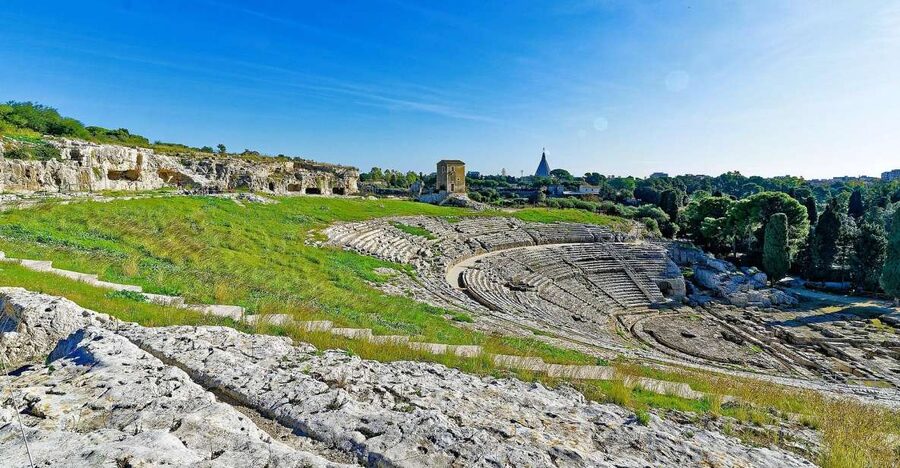
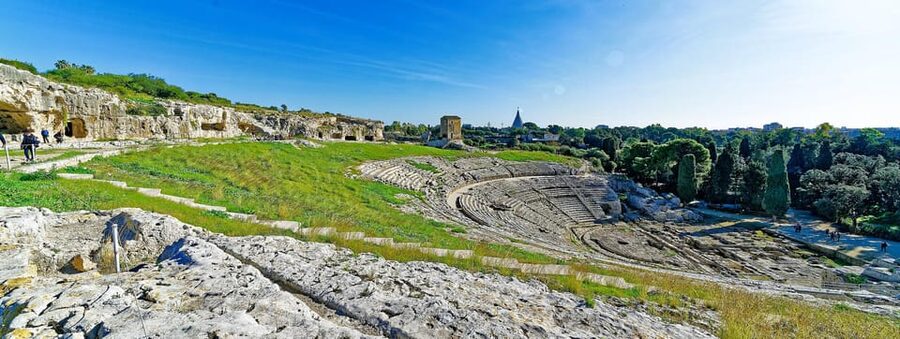
Then it’s on to the Greek Theater. This is one of the biggest mood-shifters on the route. The theater turns the park from a series of sites into a stage. From the upper terrace, you can admire the Fountain of the Nymphaeum and enjoy a panorama overlooking the large port.
That view is not just for photos. It helps you understand the theater’s role. Ancient performance space was designed for people, sightlines, and atmosphere. When you stand at the terrace and look outward, you start to grasp how much the setting mattered.
If you’re someone who likes architecture but also likes context, this is a strong moment. The guide’s perspective keeps the theater from feeling like a backdrop. You’ll understand why it mattered and how it fit into the ancient city’s rhythm.
Altar of Hieron II and the Roman turn with the amphitheater
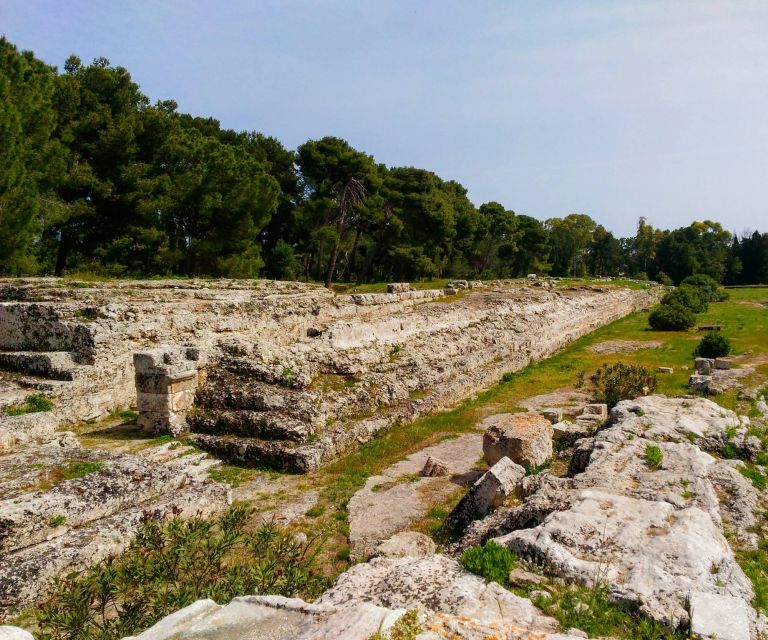
After leaving the Greek Theater, you’ll move to the Altar of Hieron II, described as the largest stone altar built in the Greek world. This stop is big because it shifts the scale. It’s not a small decorative detail. It’s a statement monument.
The guide helps you read it as part of Greek civic and religious life. Even if you don’t know the names ahead of time, you’ll leave with a clearer sense of why large altars were so important in public space.
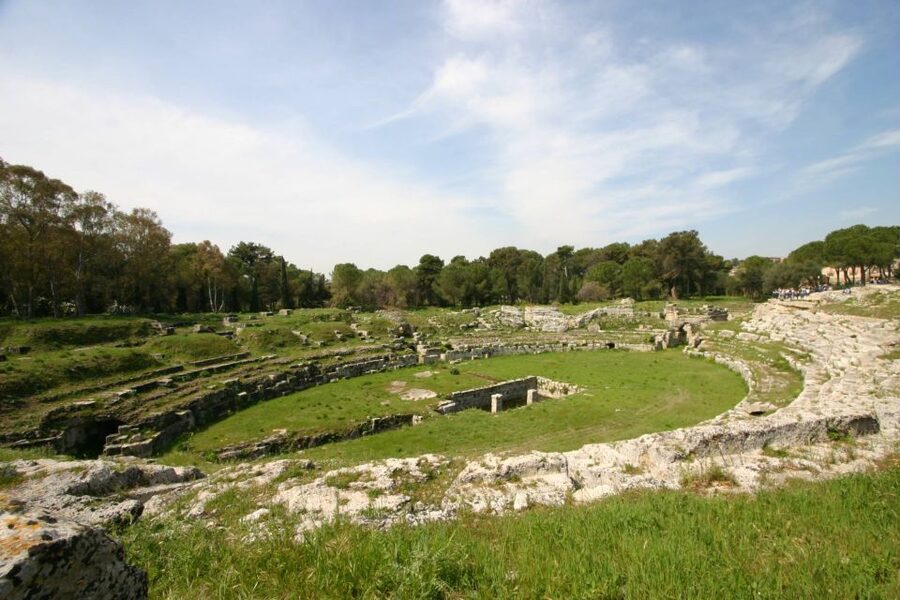
Finally, the tour reaches the Roman Amphitheater, the last major monument in Neapolis for this itinerary. Here you’ll see the Roman phase of the city, including the building characteristics and what made gladiatorial games different as entertainment.
This last step is great for people who think of Rome and Greece as unrelated. The park shows how cultures layer on top of each other in the same geographic space. You end by seeing how the city’s public drama changed from Greek theater traditions to Roman spectacle.
What you’ll learn, in plain terms, without getting lost in dates
A lot of history tours dump dates on you. This one is structured around places and purpose. You’ll learn about:
- the origins and identity of the polis of Syracuse
- the role of Latomie as quarries and spaces tied to hardship
- the legend of Dionysius connected to the Ear of Dionysius
- how the Greek Theater fit into Neapolis
- why the Altar of Hieron II is so significant
- how the Roman Amphitheater reflects a new style of games
The reviews also highlight guide strength, especially for getting details right. One guide named Rita gets called out for strong historical knowledge. Another guide, Cristina, is praised for explaining details clearly, and for making the park feel beautiful and easy to appreciate. That combination, solid facts plus good on-site explanation, is exactly what you want for this kind of archaeological stop.
Languages and the Italian option with Il mito di Aretusa
Tours are offered with a live guide in English, German, Italian, Spanish, and French. If you choose an Italian-language option, the tour notes that you may be able to attend the show Il mito di Aretusa.
If you care about language and you’re comfortable in Italian, that’s a fun bonus idea. It adds a performance element that matches the theater theme you’ll already be walking through.
Even if you do not pick Italian, the tour still focuses on the key monuments in a tight two-hour window. You get the same major sites, with the guide translating the meanings into your language.
Weather and timing: plan for changing conditions
This is outdoors, so weather matters. The tour states that in bad weather conditions, your reservation could be modified or canceled. That’s normal for archaeological parks, and it’s worth keeping flexible.
Also, the duration is listed as 2 hours, and starting times depend on availability. If you’re juggling a day of driving or other timed events, choose a time slot that leaves breathing room afterward. This kind of walk plus explanation can run a bit tighter if you arrive late or if the park has brief closures due to conditions.
So, should you book this private Syracuse tour?
If your idea of a great trip is learning what you’re seeing, not just checking off monuments, I’d say this tour is a strong choice. The route hits the Neapolis heavyweights in one organized circuit: Latomie, Ear of Dionysius, Greek Theater, the Nymphaeum fountain view moment, Altar of Hieron II, and the Roman Amphitheater.
Book it if:
- you want a guided interpretation of Greek and Roman Syracuse in one session
- you like hearing the myths and legends tied to specific places, not just generic summaries
- you’re traveling with a small group or friends and want the flexibility of a private experience
Skip it if:
- you prefer long, unstructured wandering and hate tight time windows
- you’re not interested in legends and explanations, and you mainly want scenery without guided context
If you fall somewhere in the middle, my advice is simple: pay attention to how many people will be in your group. With $283.21 per group up to 15, the value swings. For larger groups, it can be surprisingly cost-effective. For solo or very small groups, it becomes more of a comfort-and-context purchase, which is still worth it if you truly enjoy learning on-site.
FAQ
How long is the Syracuse Greek Theater and Neapolis guided private tour?
The tour duration is 2 hours.
How much does the tour cost?
The price is $283.21 per group for up to 15 people.
Is this a private tour?
Yes, it is a private group tour.
What languages are available for the live guide?
The live guide is available in English, German, Italian, Spanish, and French.
What is included in the tour?
A certified guide is included.
What is not included?
Anything not listed as included in the tour details is not included.
What if the weather is bad?
In bad weather conditions, your reservation could be modified or canceled.
Just reviewed in Syracuse
- Tour of Syracuse by Ape Calessino★ 3.0 · 3 reviews
- Boat tour of the island of Ortigia and the sea caves★ 4.2 · 4 reviews
- Tour in barca da Avola a Marzamemi/Portopalo di CapoPassero★ 4.7 · 19 reviews
- ORTIGIA tour by tuk tuk – ape calessino 1 hour★ 4.9 · 22 reviews
- Tour da Avola A Portopalo con sosta e visita a Marzamemi★ 4.9 · 5 reviews
- Tecnoparco Archimede Museum Exhibition Ticket★ 4.8 · 14 reviews
- Syracuse: Sunset Aperitif Tour★ 4.4 · 4 reviews
- Syracuse: Traditional Cooking Class & Ancient Market Visit★ 4.9 · 72 reviews
Syracuse Tours, compared.
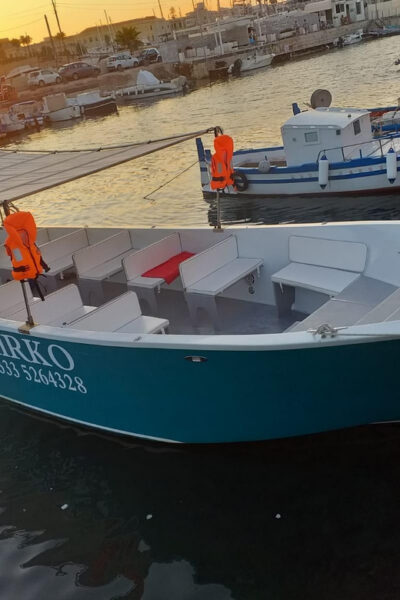
Boat Tour with Captain Mirko, Snorkeling & Caves
Read our review →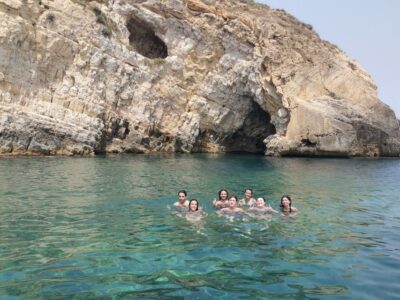
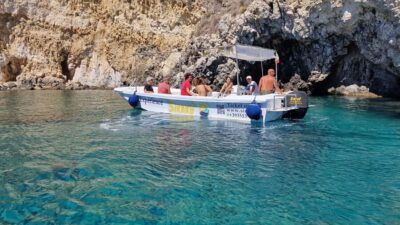
Ortigia & Sea Caves Speedboat Tour with Swim Stop
Read our review →
Ortigia Island and Sea Caves Boat Tour with Drinks
Read our review →

Street Food Walking Tour in Ortigia with Tastings
Read our review →Browse the lists this tour appears in