
Reviewed in full · SYRACUSE TOURS
Syracuse: Ortygia & Neapolis Archaeological Park Guided Tour
Syracuse pulls off something rare: in just a 2 hour walk-and-look route, you get Greek, Roman, and Baroque layers stacked in plain sight. I especially love the Temple of Apollo at Umbertino Bridge, dated to 580 BC, and the Cathedral of Syracuse, built over older temple remains with columns you can still spot.
One thing to plan for: some entry costs are not included, meaning you’ll still need tickets for the Duomo and the Archaeological Park of Neapolis, plus you handle the transfer between Ortigia and Neapolis on your own.
Key things I’d circle before you go
- Temple of Apollo (580 BC) at the start, with a clear reason it matters in Sicilian history
- Cathedral of Syracuse built on Athena’s footprint, where ancient columns reappear in the church walls
- Fonte Aretusa on the waterfront, a freshwater scene with fish, ducks, and papyrus by the Mediterranean
- Neapolis highlights in one sweep, including the Greek theater and the Roman amphitheater
- Ear of Dionysus inside the Latomie del Paradiso, known for its dramatic echo
- A guide who can handle mixed ages, since Giuseppe’s tour style has worked well even with younger guests
Why Syracuse Works So Well in a 2 Hour Private Tour
This is the kind of tour that helps you get your bearings fast. Syracuse can feel confusing at first because Ortigia is its own island world, then Neapolis opens into the big archaeological area on the mainland. This tour is designed to connect those two zones in a way that makes the story make sense.
You’ll be with a licensed guide on a private group format. That matters, because you can ask questions when something catches your eye, instead of waiting your turn. The tour runs for about 2 hours, and starting times depend on availability, so check what’s offered for your day.
The main tradeoff is time. Two hours is great for highlights, but if you like slow museum-style pacing, you might want to follow up later on your own.
Other Syracuse options side by side
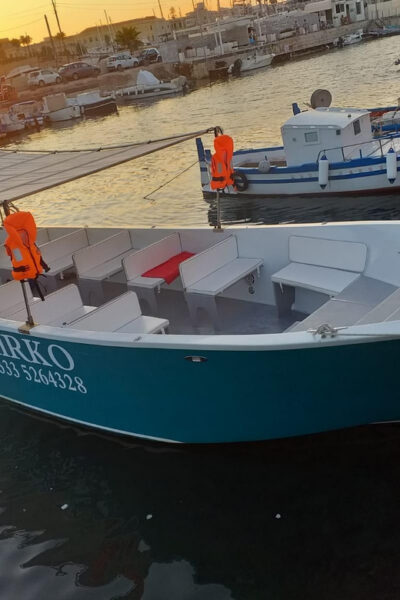
- Syracuse: Boat Tour with Captain Mirko, Snorkeling & Caves
★ 4.7 · 746 reviews - Siracusa: Ortigia Boat Tour with Marine Grotto
★ 4.7 · 617 reviews - Siracusa: Ortigia & Sea Caves Speedboat Tour with Swim Stop
★ 4.9 · 499 reviews
From Umbertino Bridge to the Temple of Apollo
You start at the Umbertino Bridge by the statue of Archimedes. Even before you reach the sites, this is a smart way to set the stage, because you’re literally crossing into Ortigia, the historic center built on the island.
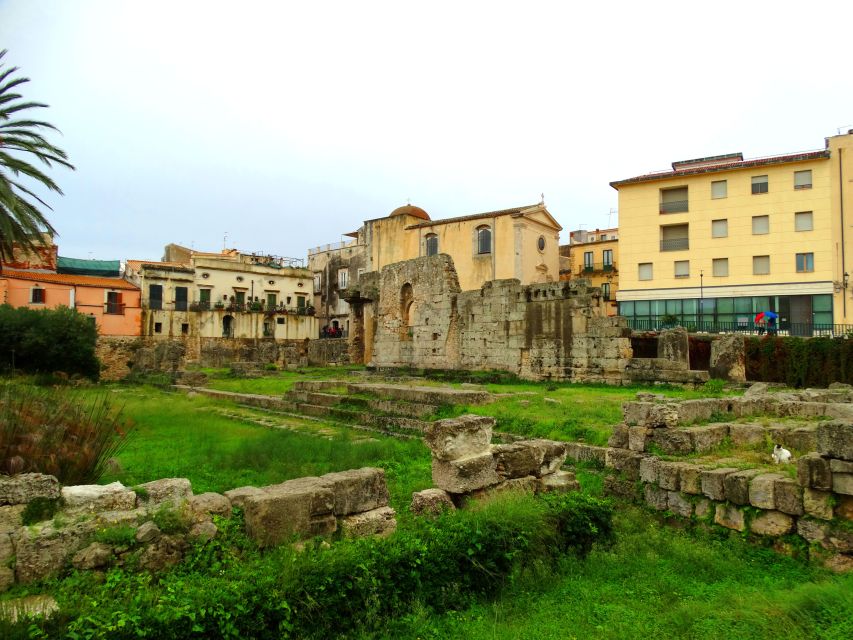
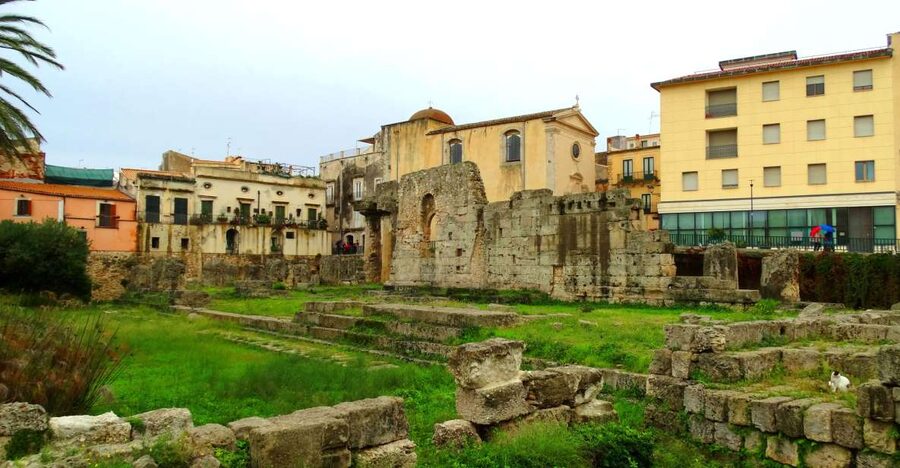
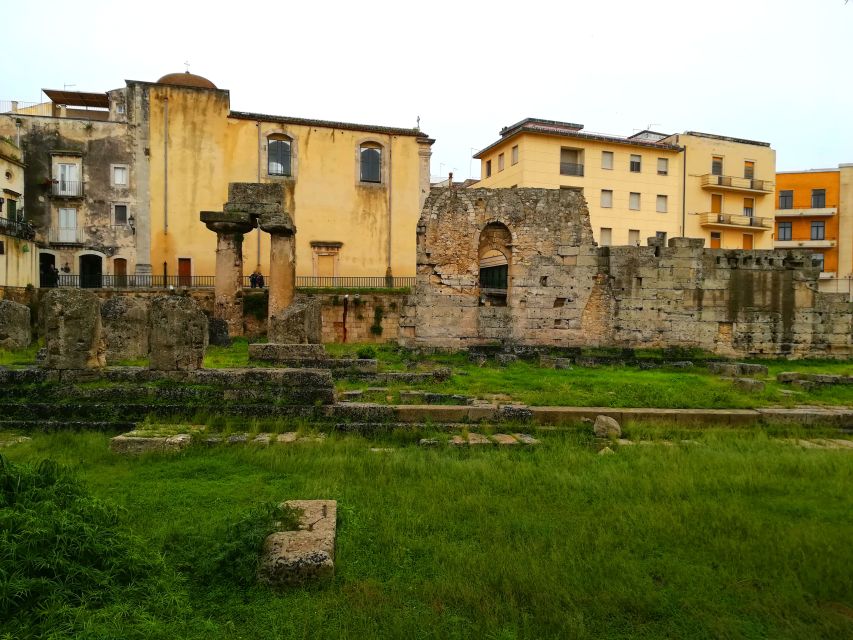
From there, you head to the Temple of Apollo, dated to 580 BC. The tour frames it as the oldest Doric temple in all of Sicily, and seeing it in person helps you understand why that claim lands. Doric architecture is straightforward, but it’s also strict, so when the guide points out the design cues, you’ll notice how the style signals “early Greece” in a place that later becomes Roman and then Baroque.
Practical tip: this is a good stop for photos, but watch your footing. Some areas around old stone look stable, yet the ground can be uneven where the city meets archaeological remains.
Piazza Archimede, the Diana Fountain, and the White Limestone Alleys of Ortigia
After Apollo, the route shifts into Ortigia’s everyday geometry. You’ll pass through Piazza Archimede, dedicated to Archimedes, the Syracusan mathematician. It’s an easy square to walk through, but the point is bigger than statues. Syracuse keeps using its own thinkers as landmarks, so your mental map starts forming quickly.
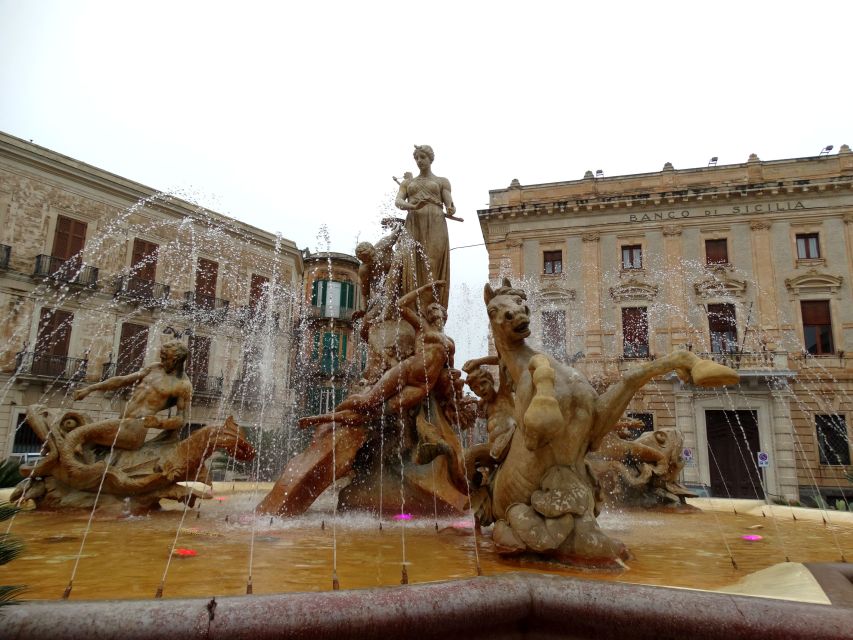
Next comes the Diana Fountain. The fountain area gives you a clean moment of “pause and look,” because it’s not just decoration. It’s tied to the waterfront world of Ortigia, and it helps you connect the spiritual and myth side of the city with the practical reality of where people lived, traded, and gathered.
You’ll also reach Piazza della Minerva, built with white limestone and framed by buildings that overlook the square. Limestone changes how light falls in Sicily, so if you’ve ever wondered why old towns look different at different hours, this is a good place to notice. Midday can be harsh, but early and late light can make the stone look almost creamy.
This part is also where you’ll feel the value of a guide. Ortigia’s alleys can be charming, but they can also send you in circles if you’re on your own. With a guide, you walk with purpose.
Inside the Cathedral of Syracuse and Santa Lucia alla Badia
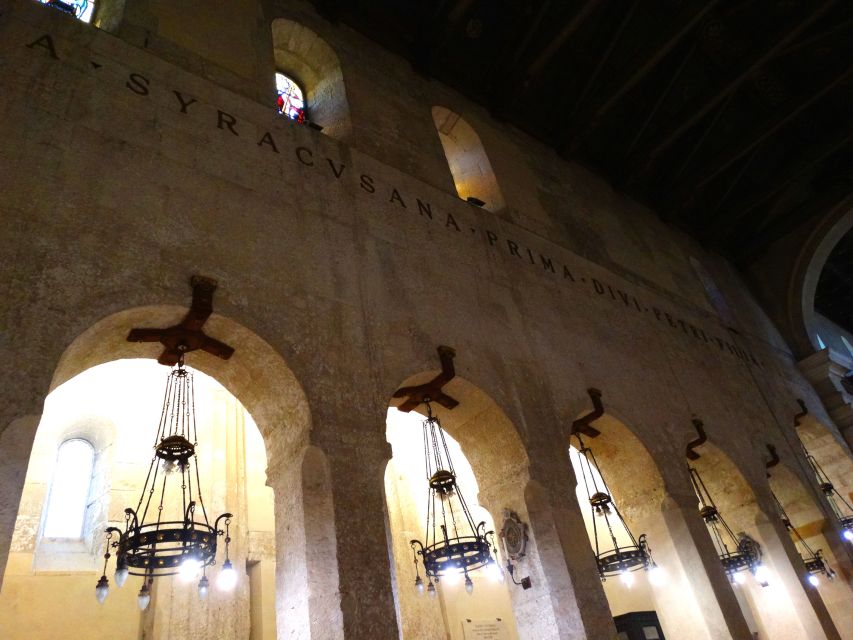
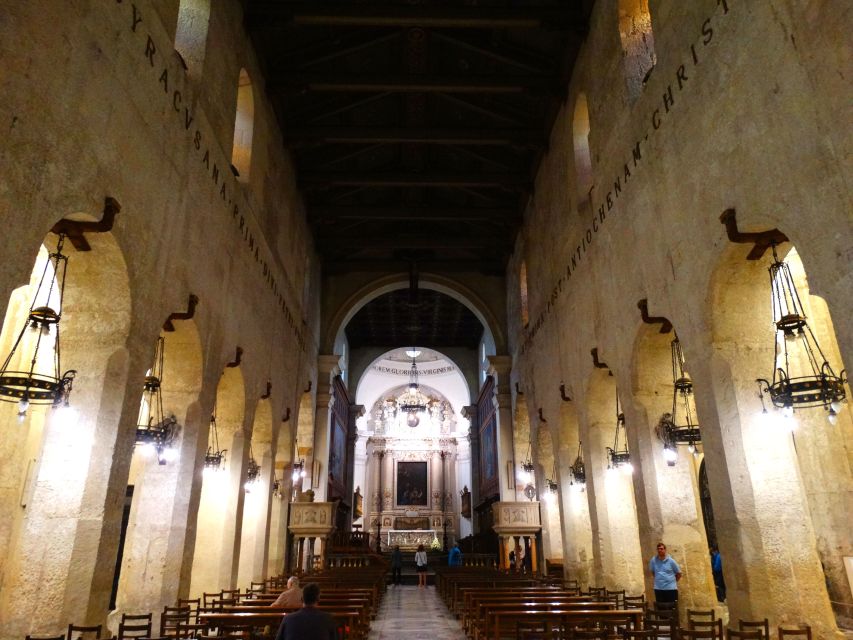
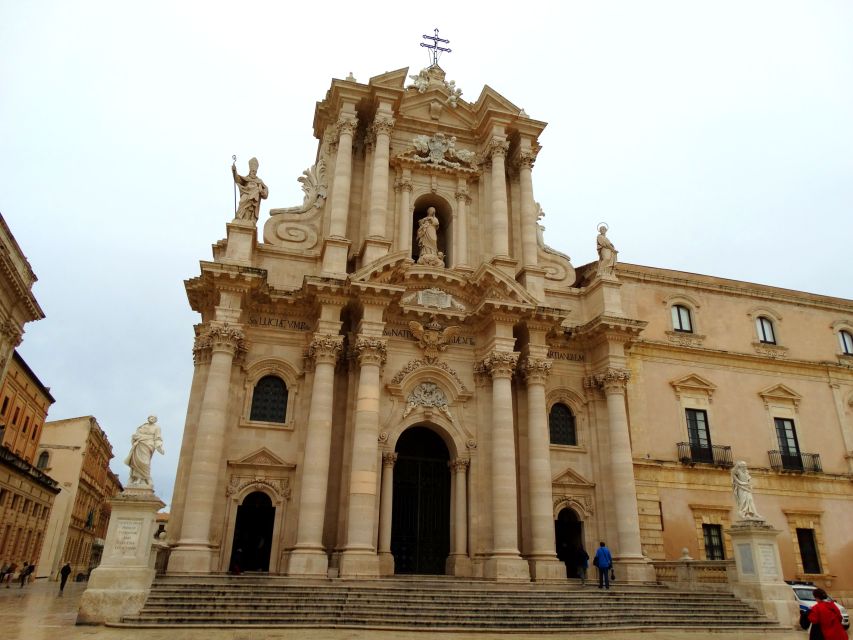
The tour’s big “wow” stop is the Cathedral of Syracuse, dedicated to the Nativity of Mary Most Holy. Here’s the key idea the guide helps you catch: the church is tied to older sacred ground. It was founded on the remains of an ancient Temple of Athena, and some columns can be seen re-emerging from the church walls. The guide points out what you can spot both externally and, more importantly, when you visit the interior.
Visually, the cathedral’s façade is Baroque and Rococo, and it changes your expectations. You might walk in expecting ancient stone and instead get theatrical church design. That contrast is exactly why this stop is valuable: it shows Syracuse didn’t just “have an ancient past,” it kept rebuilding its identity on top of older layers.
Around the cathedral area you’ll also see landmarks like the Palazzo del Vermexio, the Town Hall seat, and Palazzo Beneventano, which give the whole plaza a civic feel.
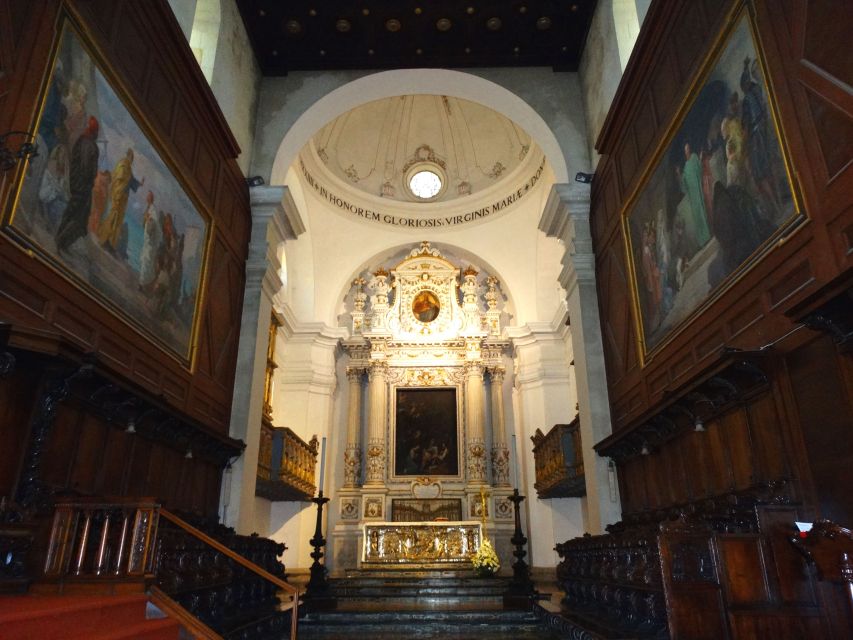
Then there’s Santa Lucia alla Badia, which the tour includes. This church is known for housing a Caravaggio painting, described here as The burial of Saint Lucia. Even if Caravaggio isn’t the only reason you travel, seeing one of his major works in the context of local devotion adds weight.
Important planning note: the cathedral ticket is not included, so you’ll want to factor in the time and cost of entry for Duomo. If you’re short on energy, you’ll still be glad you planned for it, because you’ll spend a lot of your tour story here.
A different sort of day out around Syracuse:
- Syracuse: Neapolis Archaeological Park Small Group Tour
★ 4.7 · 350 reviews - Syracuse: Pillirina, Ortigia, and Sea Caves Tour by Boat
★ 4.6 · 348 reviews - Syracuse: Ortigia Island and Sea Caves Boat Tour with Drinks
★ 4.6 · 337 reviews - Syracuse: Coast and Sea Caves Full Transparent Boat Tour
★ 4.8 · 330 reviews
Fonte Aretusa, the Waterfront, and the Views from Maniace Castle
After the cathedral area, the tour walks toward the sea. This is where Ortigia stops feeling like architecture and starts feeling like geography.
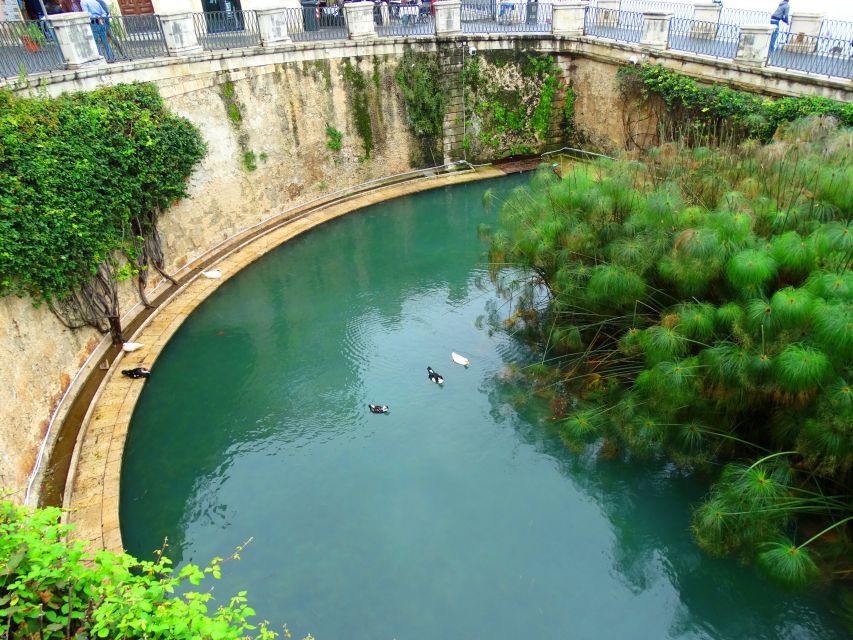
You’ll visit Fonte Aretusa, an unusual freshwater setting on the waterfront. The tour description highlights that it’s home to fish and ducks and that papyrus plants grow there. That mix is part of why this stop gets people talking. It’s one of those moments where you realize Syracuse is not only ruins and churches, it’s a working coastal landscape with its own natural features.
A few steps away, you’ll reach the Alfeo seafront, described as one of the oldest stretches of seafront on the island. You’ll also get views toward Maniace Castle, a fortress from the Swabian period. The tour notes it was used as a prison and military barracks in the past.
What I like about including Maniace Castle in the route is that it gives you a “power and protection” story that balances the religious stops. You see how the sea could be both a resource and a vulnerability, and how fortifications followed.
One more practical thing: the waterfront can be windy. If you’re wearing light layers, consider bringing something you can add or remove as the breeze changes.
Neapolis Archaeological Park: Roman Amphitheater, Ara of Hieron, and the Big Stages of Power
Now you shift from Ortigia to the mainland area of Neapolis Archaeological Park. The tour makes this transition, but tickets and transport are on you.
The park ticket is not included, so build that into your day. Also, the tour description says there’s no transfer by your own vehicle or public transport from Ortigia to Neapolis and back. In plain terms, you’ll need to handle that segment yourself, then the guide continues the experience back at the meeting point at the end.
Inside Neapolis, you start with Church of San Nicolò ai Cordari, described as an 11th-century church. Then you move through the lower area to the Roman Pool, which are large water tanks dug into the rock. Pipes once brought water to the Roman amphitheater for nautical games and water fights. Even if you don’t care about ancient “sports,” this is a strong reminder that Roman entertainment was engineering plus spectacle.
Next is the Roman amphitheater, dating to the Augustus era. The guide highlights its elliptical structure carved into rock and its three levels. The most famous shows were gladiator fights, so you can picture the roar and the rhythm of crowd energy, even though you’re walking around in quiet today.
Then comes the Ara of Hieron, an immense altar dedicated to Zeus where sacrifices of bulls took place. This stop is not about seating like the theaters. It’s about ritual and control, and the scale helps you understand how public religion and political identity overlap in ancient cities.
You end this park segment by heading toward Latomie del Paradiso and its dramatic echo cave, which is where the tour really turns up the volume in your mind.
Latomie del Paradiso and the Ear of Dionysus Echo Moment
If you’ve ever heard people describe the Ear of Dionysus as something you have to experience to believe, this is why. The tour takes you to the quarries of Latomie del Paradiso, then to the Ear of Dionysus.
The description here is specific: the cave is 23 meters high, and it’s known for the exceptional echo inside it. Even if you’re not the type who gets goosebumps, standing in that space tends to make sound feel physical. The echo transforms the site from “interesting rock” into a designed acoustic effect in your imagination.
This is also a good point in the tour for a short breather, because you’ve already taken in a lot of “greatest of” archaeology. The echo cave shifts the focus from architecture to sensation.
Greek Theater at Neapolis, Built for the Crowd, Updated by Romans
You finish the Neapolis portion with the Greek theater, carved into stone and described as the most famous monument in the archaeological park. It was built by the Greeks and later renovated by the Romans.
This is a key payoff stop. Earlier you saw Roman entertainment and Roman engineering. Here you see the earlier form of public theater space, with its Greek logic, and then you see how Rome didn’t erase it, it adapted it.
The guide’s job is to help you see where Greek design ends and Roman changes begin, even if you’re looking at a site where centuries have layered repairs and wear. The result is that you walk away with more than a list of names. You understand continuity.
Price and Logistics: Is This $369.31 Per Group Worth It?
The price is listed as $369.31 per group up to 30, for about 2 hours with a licensed guide. That group cap means the guide cost can be spread across people, so value depends on how many of you are traveling together.
What you get included is straightforward: a licensed tour guide for the guided experience. What’s not included are two ticket items (Duomo and the Archaeological Park of Neapolis) and the transport between Ortigia and Neapolis.
So is it good value? I think it can be, especially if:
- you want a guided route that strings together Ortygia and Neapolis without you doing route research on the fly
- you care about context (why Apollo dates to 580 BC, why the cathedral sits on Athena’s remains, why the Ear of Dionysus is famous)
- you want your day structured without worrying about time-consuming ticket planning mid-walk
Your main cost risk is that you’ll pay for the Duomo ticket and the Neapolis park ticket separately. The good news is the tour still feels like it’s focused on the most recognizable set pieces in both zones, so you’re not buying a “maybe” experience.
Who This Tour Fits Best (and Who Might Prefer More Time)
This private guided approach fits best if you want:
- a highlight-heavy route through Syracuse’s major sites
- clear storytelling tying together Greek, Roman, and Baroque layers
- a guide who can keep momentum and hold attention
The guide quality matters here. The experience is described as entertaining, and Giuseppe’s tour style was specifically noted as working even for younger members. That’s a good sign if your group includes kids, teens, or anyone who gets restless when history turns into a lecture.
Who might not love it: if you’re the type who wants to linger in churches, sit with paintings, or spend an hour in one archaeological corner. This tour is designed for a controlled sweep. You can always add extra time later on your own once you know what to prioritize.
Should You Book the Syracuse Ortygia and Neapolis Guided Tour?
I’d book it if you want the fastest path to understanding Syracuse’s big chapters, from the Temple of Apollo to the Ear of Dionysus and the Greek theater. It’s also a solid pick for groups that benefit from a strong guide, especially if you’re not sure how to connect Ortigia and Neapolis efficiently.
Skip it or treat it as a “start here” option if you’re hoping the tour price covers everything, because the Duomo ticket and Neapolis park ticket are not included, and you’ll handle transport between the two areas.
If you can plan those two pieces, you’ll get exactly what this kind of tour is best at: a guided storyline across the right stops, in a tight time window.
FAQ
How long is the Syracuse Ortygia and Neapolis Archaeological Park guided tour?
It lasts about 2 hours.
Where do I meet the tour guide?
You meet at the Umbertino Bridge at the statue of Archimedes.
Where does the tour end?
The tour ends back at the same meeting point on Umbertino Bridge.
What is included in the tour price?
A licensed tour guide is included.
Are tickets for the Cathedral of Syracuse (Duomo) and the Archaeological Park of Neapolis included?
No. Tickets for the Duomo and for the Archaeological Park of Neapolis are not included.
Do I need to arrange transport between Ortigia and Neapolis?
Yes. Transfer by your own vehicle or public transport from Ortigia to Neapolis and back is not included.
Is this tour private?
Yes, it is listed as a private group.
What languages does the guide speak?
The guide offers live commentary in English, Italian, French, German, and Spanish.
Is free cancellation available?
Yes. You can cancel up to 24 hours in advance for a full refund.
How do I choose the starting time?
Starting times depend on availability, so you need to check available slots for your chosen date.
Just reviewed in Syracuse
- Tour of Syracuse by Ape Calessino★ 3.0 · 3 reviews
- Boat tour of the island of Ortigia and the sea caves★ 4.2 · 4 reviews
- Tour in barca da Avola a Marzamemi/Portopalo di CapoPassero★ 4.7 · 19 reviews
- ORTIGIA tour by tuk tuk – ape calessino 1 hour★ 4.9 · 22 reviews
- Tour da Avola A Portopalo con sosta e visita a Marzamemi★ 4.9 · 5 reviews
- Tecnoparco Archimede Museum Exhibition Ticket★ 4.8 · 14 reviews
- Syracuse: Sunset Aperitif Tour★ 4.4 · 4 reviews
- Syracuse: Traditional Cooking Class & Ancient Market Visit★ 4.9 · 72 reviews
Syracuse Tours, compared.
Boat Tour with Captain Mirko, Snorkeling & Caves
Read our review →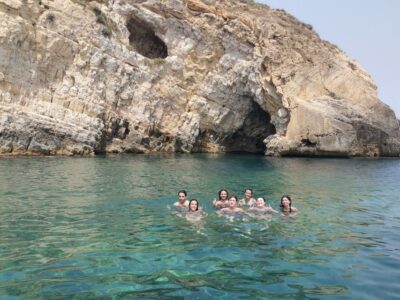
Ortigia & Sea Caves Speedboat Tour with Swim Stop
Read our review →
Ortigia Island and Sea Caves Boat Tour with Drinks
Read our review →

Street Food Walking Tour in Ortigia with Tastings
Read our review →Browse the lists this tour appears in